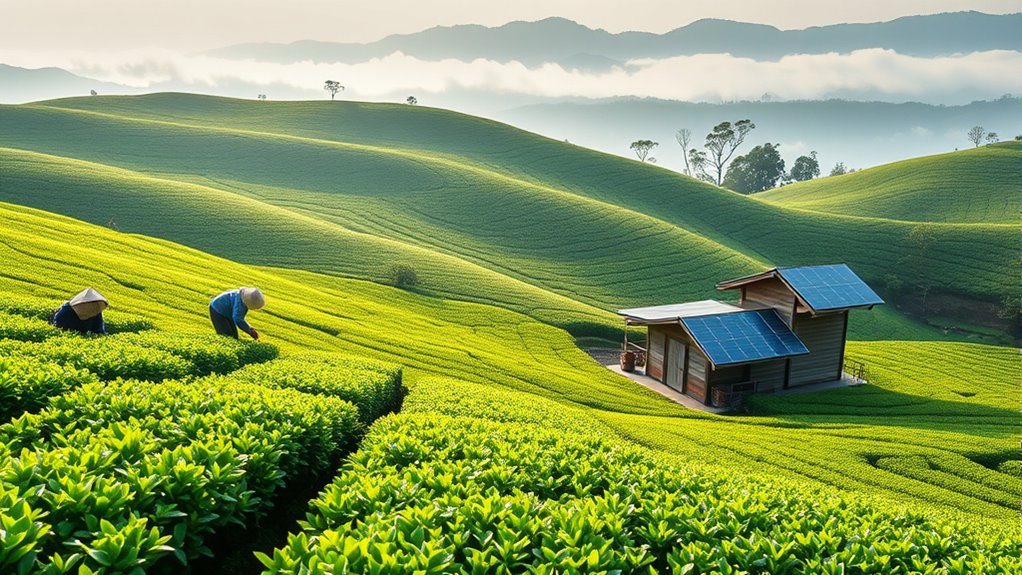

Sustainable cultivation and ethical sourcing of Japanese tea focus on eco-friendly farming methods, such as organic certification and minimal chemical use, ensuring healthier soil and better flavors. Fair trade practices guarantee fair wages and safe working conditions for farmers, supporting local communities. These efforts promote biodiversity and reduce environmental impact while providing you with high-quality, responsibly produced tea. If you keep exploring, you’ll discover how these practices benefit both the environment and the people behind your favorite cup.

Get coffee and tea gear delivered free with Prime
- Fast, free delivery on millions of items
- Prime Video, Amazon Music and more included
- Member-only deals all year
Key Takeaways
- Japanese tea farmers adopt organic certification to ensure pesticide-free, GMO-free cultivation, promoting soil health and environmental sustainability.
- Ethical sourcing practices include fair wages and safe working conditions for farmers, supporting community development and human rights.
- Organic and fair trade certifications guarantee higher-quality tea with richer flavors, due to chemical-free and environmentally friendly farming methods.
- Sustainable cultivation minimizes environmental impact through eco-friendly pest control, soil management, and biodiversity preservation.
- Certification standards build consumer trust and encourage responsible farming, supporting ecological balance and social fairness in Japan’s tea industry.
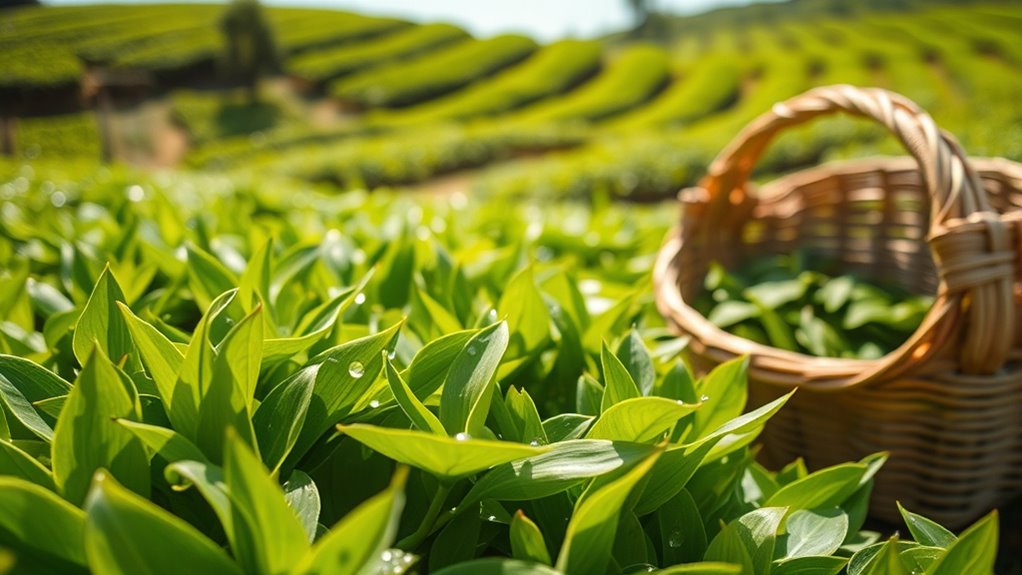
Japanese tea producers are increasingly adopting sustainable cultivation methods and ethical sourcing practices to protect the environment and guarantee fair treatment of workers. This shift reflects a broader commitment to responsible farming, ensuring that the tea you enjoy is produced with respect for nature and people. One key aspect of this movement is obtaining organic certification, which confirms that the tea is grown without synthetic pesticides, fertilizers, or genetically modified organisms. When tea bears an organic label, you can trust that the farmers follow strict standards to minimize environmental impact and promote soil health. Organic certification also indicates that workers are exposed to fewer harmful chemicals, supporting safer working conditions and healthier communities. Additionally, implementing halal standards in cultivation practices can further ensure that the tea aligns with ethical dietary guidelines and cultural sensitivities.
Fair trade practices play a vital role in transforming the Japanese tea industry. These practices ensure that farmers and workers receive fair compensation for their labor, helping to improve their living standards and promote economic stability. When you choose tea that is certified fair trade, you actively support ethical labor practices, including safe working environments, fair wages, and community development initiatives. This commitment helps break the cycle of poverty often associated with conventional agricultural systems and encourages producers to adopt more sustainable methods. By purchasing fair trade-certified Japanese tea, you foster a more equitable supply chain, where respect for human rights goes hand in hand with environmental responsibility.
Many Japanese tea producers are now integrating organic certification and fair trade practices into their production processes. These commitments often go beyond the basic requirements, with farmers adopting environmentally friendly pest control methods and soil management techniques that preserve biodiversity. They also invest in local communities, providing educational programs, health services, and infrastructure improvements. Your choice of tea therefore supports producers who prioritize both ecological sustainability and social fairness. Furthermore, these practices often lead to higher-quality tea, as plants grown without synthetic chemicals tend to develop richer flavors and aromas.
As an affiliate, we earn on qualifying purchases.
Frequently Asked Questions
How Does Climate Change Affect Japanese Tea Cultivation?
Climate change impacts Japanese tea cultivation by disrupting traditional growing conditions, making it harder for you to achieve climate resilience. Warmer temperatures and unpredictable weather increase pest risks, complicating pest management efforts. These changes threaten tea quality and yield, so you need to adapt your practices to maintain sustainable harvests. Addressing these challenges requires innovative solutions to guarantee your tea remains flavorful and ethically sourced despite shifting climate patterns.
What Certifications Guarantee Ethical Sourcing of Japanese Tea?
You can look for certifications like Fair Trade and Organic certification to guarantee ethical sourcing of Japanese tea. Fair Trade guarantees fair wages and good working conditions, while Organic certification ensures no harmful chemicals are used during cultivation. When you buy tea with these labels, you’re supporting sustainable practices and ethical treatment of farmers, helping protect the environment and communities involved in tea production.
Are Traditional Cultivation Methods More Sustainable Than Modern Techniques?
Traditional cultivation methods often weave a gentle, time-honored tapestry, making them more sustainable than modern techniques. You’ll find that organic practices and natural pest management in these methods nurture the soil and preserve biodiversity, like a delicate dance with nature. Modern techniques might rush the process, but traditional methods respect the land’s rhythm, ensuring a harmony that sustains the environment and future tea harvests alike.
How Do Farmers Ensure Fair Wages in Japanese Tea Production?
Farmers guarantee fair wages in Japanese tea production by strictly adhering to labor standards and paying workers a living wage. They often work with cooperatives or certification programs that enforce ethical practices, making sure employees receive proper compensation for their efforts. You can support these efforts by choosing teas labeled with fair trade or ethical sourcing certifications, which promote transparency and ensure workers are fairly paid.
What Role Do Local Communities Play in Sustainable Tea Farming?
You play a crucial role in sustainable tea farming by engaging with local communities, who are the backbone of cultural preservation and environmental care. Their involvement guarantees traditional practices are maintained, and new methods promote eco-friendly cultivation. When communities work together, they act as a well-oiled machine, supporting ethical sourcing and sustainable growth. Your participation helps protect the land and heritage, making sure Japanese tea remains a cherished part of local culture.
Conclusion
By choosing Japanese tea cultivated sustainably and sourced ethically, you help preserve tradition and protect the environment. Your mindful choices guarantee future generations can enjoy its delicate aroma and rich flavor, much like a careful gardener tending to their blooming cherry blossoms. Think of yourself as a modern-day samurai, wielding your tea cup as a sword for good. With each sip, you’re part of a legacy that values harmony, respect, and the timeless beauty of nature.
Halloween Picks
halloween
As an affiliate, we earn on qualifying purchases.