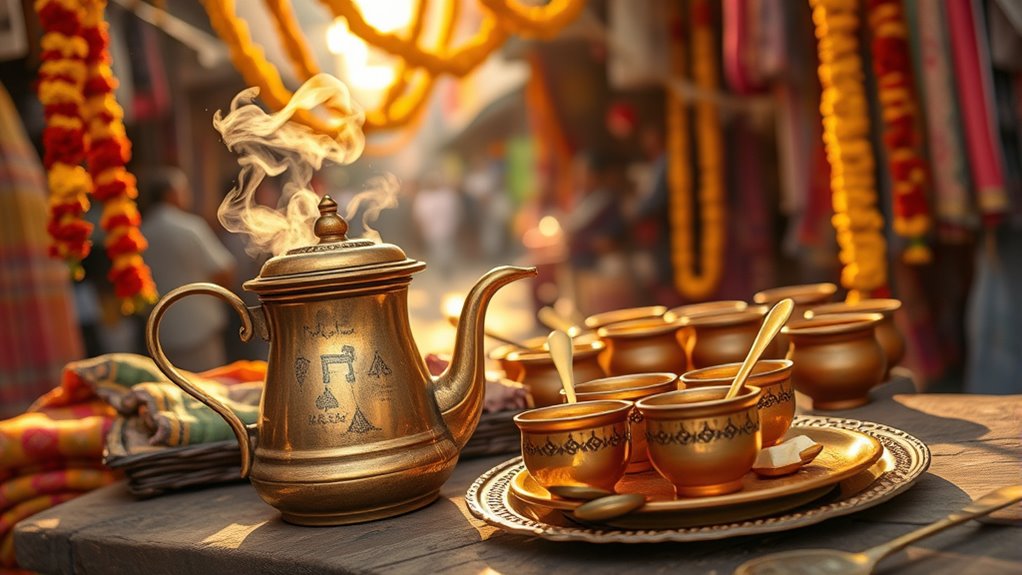

Indian tea is a essential part of local traditions, symbolizing hospitality, social bonding, and daily routines. It reflects regional flavors, from spicy chai in the north to delicate Darjeeling, each carrying unique cultural stories. Preparing and sharing tea often involves specific customs that deepen community connections. These rituals showcase India’s diverse cultural identity and history. To understand how tea unites communities and embodies tradition, explore the rich stories behind each cup.
Key Takeaways
- Tea preparation and serving methods reflect regional customs, showcasing local identity and cultural heritage.
- Offering tea to guests signifies hospitality, respect, and social bonding within communities.
- Tea stalls serve as social hubs, fostering community interaction and cultural exchange.
- Different regional varieties embody local traditions, history, and unique flavor profiles.
- Participating in tea rituals deepens cultural understanding and preserves traditional practices.

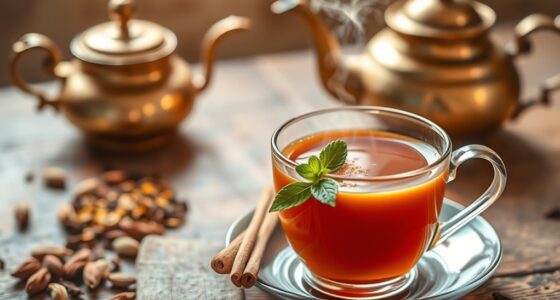
India’s rich tea culture goes beyond just drinking a warm cup; it embodies tradition, social bonding, and daily rituals. When you think about Indian tea, you’re not just envisioning a beverage, but a deep-rooted practice that varies across regions and communities. Each sip connects you to a history filled with customs passed down through generations. Tea rituals are central to many social interactions, whether it’s a morning start, an afternoon break, or a gathering with friends and family. These rituals often involve specific ways of preparing and serving tea, reflecting local customs and preferences. For example, in northern India, chai is commonly brewed with spices like cardamom, ginger, and cloves, creating a fragrant, warming experience. In contrast, southern regions might favor a simpler, milder black tea served with milk and sugar, highlighting regional taste profiles.
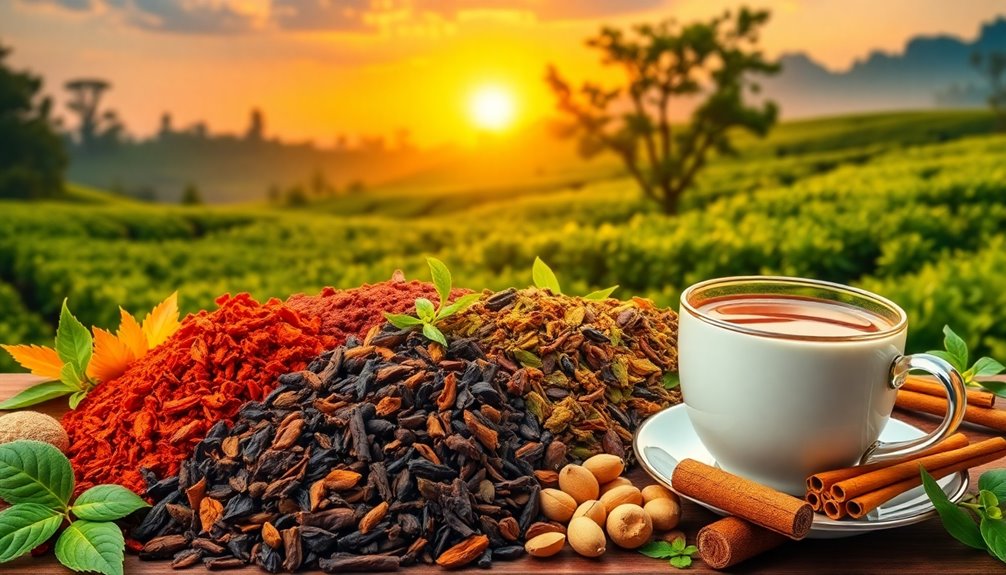
Your experience of Indian tea is often shaped by regional varieties, each offering a unique flavor profile and cultural significance. In Assam, you’ll encounter robust, malty teas cultivated in vast estates, often enjoyed plain or with a splash of milk. Moving to Darjeeling, the “Champagne of teas,” you find delicate, floral notes that are savored slowly to appreciate their nuanced aroma. In Tamil Nadu, the famous South Indian filter coffee shares the stage, but tea blends like the classic “Chai” are still integral to daily life, prepared with a specific blend of spices and served in small glasses. These regional varieties aren’t just about flavor—they symbolize local identities and histories.
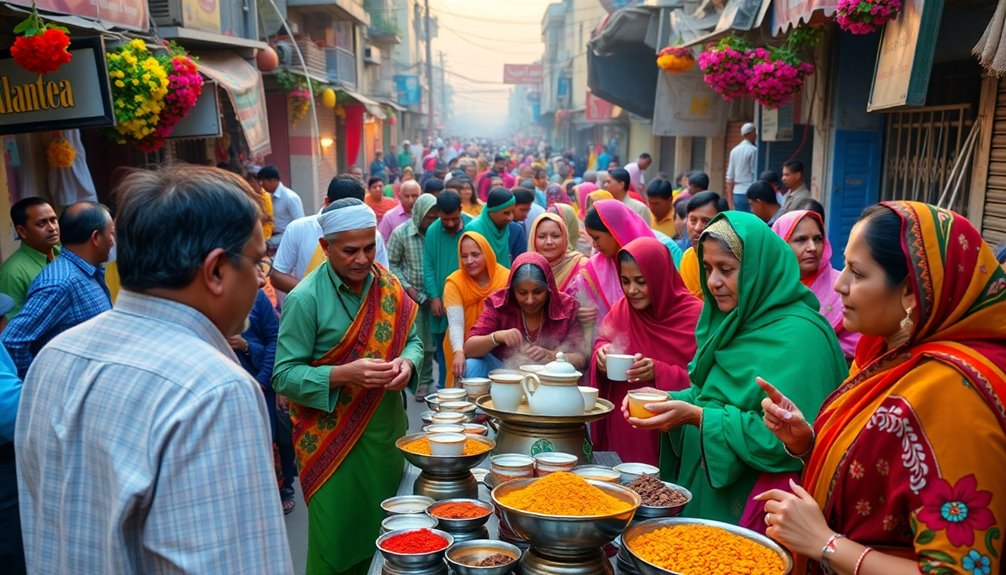
As you participate in these tea traditions, you become part of a collective cultural fabric. The act of preparing tea can be a communal activity, where family members gather to chat and bond over shared routines. In many households, offering tea to guests signifies hospitality and respect. Tea stalls, or “chaiwalas,” serve as social hubs where people exchange news, ideas, and stories while sipping their favorite brew. The way tea is served—whether in a brass kettle, a clay cup, or a modern teapot—also reflects regional influences and social customs. Additionally, the preparation and serving of tea often involve specific tools that are unique to local traditions and enhance the overall experience.
In essence, Indian tea isn’t just a drink; it’s a reflection of the diverse cultural landscape. Your involvement in these tea rituals, understanding the regional varieties, and appreciating their significance deepens your connection to India’s vibrant traditions. Each cup tells a story, weaving together history, community, and the simple joy of sharing a warm beverage.
Frequently Asked Questions
How Did Indian Tea Originate Historically?
You might find that Indian tea originated during British colonial times, when tea cultivation was introduced to boost trade. The British established large plantations in regions like Assam and Darjeeling, adapting traditional methods to suit local conditions. Colonial influence played a significant role in shaping Indian tea production, transforming it into a major industry. Today, this history is reflected in India’s diverse tea varieties enjoyed worldwide.
Are There Specific Rituals Associated With Indian Tea Preparation?
Think of Indian tea preparation as a dance, where every step has a purpose. You’ll often follow specific ritual customs like boiling water with spices, adding tea leaves, and pouring with care, creating a tea ceremony that honors tradition. These rituals deepen the experience, turning a simple cup into a moment of connection and reverence, embodying the rich cultural tapestry woven into everyday life.
Which Regions in India Are Renowned for Unique Tea Varieties?
You should explore regions like Assam, Darjeeling, and Nilgiri, which are renowned for their unique tea varieties. In Assam, vast tea estates produce bold, malty teas with distinctive regional flavors. Darjeeling offers delicate, floral teas, often called the Champagne of Teas, while Nilgiri’s cool climate creates aromatic, brisk brews. Visiting these tea estates allows you to taste the authentic regional flavors and appreciate the diverse Indian tea landscape.
How Does Tea Influence Social Interactions in Indian Communities?
Imagine a time-traveling tea party—today, tea still plays a crucial role in Indian communities. It’s more than just a beverage; it’s a symbol of hospitality and community bonding. When you offer tea to guests, you’re fostering warmth and trust. Sharing chai during conversations strengthens relationships, making social interactions more genuine and relaxed. Tea truly acts as a bridge, uniting people across generations and social backgrounds through shared moments of hospitality.
What Role Does Tea Play in Indian Festivals and Ceremonies?
During Indian festivals and ceremonies, tea plays a crucial role in bringing people together. You participate in traditional tea ceremonies that symbolize hospitality and unity. Festival teas, specially prepared for celebrations, warm hearts and foster bonding. Serving tea during rituals signifies respect and goodwill. As you enjoy these moments, you connect deeply with cultural roots, making festivals more meaningful through shared tea experiences that embody tradition and togetherness.
Conclusion
As you sip your morning chai, you realize it’s more than just a drink—it’s a thread weaving together India’s rich traditions and everyday life. That unexpected aroma or shared cup can connect generations and stories, showing how tea’s cultural significance isn’t just coincidence but a reflection of deep-rooted customs. So next time you enjoy that warm brew, remember, you’re part of a timeless tradition that’s as vibrant as the country itself.