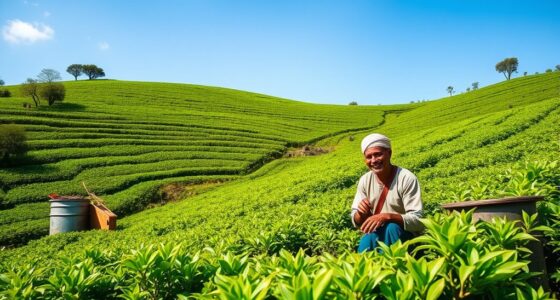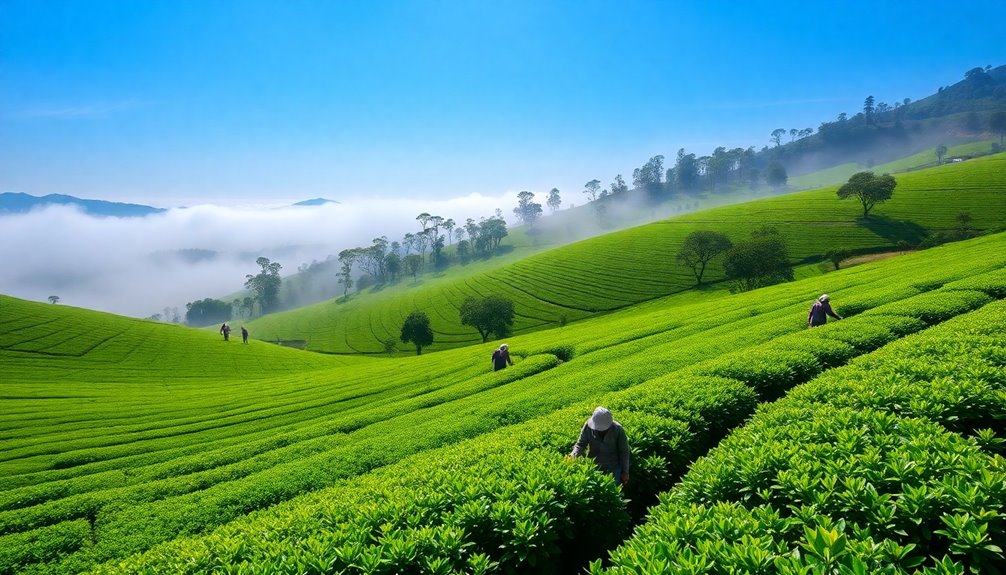
Indian tea’s story is rooted in diverse regions like Assam, Darjeeling, and Nilgiri, each shaping unique flavors through distinct climates and soils. It’s more than a beverage; it’s woven into social rituals, family traditions, and hospitality across the country. Millions depend on tea cultivations that support local economies and sustain centuries-old customs. To understand how Indian tea reflects history, culture, and heritage, explore these fascinating stories behind every cup.

Get coffee and tea gear delivered free with Prime
- Fast, free delivery on millions of items
- Prime Video, Amazon Music and more included
- Member-only deals all year
Key Takeaways
- Indian tea’s distinct flavors are shaped by diverse regional climates and soil, reflecting centuries of cultivation traditions.
- The industry supports millions of livelihoods, from plantations to local markets, highlighting its economic significance.
- Tea culture in India is deeply rooted in social rituals, hospitality, and daily life across various communities.
- Heritage and history influence Indian tea’s identity, with regional customs enriching its cultural legacy.
- The global reputation of Indian tea is built on unique regional varieties like Assam, Darjeeling, and Nilgiri.
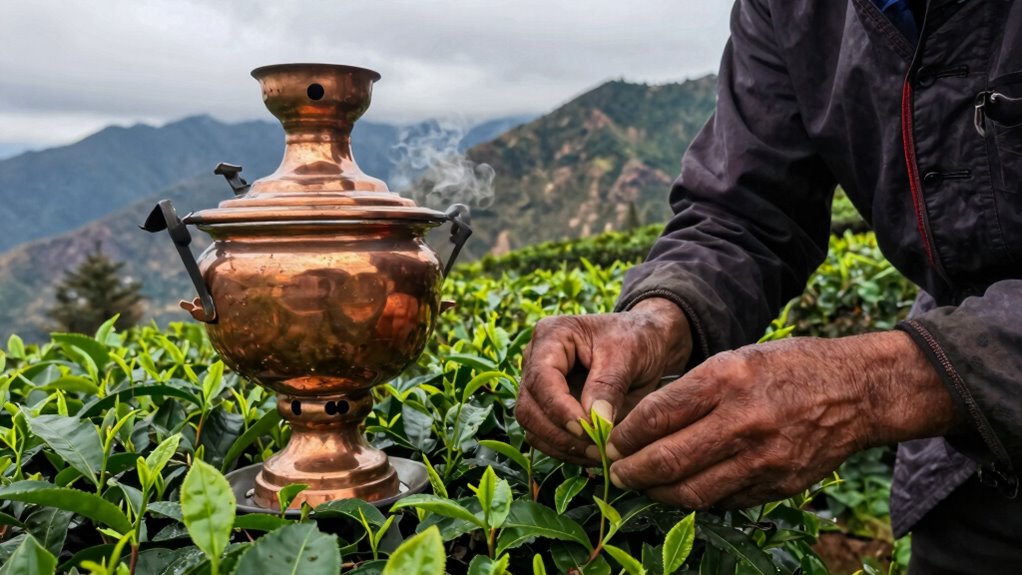
Indian tea isn’t just a popular beverage; it’s a centuries-old tradition woven into the country’s cultural and economic fabric. When you think of Indian tea, you’re not just imagining a warm cup in the morning—you’re also considering a complex history rooted in tea cultivation that spans generations. The lush hills of Assam, the rolling plantations of Darjeeling, and the sprawling fields of Nilgiri are more than scenic landscapes; they’re the backbone of India’s tea industry. These regions have perfected the art of tea cultivation, transforming it into a thriving economic activity that supports millions of lives. The unique climate and soil in each region give rise to distinct flavors and qualities, making Indian tea renowned worldwide. Whether it’s the bold, malty notes of Assam or the delicate floral aroma of Darjeeling, each cup tells a story of meticulous cultivation and tradition.
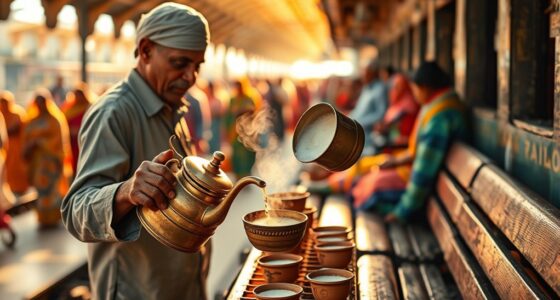
The cultural significance of Indian tea runs deep, influencing social rituals and daily routines. For many, sharing a cup isn’t just about quenching thirst but about fostering community and hospitality. You’ll find tea served during festivals, family gatherings, and even in business meetings, symbolizing warmth and connection. The act of brewing and drinking tea is intertwined with Indian hospitality, where offering a steaming cup is a gesture of respect and friendship. Over centuries, this ritual has evolved but remained central to social life, reinforcing bonds and cultural identity. The tradition extends beyond mere consumption—tea is woven into stories, folklore, and daily practices. From street vendors pouring chai on bustling street corners to high-end tea salons, the cultural importance resonates across social strata. Additionally, regional traditions and customs have further enriched the cultural tapestry associated with Indian tea. The diverse climate and soil conditions in each region have played a crucial role in shaping the unique flavors and qualities of Indian tea. Understanding the agro-climatic factors involved in tea cultivation helps enthusiasts appreciate the depth and variety that Indian tea offers. Recognizing the distinct regional flavors helps enthusiasts appreciate the depth and variety that Indian tea offers. As you sip your cup, you’re experiencing more than just flavor—you’re partaking in a legacy that encompasses history, livelihood, and social fabric. Indian tea’s story isn’t just about taste; it’s about the enduring cultural importance and the centuries-old tradition of tea cultivation that continues to thrive today. This rich heritage guarantees that every sip carries the weight of history, making Indian tea a truly iconic and meaningful beverage.
As an affiliate, we earn on qualifying purchases.
Frequently Asked Questions
What Are the Health Benefits of Indian Tea?
Indian tea offers numerous health benefits, especially with herbal infusions and antioxidant properties. When you drink it regularly, you can boost your immune system, improve digestion, and enhance mental alertness. The antioxidants help fight free radicals, reducing inflammation and lowering the risk of chronic diseases. Plus, herbal infusions in Indian tea can soothe your nerves and promote relaxation. Overall, it’s a flavorful way to support your health every day.
How Does Indian Tea Impact Local Farmers’ Livelihoods?
Indian tea acts like a river nourishing local farmers’ livelihoods, flowing through mountain valleys and fertile lands. You see, when you buy Indian tea, you’re supporting their economic impact, helping farmers earn a steady income. This boost sustains families, preserves traditional farming practices, and encourages community growth. Your choice directly impacts their lives, turning a simple cup into a force for positive change, fostering resilience and prosperity in tea-growing regions.
What Are the Environmental Concerns in Tea Plantations?
You should know that environmental concerns in tea plantations include issues like water pollution and the need for sustainable farming practices. Pesticides and fertilizers often contaminate nearby water sources, harming ecosystems and local communities. Unsustainable farming can lead to soil degradation and loss of biodiversity. To protect the environment, adopting sustainable farming methods and reducing chemical use are essential steps for tea plantations to minimize their ecological footprint.
How Does Indian Tea Differ From Other Global Varieties?
You’ll notice Indian tea’s unique charm—its rich tea aroma and vibrant flavors set it apart from global varieties. While other teas may focus on uniformity, India’s plantations thrive amidst diverse biodiversity, giving each brew a distinct character. This blend of tradition and environment creates a tea experience that’s both bold and nuanced, capturing the essence of India’s landscape and cultural heritage in every cup.
What Are the Traditional Methods of Tea Production in India?
You’ll find that traditional Indian tea production relies on careful tea processing and specific harvesting techniques. First, workers pluck tender tea leaves by hand, ensuring quality. Then, the leaves undergo withering, rolling, oxidation, and drying, often in sun or fire-heated chambers. These steps preserve flavor and aroma, reflecting age-old methods. The process combines manual labor with natural elements, creating the rich, distinctive taste Indian tea is known for worldwide.
Conclusion
So, next time you sip that warm cup of Indian tea, remember the journey behind it—the tradition, the craftsmanship, and the passion. It’s not just a beverage; it’s a story of resilience, culture, and history. Every leaf tells a tale, every aroma carries a legacy, and every sip connects you to a vibrant heritage. Appreciate the depth beneath the surface, embrace the story, and cherish the experience in each comforting, flavorful moment.
Halloween Picks
halloween
As an affiliate, we earn on qualifying purchases.