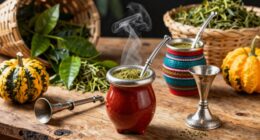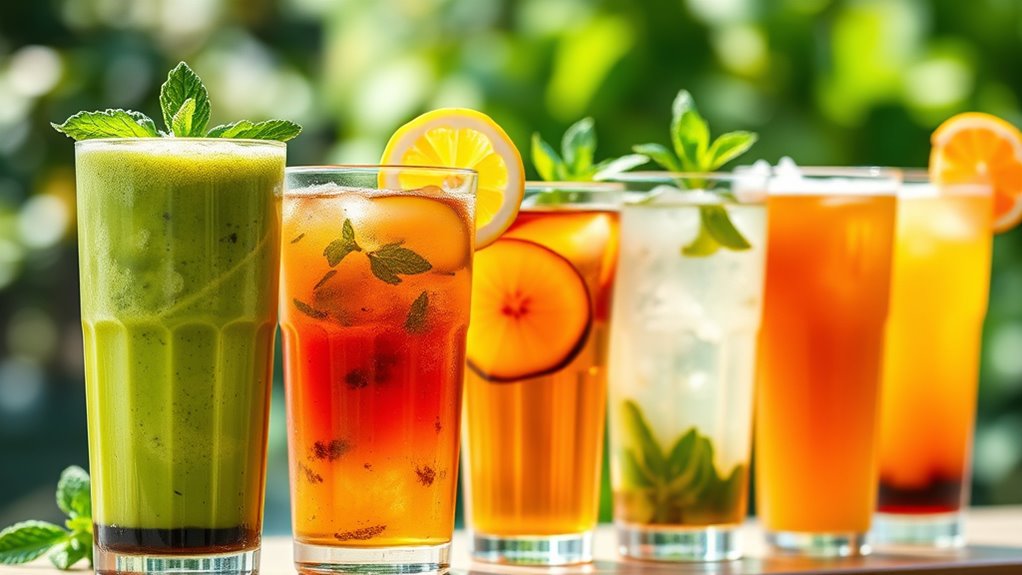

Exploring iced tea recipes from around the world shows you how different cultures add unique flavors and techniques. In the U.S., you might enjoy sweetened black tea with lemon, while in Thailand, spicy and fragrant iced teas with herbs and tropical fruit are popular. China often uses jasmine or green teas, cooled quickly for a delicate taste. These global variations inspire you to try new flavorings and brewing styles for your perfect glass—there’s much more to discover beyond this summary.
Key Takeaways
- Incorporate herbs like mint in Middle Eastern iced teas or Thai basil for a fresh, aromatic twist.
- Use spices such as cinnamon or cardamom in Indian chai-based iced teas for warm, complex flavors.
- Add tropical fruits like passionfruit or pineapple for a sweet, island-inspired refreshment.
- Brew green or jasmine tea at lower temperatures, then flavor with citrus or ginger for delicate, nuanced drinks.
- Serve with unique cooling techniques like crushed ice or flavored ice cubes to enhance regional iced tea styles.

Iced tea is a globally loved beverage, and around the world, people are putting their unique spin on this revitalizing classic. Whether you prefer it sweet, tangy, or infused with exotic flavors, there’s a world of variety waiting to be explored. One of the key ways to elevate your iced tea experience is by experimenting with tea flavorings. From fresh herbs like mint and basil to spices such as cinnamon and cardamom, adding these elements can transform a simple glass into a sensory adventure. In many cultures, citrus fruits like lemon, lime, or orange are squeezed into the tea for a zesty kick, while tropical fruits like pineapple or passionfruit lend a sweet, fragrant aroma that screams summer. Incorporating these flavorings isn’t just about adding taste; it’s about creating balance and enhancing the natural qualities of the tea leaves.
But perhaps more important than the flavorings is mastering the brewing techniques that serve as the foundation for a great iced tea. Different regions have their preferred methods, and understanding these can help you craft the perfect brew. For example, in the southern United States, black tea is often brewed strong and then cooled quickly to preserve its robust flavor. You might use the cold brew method, steeping tea leaves in cold water overnight, which results in a smoother, less bitter taste. In contrast, some Asian cultures favor brewing green or jasmine tea at lower temperatures, ensuring delicate nuances are maintained. The brewing time and water temperature directly influence the clarity, strength, and flavor profile of your iced tea, so paying attention to these details can make a big difference. Additionally, understanding the benefits of proper brewing, such as extracting optimal flavor and avoiding bitterness, can significantly improve your tea experience.
Additionally, the type of tea you select plays a pivotal role. Black teas like Assam or Darjeeling provide boldness, while green teas or oolongs offer lighter, more floral notes. Each requires specific brewing techniques to unlock their full potential. For instance, green tea is best brewed at lower temperatures and shorter times to prevent bitterness, whereas black tea benefits from a hotter, longer steep. Once brewed, quick cooling—either by ice or refrigeration—sets the stage for adding your chosen flavorings, ensuring the tea remains crisp and revitalizing.

Primula The Big Iced Tea Maker and Infuser, Plastic Beverage Pitcher with Leak Proof, Airtight Lid, Fine Mesh Reusable Filter, Made without BPA, Dishwasher Safe, Aqua
THE BIG ICED TEA MAKER: Brew, infuse, serve and store all in the same pitcher. Make up to…
As an affiliate, we earn on qualifying purchases.
As an affiliate, we earn on qualifying purchases.
Frequently Asked Questions
What’s the History Behind Iced Tea’s Global Popularity?
You might not realize it, but the history of iced tea’s global popularity traces back to the tea trade and colonial influence. As tea became a prized commodity, colonizers introduced it worldwide, and people started enjoying it cold, especially in hot climates. This shift was boosted by innovations like refrigeration and cultural exchanges, making iced tea a invigorating staple across many countries, blending traditional flavors with local twists.
How Do Climate Differences Influence Regional Iced Tea Flavors?
You notice how the warm, sun-drenched days in tropical regions infuse iced tea with vibrant citrus and tropical fruit flavors, while cooler climates bring out richer, spiced notes. Climate impact shapes regional flavor variations, making drinks invigoratingly light or warmly robust. As you sip, you can taste how the environment molds each glass—bright and zesty or deep and comforting—highlighting the beautiful diversity of iced tea around the world.
Are There Traditional Health Benefits Linked to Specific Regional Iced Teas?
You’ll find that many regional iced teas offer traditional health benefits. For example, herbal infusions like chamomile or mint are common, known for calming effects and digestive aid. Additionally, teas such as green or black tea contain antioxidant properties that may boost your immune system and improve overall health. By choosing these regional options, you get both invigorating flavors and natural health benefits, making your iced tea experience more nourishing.
What Are Some Common Misconceptions About International Iced Tea Recipes?
You might think international iced tea recipes are all about exotic ingredients, but that’s a myth debunked by ingredient misconceptions. Sometimes, people assume certain spices or fruits are essential, yet many recipes rely on simple, familiar ingredients. Coincidentally, understanding the true origins and traditional methods helps you appreciate each region’s unique twist without overcomplicating it. Embracing these truths allows you to enjoy authentic iced teas without unnecessary confusion.
How Can I Adapt These Global Twists for Dietary Restrictions?
You can adapt global iced tea twists for dietary restrictions by using sugar substitutes like honey, stevia, or agave to reduce sugar content. For gluten-free options, choose ingredients like fresh herbs, fruits, and gluten-free tea leaves. You might also experiment with plant-based milks or natural flavorings to enhance taste without compromising dietary needs. These simple swaps make international iced tea recipes accessible and delicious for everyone.

Reinmoson Large Tea Infuser for Loose Tea & Spice Infuser for Cooking, Extra Fine Mesh Tea Strainers, 304 Stainless Steel Loose Leaf Tea Steeper for Black Tea, Rooibos, etc
Large Size for Versatile Use: 2" diameter, 2.8" high large tea infuser can holds 6 tsp (6 oz)…
As an affiliate, we earn on qualifying purchases.
As an affiliate, we earn on qualifying purchases.
Conclusion
As you explore these international iced tea twists, you’ll discover a world of flavors at your fingertips. Did you know that iced tea consumption has increased by 20% worldwide in the past five years? Imagine yourself sipping vibrant Moroccan mint, sweet Indian chai, or invigorating Thai iced tea—each offering a unique cultural experience. So, next time you reach for a cold drink, consider trying a global twist and enjoy a taste of the world in every sip.

Cold Brew Coffee Maker,64 oz Mason Jar Pitcher with Stainless Steel Filter, Pour Spout Handle Lid, Heavy Duty Glass Airtight & Leak-Proof for Iced Coffee,Tea & Lemonade
【What You Will Get】:1 Pcs / 64 oz mason jar pitcher with pour spout lid, 1 stainless stell…
As an affiliate, we earn on qualifying purchases.
As an affiliate, we earn on qualifying purchases.

Optish 3 Pack Ice Trays for Freezer, 99 PCS Ice Cube Tray with Lid and Bin, Round Ice Cube Mold, Circle Ice Maker for Chilling Drinks (0.8 inch, Blue)
Easy to Use: Simply Put water into ice cube tray, the excess water will flow out through the…
As an affiliate, we earn on qualifying purchases.
As an affiliate, we earn on qualifying purchases.