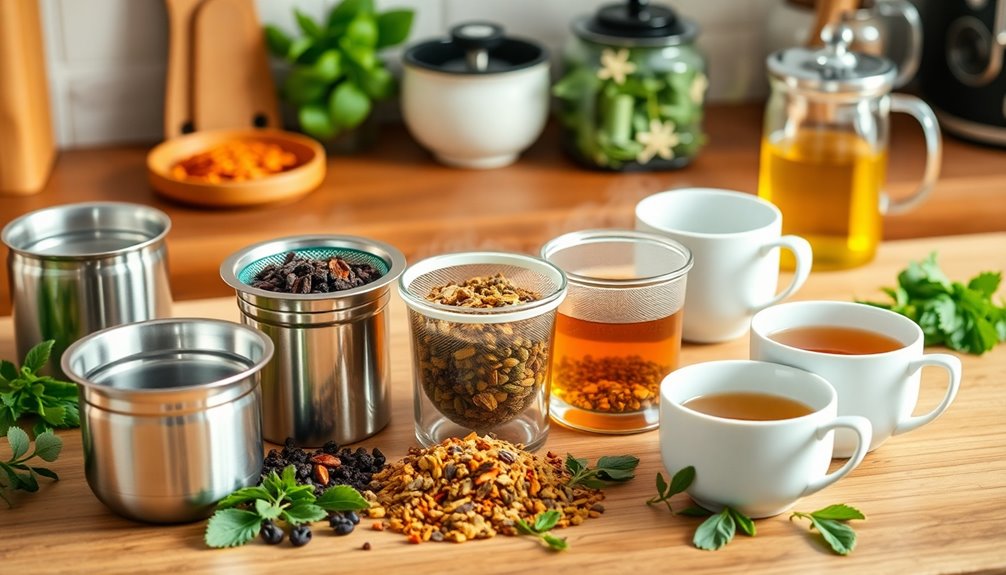
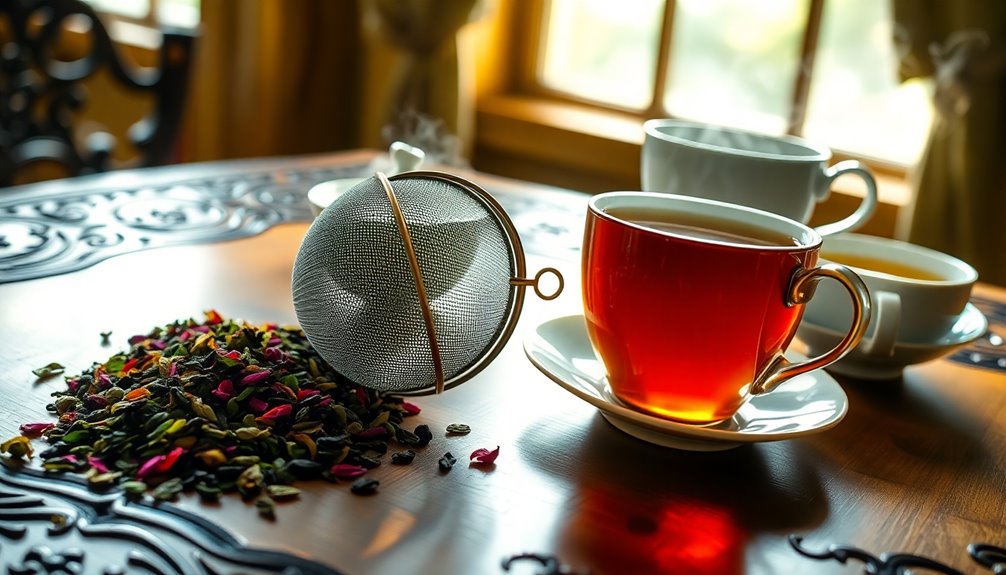
Use a tea infuser to hold loose leaf tea while hot water extracts its flavor, then remove the leaves before they over-steep. This guide is for beginners who want to brew one cup or a small pot without leaves floating in the drink. You will learn how to choose an infuser with enough room for the leaves, set a suitable amount and steep time, and clean the infuser afterward. Allow about 5-10 minutes, depending on the tea.

Get coffee and tea gear delivered free with Prime
- Fast, free delivery on millions of items
- Prime Video, Amazon Music and more included
- Member-only deals all year

Exptolii 3-Pack Stainless Steel Snap Ball Tea Strainer with Handle
- ✔ Material: 304 stainless steel
- ✔ Quantity: 3 infusers
- ✔ Dimensions: 6.7 x 1.77 x 1.77 inches

Fu Store 2-Piece Stainless Steel Mesh Tea Ball Strainers (2.1 Inch)
- ✔ Material: 304-grade stainless steel; aluminum rivets
- ✔ Quantity: 2 pieces
- ✔ Dimensions: 2.08 x 2.08 inches

Stainless Steel Mesh Tea Infuser with Honey Bee Pendants, 2.1-Inch
- ✔ Brand: YOIYINI
- ✔ Material: Stainless steel
- ✔ Shape: Round
Difficulty: Beginner | Time: 5-10 minutes
What You’ll Need
Tools & Materials:
- Loose leaf tea
- A cup or teapot
- A tea infuser that fits the cup or pot
- Hot water and a kettle or other way to heat it
- A teaspoon or tea scale
- A timer
- A sink or bowl for rinsing
Knowledge:
- Basic ability to heat water safely
- Ability to follow the tea package’s water temperature and steep-time guidance
Check the tea label before brewing. Different teas can call for different water temperatures and steep times. If the package gives no guidance, use the starting amounts and timing listed in this guide, then adjust on the next cup to suit your taste.
Exptolii 3-Pack Stainless Steel Snap Ball Tea Strainer with Handle
Among these three, Exptolii is the strongest choice when keeping small tea particles contained matters most: its ultra-fine mesh is specifically described as effective filtration. The long handle also gives us a direct way to lift the ball from hot water, unlike the chain-hung YOIYINI, while the pack of three makes it easier to keep a strainer in more than one kitchen spot or share them.The tradeoff is capacity. These are compact snap balls, so they may not leave larger leaves much room to open, and the product description notes the snap mechanism may loosen with frequent use. Fu Store’s 2.1-inch balls may better suit those who want a more conventional basket size, although its mesh is less suited to very fine leaves. Exptolii is listed as dishwasher safe, giving it the clearest care advantage in this lineup.
Pros:
- Ultra-fine mesh is specified for filtering small particles
- Long handle supports filling and retrieval from hot water
- Three strainers offer convenient spares or shared use
- 304 stainless steel construction and dishwasher-safe care are listed
Cons:
- Small ball capacity may restrict leaf expansion
- Snap mechanism may loosen with frequent use
- Compact ball design may be less suitable for larger leaf portions
Best for: Tea drinkers who brew finer loose leaves and want several lightweight, handled infusers for home, work, or travel.
Not ideal for: People who need a roomy basket for large leaves or want a closure without a stated risk of loosening over time.
Bottom line: Choose Exptolii for the lineup’s clearest fine-leaf filtration and multipack convenience, provided its small capacity suits your brew.
“Choose Exptolii for the lineup’s clearest fine-leaf filtration and multipack convenience, provided its small capacity suits your brew.”
Fu Store 2-Piece Stainless Steel Mesh Tea Ball Strainers (2.1 Inch)
Fu Store makes the most sense when we want a classic ball strainer with an attached hook for a teapot or pan. Its two 2.1-inch infusers are larger in stated diameter than Exptolii’s 1.77-inch ball width, which may give leaves more room than the compact handled design. The secure clasp supports filling and closing, while the hook provides a straightforward retrieval point.That extra room does not solve every tea type. Fu Store specifically cautions that very fine or small leaves may escape through the mesh, so Exptolii is the safer fit for those. The rivets are aluminum rather than stainless steel, and the supplied care note recommends thorough drying after washing to help maintain longevity. Compared with YOIYINI’s decorative chain, Fu Store’s attachment is more utilitarian and comes as a two-piece set, but buyers should accept the additional drying step.
Pros:
- Two strainers provide a spare or allow multiple brews
- 2.1-inch size offers a larger ball format than Exptolii
- Attached hooks support hanging and retrieval from pots
- Secure clasp is described for filling and closing
Cons:
- Mesh may let very fine or small leaves escape
- Aluminum rivets call for thorough drying after washing
- Small ball capacity may still limit larger tea portions
Best for: People who steep in teapots or pans and want two traditional ball strainers with hooks for hanging and removal.
Not ideal for: Drinkers who use very fine tea, want dishwasher-safe care explicitly stated, or prefer not to dry infusers thoroughly after washing.
Bottom line: Pick Fu Store for hook-assisted pot steeping and a traditional two-piece set, as long as your tea leaves are not especially fine.
“Pick Fu Store for hook-assisted pot steeping and a traditional two-piece set, as long as your tea leaves are not especially fine.”
Stainless Steel Mesh Tea Infuser with Honey Bee Pendants, 2.1-Inch
YOIYINI stands apart through its long chain, cup hook, and honey bee pendants. That arrangement is useful when we want to lower an infuser into a cup or pot and lift it out without reaching into hot water. For retrieval convenience, it has a clearer advantage over both Exptolii’s handled snap ball and Fu Store’s attached hook, particularly when a vessel’s rim makes a short handle awkward.Its limitations are more pronounced for tea selection and upkeep. The supplied details say it is not suitable for ground tea, and unlike Exptolii’s explicit ultra-fine filtration claim, they do not establish that it contains especially small particles. It also needs to be dried after rinsing. Fu Store offers two strainers and a secure clasp, whereas this listing describes a single round infuser with pendants; choose YOIYINI for its chain-and-hook setup rather than for a documented filtration advantage.
Pros:
- Long chain and hook make retrieval straightforward
- Can be used with a cup or pot according to the description
- Stainless steel mesh construction
- Rinses clean with water
Cons:
- Not suitable for ground tea
- Must be dried after cleaning
- Filtration performance for very small leaves is not specified
Best for: People who want to suspend and retrieve an infuser from a cup or pot using a long chain and hook.
Not ideal for: Anyone brewing ground tea, seeking stated ultra-fine filtration, or wanting an infuser that can be put away directly after rinsing.
Bottom line: Choose YOIYINI when chain-assisted retrieval and decorative pendants matter more than a documented fine-mesh advantage or low-maintenance drying.
“Choose YOIYINI when chain-assisted retrieval and decorative pendants matter more than a documented fine-mesh advantage or low-maintenance drying.”
As an Amazon Associate we earn from qualifying purchases.
Before You Start
Set out the cup, infuser, tea, and timer before heating the water. Choose an infuser that rests securely on the cup or hangs from its rim, with its basket fully below the water when filled. The leaves need room to expand; a roomy basket usually lets them move more freely than a small tea ball. Check that the infuser has no damaged mesh or loose parts. Hot water and the infuser can become hot during use, so lift it by its handle or chain rather than touching the basket.
Step-by-Step Instructions
Step 1: Choose an infuser that fits
Match the infuser to your cup or teapot. For a single cup, use a basket or mug infuser that rests securely at the rim and sits deep enough for the leaves to stay submerged. For a pot, use a larger basket that can be removed easily after steeping. Check the mesh: it should hold the leaf size of your tea. Fine tea particles can escape through coarse holes, while whole-leaf tea needs space to open.
Tip:A basket-style infuser is a practical choice for many loose teas because it offers more space than a small ball. Avoid filling any infuser so tightly that water cannot flow through the leaves.
Check: The infuser sits steadily on the vessel, stays immersed during brewing, and has enough space for the dry leaves to expand.
Step 2: Measure the tea
Read the package for a recommended amount per cup. If there is no direction, start with about one teaspoon of tea per 240 milliliters (8 ounces) of water. Use a scale if you prefer a repeatable amount or if the leaves vary greatly in size. Place the measured leaves in the infuser basket, and leave space around them rather than packing them down.
Tip:Large, fluffy leaves can take up more volume than small, dense leaves. Adjust by taste after your first cup instead of forcing a full measure into a crowded infuser.
Check: The dry leaves sit loosely in the basket, with visible room for them to unfurl as they absorb water.
Step 3: Heat the water
Heat the amount of water you need and follow the tea package’s temperature guidance. If the package lists a range, choose a temperature within it. Pour the water into the cup or teapot carefully, leaving enough room for the infuser and for safe handling. If you do not have a temperature-controlled kettle, follow the kettle maker’s guidance for cooling hot water before use.
Tip:Water that is too hot for a delicate tea can produce a harsh or bitter cup. Use the tea’s instructions when available rather than applying one temperature to every variety.
Check: You have enough water for the serving, heated to the temperature recommended for that tea.
Step 4: Place the infuser in the water
Set the filled infuser into the cup or teapot once the water is ready. Make sure the basket is submerged and does not rest against the bottom in a way that blocks water flow. If the infuser has a lid, put it on during steeping to help retain heat. Keep the handle or chain outside the vessel for easy removal.
Tip:Do not drop the infuser into the cup. Lower it by its handle or chain to avoid splashing hot water.
Check: The leaves are in contact with the water, the infuser is stable, and you can remove it without reaching into the hot cup.
Step 5: Steep for the recommended time
Start a timer as soon as the infuser enters the water, and use the package’s steeping time. If no time is given, begin with about 3 minutes for green tea and 4-5 minutes for black tea, then adjust later by taste. Follow the package for herbal, white, oolong, and other teas, since their recommended times vary. Keep the infuser in place while the tea steeps.
Tip:Leaving leaves in the water after the timer ends can make the flavor stronger or more bitter. If you prefer a bolder cup, try a slightly longer steep on the next brew.
Check: The timer signals that the tea has reached its recommended steep time.
Step 6: Remove the infuser and taste
Lift the infuser out by its handle or chain when the timer ends. Let it drain over the cup for a moment, then place it on a saucer or in a bowl. Avoid squeezing the leaves, which can push extra fine particles and strong flavors into the drink. Stir the tea if desired, then taste it before adding milk, sweetener, or other additions.
Tip:Use a heat-resistant rest for the infuser. The basket may remain hot even after it is out of the water.
Check: The leaves are no longer steeping, and the cup has a clear brewed color with little or no leaf debris.
Step 7: Empty and clean the infuser
Let the infuser cool enough to handle, then empty the wet leaves into food waste or compost if accepted locally. Do not push leaves into the drain, where they can collect and cause a blockage. Rinse the basket promptly under running water, brushing the mesh gently if particles remain. Wash it with dish soap if needed, rinse away all soap, and let it dry fully before storing.
Tip:Check the maker’s care directions before putting an infuser in a dishwasher. Some handles, coatings, or fine mesh parts need hand washing.
Check: The mesh is free of visible leaves and residue, the infuser has no lingering soap smell, and it is dry before storage.
Common Mistakes to Avoid
- Rinsing tea leaves into the sink drain. — Empty the basket into food waste or compost where accepted, then rinse the infuser.
Troubleshooting
Problem: Leaf fragments end up in the cup.
Solution:
Use an infuser with finer mesh, especially for small or broken tea leaves. Check that the mesh is intact and that the basket is not overfilled. A small amount of fine sediment can occur with some teas.
Problem: The tea tastes weak.
Solution:
Check that the infuser was submerged and that the water was hot enough for the tea’s instructions. Add a little more leaf or extend the steep on your next cup; change one factor at a time so you can tell what helped.
Problem: The tea tastes bitter or harsh.
Solution:
Remove the infuser as soon as the timer ends. For the next cup, shorten the steep or use water at the recommended temperature. Avoid squeezing the wet leaves.
Problem: The leaves remain crowded and brew unevenly.
Solution:
Use a larger infuser or reduce the amount of tea. Make sure the basket is submerged and water can circulate through it.
What Success Looks Like
Your cup has the strength and flavor you wanted, the infuser has been removed at the end of the steep, and little or no leaf debris is present. The infuser is emptied, rinsed clean, and dry before storage.
Next Steps
Record the tea amount, water temperature, and steep time if you want to repeat a cup you liked. Adjust one of those details at a time on future brews. After repeated use, inspect the mesh for trapped residue or damage; clean it according to the maker’s care directions, and replace the infuser if it no longer holds the leaves securely.
Frequently Asked Questions
How much loose tea should I put in an infuser?
Start with the amount on the tea package. If there is no guidance, try about one teaspoon per 240 milliliters (8 ounces) of water. Use less if the leaves crowd the basket.
Can I leave the infuser in while I drink?
Remove it when the recommended steep time ends. Leaving the leaves in the cup continues extraction and can make the tea stronger or more bitter.
Can I reuse the leaves for another cup?
Some teas can be steeped more than once, though later cups may taste lighter. Follow the tea maker’s guidance, and steep each infusion separately. Do not leave wet leaves at room temperature for a long time before reusing them.
Which type of infuser works best?
A roomy basket infuser suits many loose-leaf teas because it gives leaves space to expand and is easy to remove. Choose mesh fine enough to contain your tea and a size that fits your cup or pot.
How should I clean a tea infuser?
Empty the leaves into food waste or compost where accepted, rinse the basket promptly, and brush away any particles. Use dish soap if needed, rinse thoroughly, and let the infuser dry before storing. Check the maker’s directions before using a dishwasher.