
TL;DR

Get coffee and tea gear delivered free with Prime
- Fast, free delivery on millions of items
- Prime Video, Amazon Music and more included
- Member-only deals all year
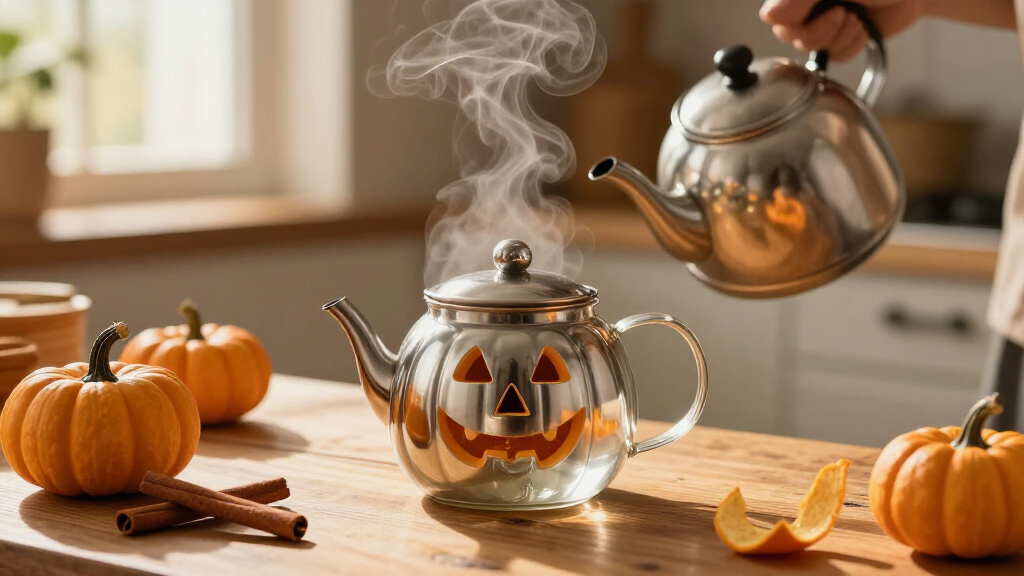
Halloween-themed tea infusers are novelty steepers shaped like ghosts, skeletons, pumpkins, and black cats that turn an ordinary cup into a seasonal moment for under $15. The best ones are food-grade stainless steel or silicone, seal tightly to keep leaf dust out of your cup, and clean easily with a rinse and a 170°F water bath. Look for fine mesh, a secure latch, and a chain long enough for your mug before you buy.
Your tea doesn’t know it’s October. But when a tiny porcelain-white skeleton hand drapes over the rim of your mug, slowly turning amber in hot water — you know. Everyone who walks past your desk knows. It costs about $12 and it’s the most efficient spooky upgrade you can buy.
Halloween tea infusers have quietly become one of the most gifted items in the tea world every fall, and for good reason: they’re cheap, they work, and they make people smile. But some of them are genuinely great brewers, and some will dump leaf fragments into your cup by the second steep.
In this guide, you’ll learn which designs actually brew well, what materials are safe, how to clean them, and how to spot the duds before checkout. Plus a few pairing ideas that will make your October tea ritual feel like an event.
Buy only infusers made from 304 food-grade stainless steel or explicitly food-grade silicone — skip listings that won’t name the material.
Mesh finer than 0.3mm holds back rooibos and broken-leaf teas; punched holes over 1mm will leak leaf dust every steep.
Cauldron-style basket infusers brew best because leaves get room to expand; hollow shapes like skeleton hands look great but under-fill.
Rinse the infuser immediately after use and soak clogged mesh in 170°F soapy water for 15 minutes — never store it damp.
Brewed tea with milk or honey left at room temperature over two hours should be tossed; treat it like any perishable food.
What Is a Halloween Tea Infuser, and Why Do People Love Them?
A Halloween tea infuser is a reusable steeper — usually stainless steel or silicone — shaped like a seasonal character: a ghost, a skull, a pumpkin, a witch’s cauldron, a black cat, or a skeleton hand clawing over your mug’s edge. It does the same job as any ball or basket infuser: it holds loose leaf tea while hot water flows through it.
The appeal is pure theater. A standard steel ball steeps tea. A ghost-shaped infuser steeps tea and slowly sinks into your Earl Grey like it’s haunting it. That’s the whole product, and honestly, that’s enough — a 2019 survey by the Tea Association of the USA found loose leaf tea steadily gaining share among younger drinkers, and novelty gear is one of the main on-ramps.
My gateway purchase was a $9 silicone skull from a craft fair. Three Octobers later, it’s still the first thing guests ask about when they see it floating in a pot of rooibos. Cheap thrills, daily use.
Products Worth Considering

Le Creuset Enameled Cast Iron Round Dutch Oven, 5.5 Qt, Flame

Breville Smart Grinder Pro Conical Burr Coffee Grinder, Brushed Stainless Steel

KitchenAid Artisan 5-Quart Tilt-Head Stand Mixer, KSM150PS, Almond Cream
As an affiliate, we earn on qualifying purchases.
Ghost Hands vs. Pumpkins vs. Cauldrons: Which Design Actually Steeps Best?
Not every spooky shape brews equally. Silicone shapes are fun but often trap tea against the walls; mesh baskets circulate water better. Here’s how the popular Halloween designs compare in real use:
| Design | Material | Best For | Watch Out For |
|---|---|---|---|
| Skeleton hand over rim | Silicone or enamel steel | Big mugs, showmanship | Hollow fingers under-fill with leaf |
| Floating ghost | Borosilicate glass or silicone | Whole-leaf teas, glass pots | Fragile; ghost fills with air and won’t sink |
| Pumpkin ball infuser | Stainless steel mesh | Everyday black and green teas | Latch can pinch fine mesh shut |
| Witch cauldron basket | Stainless steel with hook | Large-leaf blends, chai | Chain too short for tall travel mugs |
| Black cat / bat clip-on | Silicone with steel clip | Gifting, kids’ parties | Small capacity — one weak cup max |
The winner for actual brewing? The cauldron basket. Its wide opening gives leaves room to expand, which matters more than most people realize — whole leaves can double in size when steeped, and cramped leaves make flat, bitter tea. Save the ghost and skeleton for the second mug of the evening.
4 Checks Before You Buy: Spotting a Safe, Well-Made Infuser
Most Halloween infusers on marketplace sites are fine. A small minority aren’t. Four checks, in order of importance:
- Confirm food-grade material. Look for 304 (18/8) stainless steel or food-grade platinum-cured silicone stated explicitly in the listing. If the seller won’t name the material, pass — cheap alloys can leach metallic flavor, and mystery silicone can off-gas at brewing temperatures.
- Check the mesh or hole size. Mesh finer than about 0.3mm holds back rooibos and broken leaf. Punched holes bigger than 1mm will let dust through every single steep.
- Test the seal. Two-piece infusers should click or screw closed with real resistance. A loose latch means a mess of wet leaves at the bottom of your mug.
- Measure the chain. The chain or handle should reach the bottom of your tallest mug with slack. A cauldron that dangles half an inch above the waterline is a Halloween decoration, not an infuser.
One more practical note: skip anything with painted-on faces unless the paint is explicitly labeled food-safe and bake-cured. Chipped jack-o’-lantern eyes in your tea is nobody’s idea of festive.
Rule of thumb: if a listing doesn’t say what the material is, that silence is your answer.
How to Brew With a Novelty Infuser Without Bitter, Watery Tea
Novelty infusers reward slightly different technique than paper filters or standard baskets. Because their chambers are smaller and oddly shaped, you adjust the leaf and the timing, not the temperature.
Start with about 1 rounded teaspoon of loose leaf per 8 oz of water, but favor smaller-leaf teas — English breakfast, rooibos, masala chai — over huge whole leaves like oolong pearls that won’t fit inside a skeleton’s ribs. Then add 30–60 seconds to your usual steep time, since restricted leaf movement slows extraction slightly.
For food safety, use water at a full boil for black and herbal teas — 212°F — which handles both flavor extraction and sanitizing the infuser itself. Green teas want cooler water, around 175°F, so let boiling water sit for two to three minutes first. And if you’re steeping at a party and the pot sits out, toss anything that’s been at room temperature for over two hours with milk or honey added; brewed tea with dairy is a perishable food, not a decoration.
A real-world favorite: a cauldron infuser full of masala chai with a cinnamon stick stirrer. The pot steams, the cauldron dangles, the kitchen smells like a spiced market. Zero extra effort.
Cleaning and Storage: Making Your $12 Infuser Last Five Octobers
Want your skeleton hand to survive more than one season? Rinse it immediately after each use — dried tea leaf is basically cement on fine mesh. A quick hot-water rinse while the leaves are still soft takes ten seconds; a scrubbed-out, caked infuser takes ten minutes.
For a deeper clean, soak the infuser in hot water (about 170°F) with a drop of dish soap for 15 minutes, then brush the mesh gently with an old toothbrush. Silicone shapes can go in the top rack of the dishwasher; mesh steel is better hand-washed because dishwasher detergent dulls the mesh over time.
- Dry fully before storing — trapped moisture in a sealed drawer breeds mold and odd smells.
- Store flat, not crushed — bent mesh and warped silicone latches never recover.
- Deep-clean monthly in-season with a 1:1 white vinegar and water soak to strip tannin buildup.
Store your infuser in an open basket or hanging from its chain, not stuffed in a drawer under the honey jar. Mine lives on a hook next to the kettle from October 1st to November 1st, then retires to a drawer until next year. Treat it well and it becomes a small tradition rather than a purchase.
Spooky Pairings: Teas That Match Your Infuser’s Personality
The right tea completes the costume. A ghost infuser deserves a pale cup; a cauldron demands something dark and smoky. These pairings have been tested on real guests at real Halloween parties:
- Ghost infuser + Silver Needle white tea — a ghostly pale gold cup that needs 180°F water and a patient 3-minute steep.
- Skeleton hand + rooibos — the leaf dust stains the silicone fingers a rusty amber by late October. Deliberately creepy. Free patina.
- Witch cauldron + Lapsang Souchong — a pine-smoked black tea that genuinely tastes like a campfire. Adults-only vibe, maximum drama.
- Pumpkin ball + masala chai — cinnamon, clove, and cardamom are the official flavors of the season.
- Black cat + Earl Grey — bergamot turns a simple cup into something a little gothic.
Hosting? Set up a build-your-own-potion bar: three infusers, three teas, a jar of honey labeled “witch syrup,” and a pot of just-off-boil water. Kids choose decaf rooibos, adults get the Lapsang. It’s the cheapest themed party station you’ll ever assemble — under $30 if you already own a kettle.
Are They Worth It? An Honest Cost Breakdown
Yes — if you drink loose tea more than a handful of times a season. A good Halloween infuser costs $8–$18 and replaces disposable paper filters, which run about $0.05 each. At one pot a day through October, you break even in about three weeks, and the infuser keeps working year-round (skeletons don’t check the calendar).
Compare that to a novelty Halloween mug at $25 that only holds liquid, or an electric kettle at $60. The infuser is the cheapest item in the seasonal-gear category that also improves your actual brewing by switching you to loose leaf — which is typically fresher and cheaper per cup than bagged tea from the same brand.
The tradeoff to know: a $6 marketplace bargain with unnamed materials may save you money once and cost you a metallic-tasting pot. Spend the extra five dollars on a brand that names its steel or silicone. It’s still the cheapest fun you’ll have this October.
Frequently Asked Questions
Are silicone Halloween tea infusers safe to use in boiling water?
Yes, if the silicone is labeled food-grade and heat-safe to at least 450°F, which covers any tea-brewing temperature. Platinum-cured silicone is the gold standard. Avoid unbranded silicone with a strong chemical smell — that odor usually means it wasn’t cured properly and may off-gas in hot water.
How do I stop leaf fragments from escaping into my cup?
Use an infuser with mesh finer than 0.3mm rather than punched holes, and don’t overfill it — leaves expand to roughly double their dry size, which forces fragments out through any gap. A quick secondary pour through a fine strainer catches stragglers if your infuser is decorative rather than precise.
Can I put a novelty tea infuser in the dishwasher?
Silicone shapes are usually top-rack safe, but check the label first. Stainless steel mesh infusers last longer hand-washed, because dishwasher detergent gradually clogs and dulls the mesh. A 15-minute soak in 170°F water with a drop of dish soap does the same job more gently.
What’s the best tea to use in a small novelty infuser?
Small-leaf teas work best: English breakfast, rooibos, masala chai, or Earl Grey. Large whole leaves like oolong pearls or silver needle need room to unfurl, so save those for a roomy cauldron-style basket or a separate pot with plenty of space.
Do Halloween tea infusers make good gifts?
They’re one of the best cheap gifts for tea drinkers — pair a $12 infuser with a 2-oz bag of masala chai and a plain mug for a complete gift under $25. Clip-on cat and bat designs are especially popular as party favors and office gift exchanges.
Conclusion
If you take one thing from this: buy the cauldron or the pumpkin mesh ball for daily brewing, and let the ghost and skeleton hand be your beautiful, slightly impractical decorations. Named material, fine mesh, tight latch, long chain. That’s the whole checklist.
Then put on the kettle, drop a skeleton into a pot of rooibos, and watch your kitchen turn into October for about twelve dollars. Some traditions start exactly that small.