When using tea for heart health, consider potential herbal interactions and your caffeine sensitivity. Herbal teas like ginseng or licorice can interfere with medications or worsen health conditions, so check with your healthcare provider first. Be mindful of caffeine intake, especially if you’re prone to anxiety or sleep issues, and stick to moderate amounts—about 2-3 cups daily. Understanding these safety tips helps you enjoy tea benefits safely; there’s more to contemplate to support your heart effectively.
Key Takeaways
- Consult healthcare providers before adding herbal or caffeinated teas to ensure they won’t interfere with medications or health conditions.
- Limit tea intake to 2-3 cups daily to avoid potential side effects like iron absorption issues or dehydration.
- Be aware of caffeine sensitivity; opt for decaffeinated teas if you experience jitters, insomnia, or heart palpitations.
- Monitor your body’s response, especially if you have underlying conditions like hypertension or arrhythmias.
- Choose reputable brands and read labels, especially for decaffeinated or herbal teas, to avoid harmful chemicals and interactions.
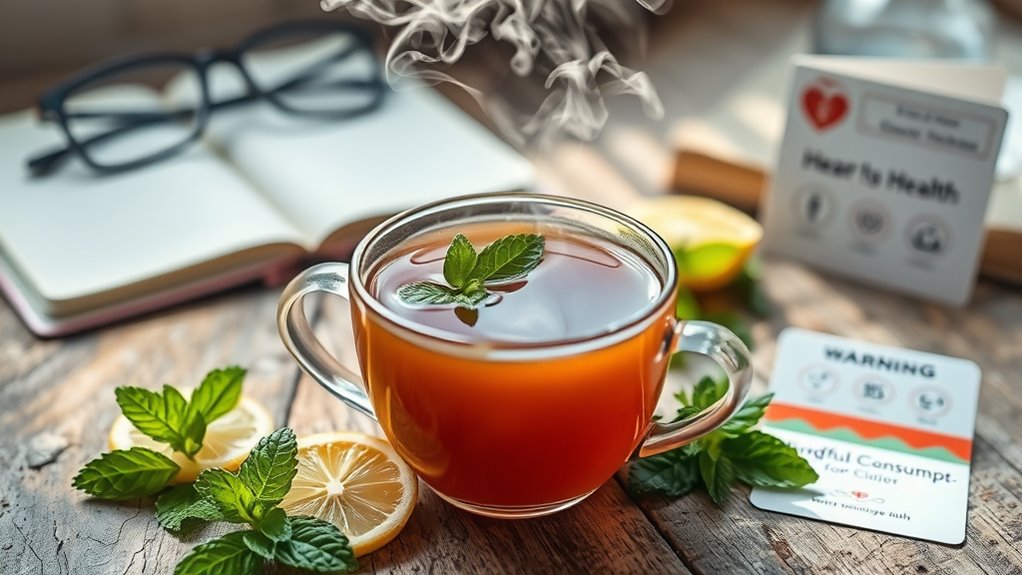
Tea is often celebrated for its potential heart health benefits, but it’s important to understand the safety considerations before making it a regular part of your routine. While many enjoy tea for its antioxidants and soothing qualities, you should be aware of how herbal interactions and caffeine sensitivity may affect you. Not all teas are created equal, and some can interact with medications or underlying health conditions. For example, herbal teas like ginseng, chamomile, or licorice may have specific effects that could interfere with certain drugs or exacerbate health issues. If you’re taking medications for blood pressure or blood thinning, check with your healthcare provider before adding herbal teas to your daily regimen. Some herbs can amplify or diminish medication effects, posing potential risks.
Be aware of herbal tea interactions and consult your healthcare provider before adding them to your routine.
Caffeine sensitivity is another key factor to contemplate. Tea naturally contains caffeine, which acts as a stimulant. If you’re sensitive to caffeine, even small amounts can cause jitters, increased heart rate, or difficulty sleeping. These effects could counteract the heart health benefits you’re aiming for and might lead to unwanted side effects. Decaffeinated teas are an option, but be aware that some processing methods use chemicals that could also have health implications. Always read labels and choose reputable brands if you opt for decaffeinated varieties.
It’s also essential to weigh your overall health status. For example, if you have anxiety, insomnia, or heart arrhythmias, caffeine intake from tea might worsen your symptoms. In such cases, herbal or caffeine-free teas could be better choices. Additionally, some herbal teas may interact with supplements or herbs you’re already taking, so it’s wise to consult your healthcare professional before making significant changes.
Another safety tip involves moderation. Drinking excessive amounts of tea can lead to unintended side effects, including iron absorption issues, dehydration, or gastrointestinal upset. Stick to recommended servings—typically 2-3 cups daily—to enjoy the benefits without risking adverse effects. Also, be mindful of added sugars or flavorings, which can negate health benefits or contribute to other health problems.
Furthermore, studies on tea and cardiovascular health suggest that moderate consumption can be beneficial, but individual responses vary. Ultimately, while tea can be a heart-healthy beverage, it’s not a one-size-fits-all solution. Pay attention to how your body responds, especially regarding caffeine sensitivity, and be cautious about herbal interactions. Consulting your healthcare provider will help ensure that incorporating tea into your routine supports your heart health safely and effectively.
decaffeinated herbal tea for heart health
As an affiliate, we earn on qualifying purchases.
As an affiliate, we earn on qualifying purchases.
Frequently Asked Questions
Can Pregnant Women Safely Drink Tea for Heart Health?
Pregnant women should be cautious with tea for heart health, as herbal safety varies. Some teas contain ingredients that might affect pregnancy or interact with medications. Always consult your healthcare provider before drinking herbal teas during pregnancy. Pregnancy precautions are essential because not all herbs are safe, and some may pose risks to your baby. Stick to approved, pregnancy-safe options and avoid teas with unknown or potentially harmful herbs.
Are There Specific Teas More Effective for Heart Benefits?
You can find powerful heart benefits in both herbal and black teas, but herbal teas often pack a stronger antioxidant punch, potentially making them more effective. Black tea offers heart-healthy flavonoids that boost circulation, while herbal teas like hibiscus and rooibos may lower blood pressure. Your choice depends on your goals—herbal teas might deliver more antioxidants, giving your heart a superhero boost, but enjoy a variety for best results!
How Much Tea Is Safe to Consume Daily?
You should limit yourself to about 3-4 cups of tea daily, as excessive intake can lead to too much caffeine and herbal ingredients, which may cause health issues. Be mindful of caffeine content, especially in black and green teas, and watch for herbal ingredients that might interact with medications or cause sensitivities. Drinking within this range helps you enjoy heart benefits without risking side effects or overconsumption.
Can Tea Interact With Common Heart Medications?
Yes, tea can interact with common heart medications, potentially causing drug interactions. You should be cautious because certain herbal supplements and tea compounds, like caffeine, can affect how your medications work. Always check with your healthcare provider before adding tea or herbal supplements to your routine, especially if you’re on heart medications. They can advise you on safe consumption levels and help prevent any adverse interactions.
Are There Any Age Restrictions for Drinking Heart-Healthy Tea?
There are generally no strict age restrictions for drinking heart-healthy tea, but you should be cautious with pediatric consumption. Kids under age 12 should limit or avoid certain teas, like those with caffeine, to prevent sleep and behavior issues. Always consult your child’s doctor before introducing new teas, especially if they have existing health conditions. For adults, moderate tea intake is usually safe and beneficial for heart health.
organic ginseng tea for blood circulation
As an affiliate, we earn on qualifying purchases.
As an affiliate, we earn on qualifying purchases.
Conclusion
Enjoying tea can boost your heart health, but it’s important to do so safely. Always consider your personal health conditions and consult with a healthcare professional if needed. Moderation is key—overdoing it might cause more harm than good. Are you willing to sip wisely, knowing that small choices can lead to big health benefits? Remember, a mindful approach to tea can support your heart without risks, helping you stay vibrant and healthy every day.
reputable herbal tea brands for health
As an affiliate, we earn on qualifying purchases.
As an affiliate, we earn on qualifying purchases.
low caffeine green tea for heart support
As an affiliate, we earn on qualifying purchases.
As an affiliate, we earn on qualifying purchases.