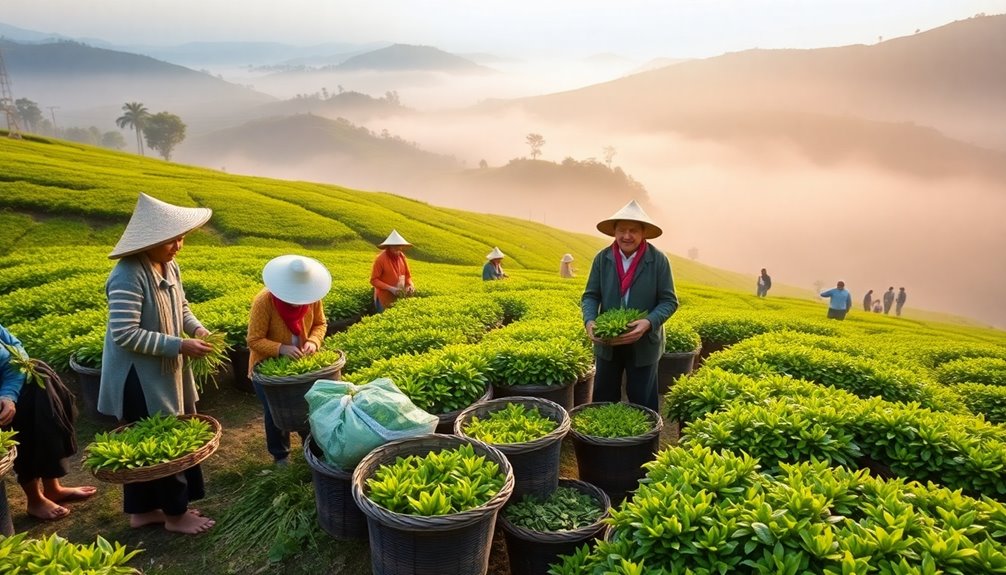

Ethical certifications like Fair Trade and Organic help guarantee you pay fair prices to tea farmers by supporting sustainable farming, fair wages, and community projects. These labels often mean higher costs for farmers initially, but they can earn more per kilogram over time due to premium payments and healthier practices. If you want to learn how these certifications promote fairness and environmental health while influencing prices, keep exploring further.
Key Takeaways
- Ethical certifications often lead to higher retail prices, enabling farmers to receive fairer wages and better income.
- Certification costs and compliance requirements can initially raise production expenses for farmers.
- Premium payments from certified tea sales fund community projects and improve farmers’ living standards.
- Certified practices promote sustainable farming, which can increase long-term productivity and profitability for farmers.
- Consumers’ willingness to pay more for certified tea supports fair pricing and encourages ethical farming practices.
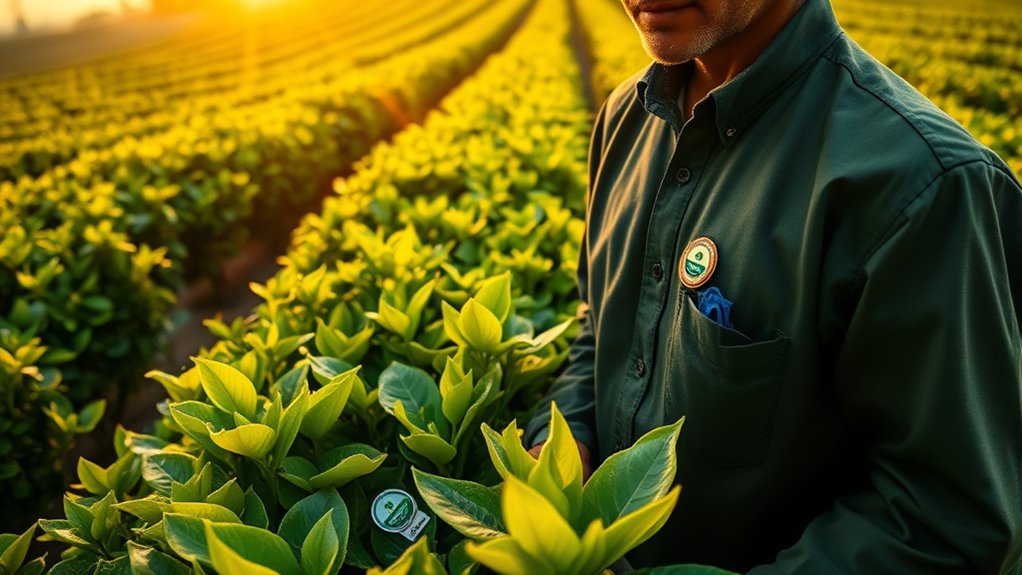
Have you ever wondered how ethical certifications influence the price of your favorite tea? When you sip that comforting cup, it’s easy to overlook the journey it took to reach your hands. But behind the scenes, certifications like Fair Trade and Organic Certification play a significant role in shaping the economic landscape for tea farmers. These labels aren’t just about quality—they’re about fairness, sustainability, and ensuring farmers receive a fair share for their labor. By understanding how these certifications impact prices, you gain insight into the complex relationship between ethics and economics in the tea industry.
Fair Trade certification is designed to promote equitable trading conditions. When a tea farm earns this label, it means producers are paid fair prices that help cover the costs of sustainable farming and support community development. The premium prices paid for Fair Trade tea aren’t just a marketing gimmick—they’re intended to provide farmers with a steadier income, reduce exploitation, and fund social programs. Because Fair Trade standards often require stricter labor practices and community investment, the costs for certification and compliance are higher. These added costs initially push up the price of the tea, but they also translate into better wages and improved living conditions for farmers. Over time, this creates a more stable and sustainable income for those cultivating your tea leaves.
Fair Trade promotes fair prices, supports community development, and ensures better wages for tea farmers.
Organic Certification also influences tea prices significantly. Organic tea involves strict standards that prohibit synthetic pesticides, herbicides, and fertilizers. Achieving organic status demands careful monitoring, certification fees, and often more labor-intensive farming practices. These costs are reflected in the retail price, but they also ensure that farmers aren’t relying on expensive chemical inputs, which can be detrimental to the environment and their health. Organic certification tends to command higher prices in the market because consumers are willing to pay a premium for products they perceive as healthier, more environmentally friendly, or more ethically produced. For farmers, this means they can often earn more per kilogram of tea, provided they meet the rigorous standards required for organic labels.
Additionally, these certifications encourage the adoption of sustainable farming practices, which help preserve natural resources and promote long-term productivity. While these certifications can raise the initial price of tea, they also foster a more sustainable and equitable system for farmers. They incentivize better farming practices, improve livelihoods, and promote environmental health—all of which benefit not just the farmers but also the consumers who value ethical sourcing. So, next time you buy a bag of organic or Fair Trade tea, remember that part of what you’re paying goes directly toward supporting fair wages, sustainable farming, and a healthier planet. These certifications help balance the scales of fairness and profit, ensuring that the people behind your favorite brew are compensated justly for their hard work.
Frequently Asked Questions
Do Ethical Certifications Guarantee Higher Income for Tea Farmers?
Ethical certifications like Fair Trade don’t guarantee higher income for tea farmers. While certification can help access better markets, it also involves Certification Costs that farmers must cover. You might see improved prices, but expenses could offset those gains. Ultimately, your income depends on factors like market demand, certification quality, and how well farmers manage costs. Ethical certification offers potential, but it’s not a guaranteed path to higher earnings.
How Do Certifications Affect the Quality of Tea Produced?
Did you know organic tea often has a richer flavor profile? Certifications can substantially improve tea quality by encouraging farmers to adopt sustainable practices, which boost organic yield and enhance flavor. When you buy certified tea, you’re more likely to enjoy a higher-quality product with better aroma and taste. These certifications motivate farmers to follow strict standards, ultimately resulting in a superior tea experience for you.
Are Small-Scale Farmers Able to Obtain Ethical Certifications Easily?
You might wonder if small-scale farmers can easily get ethical certifications. Certification costs can be high, making it tough for them to afford the process. Farmer accessibility varies; some programs offer support or simplified procedures, but many smallholders face challenges. Overall, while obtaining certifications is possible, it often requires significant effort and resources, which can limit access for smaller farmers trying to improve their practices sustainably.
What Is the Global Market Demand for Ethically Certified Tea?
You’ll find that global demand for ethically certified tea is rising rapidly, with reports indicating over 50% growth in recent years. Consumers increasingly value sustainable farming practices and are willing to pay premiums for ethically sourced products. However, certification costs can be significant, posing challenges for small-scale farmers. This growing demand encourages farmers to adopt sustainable methods, but balancing certification expenses with market benefits remains a key concern.
How Do Certifications Influence Consumer Purchasing Decisions?
You notice that certifications boost consumer trust, making you more confident in buying ethically certified tea. These labels often influence your purchasing decisions, as they signify quality and social responsibility. When you see trusted certifications, you’re more likely to develop brand loyalty because they align with your values. This increased trust encourages you to choose products with ethical certification, knowing it supports fair practices and sustainable farming.
Conclusion
Ethical certifications can boost your tea’s value, much like a lighthouse guides ships safely to shore. They build trust with consumers, just as a firm handshake shows honesty. While certifications may increase costs upfront, they often lead to better prices and fairer treatment for farmers like you. Embracing these standards is like planting seeds for a sustainable future—rewarding in both ethical satisfaction and economic gain, helping you thrive in a competitive market.