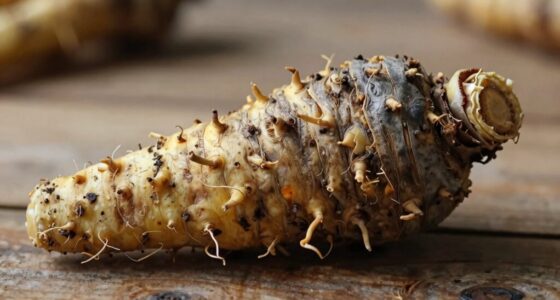
To cultivate chicory root sustainably and ethically, focus on building healthy soil with compost, crop rotation, and organic amendments. Use eco-friendly pest management like beneficial insects and resistant varieties, and maintain biodiversity. Implement water-saving methods such as drip irrigation and rainwater harvesting. Avoid synthetic chemicals to protect water and soil quality, fostering resilient crops. Continuing this approach guarantees eco-conscious, healthy chicory sourcing that benefits both the environment and your community.

Get coffee and tea gear delivered free with Prime
- Fast, free delivery on millions of items
- Prime Video, Amazon Music and more included
- Member-only deals all year
Key Takeaways
- Adopt organic farming practices that enhance soil health, reduce chemical use, and promote biodiversity for sustainable chicory cultivation.
- Implement integrated pest management with natural predators and resistant varieties to minimize environmental impact.
- Utilize water-saving techniques like drip irrigation and rainwater harvesting to ensure responsible water use.
- Maintain ecosystem balance by planting cover crops, organic mulches, and supporting beneficial insects for natural pest control.
- Ensure ethical sourcing by adhering to eco-friendly practices, supporting local communities, and promoting transparent supply chains.

Sustainable cultivation of chicory root is essential for maintaining healthy soils and reducing environmental impact. When you choose to grow chicory organically, you’re not only supporting healthier ecosystems but also minimizing reliance on synthetic chemicals that can harm soil quality and surrounding wildlife. Organic farming practices focus on building soil fertility through composting, crop rotation, and natural amendments, which foster a robust root system for your chicory plants. This approach helps prevent soil degradation, ensures better water retention, and reduces erosion, making your cultivation more sustainable over time. Additionally, promoting soil biodiversity**** enhances nutrient cycling and naturally suppresses pests, contributing to a healthier growing environment.
Pest management plays a crucial role in maintaining the integrity of your chicory crop without resorting to harmful pesticides. Instead of chemical solutions, you can implement integrated pest management (IPM) strategies that are both effective and environmentally friendly. These strategies include introducing beneficial insects that prey on pests, using physical barriers like row covers, and selecting pest-resistant chicory varieties. Regular monitoring allows you to catch infestations early, reducing the need for interventions and keeping pest populations under control naturally. By adopting such measures, you not only protect your crop but also prevent contamination of soil and water sources, supporting a more sustainable farming system.
When practicing organic farming and pest management, it’s important to consider the broader ecosystem. Maintaining biodiversity in your fields encourages natural pest control and improves soil health. Planting cover crops alongside chicory can suppress weeds, enhance soil nutrients, and attract beneficial insects that help keep pest populations in check. Additionally, composting plant residues and using organic mulches can improve soil structure and provide a steady supply of nutrients, reducing the need for external inputs. These practices create a resilient farming environment where chicory roots thrive without compromising ecological balance.
Sustainable chicory cultivation also involves mindful water use. Implementing drip irrigation or rainwater harvesting helps conserve water and prevents runoff that could carry pollutants into nearby waterways. By integrating organic methods with careful pest management, you’re building a system that sustains productivity while respecting the environment. This approach not only benefits the health of your soil and crop but also aligns with ethical sourcing principles that prioritize environmental stewardship and long-term viability. In doing so, you contribute to a more sustainable food system, ensuring chicory remains a healthy, eco-friendly crop for generations to come.
As an affiliate, we earn on qualifying purchases.
Frequently Asked Questions
How Does Chicory Cultivation Impact Local Biodiversity?
Chicory cultivation can impact local biodiversity by potentially disrupting habitat preservation and biodiversity conservation if not managed carefully. When you adopt sustainable practices, you help protect native species and maintain natural ecosystems. Avoiding monocultures and promoting diverse plantings supports habitat preservation. This way, you guarantee that local wildlife thrives and biodiversity remains strong, balancing chicory farming with the health of surrounding ecosystems and safeguarding natural habitats for future generations.
What Certifications Ensure Ethical Sourcing of Chicory Root?
Imagine a lush garden where every plant’s journey is guided by a gentle hand. You can trust Fair Trade and Organic certification to guarantee chicory roots are ethically sourced. These seals act like trusted guardians, promising fair wages, environmentally friendly practices, and respect for local communities. By choosing certified chicory, you support a harvest that nurtures both the land and the people who tend it.
Are There Specific Regions Known for Sustainable Chicory Farming?
You’ll find that regions like parts of Europe, especially Belgium and France, are known for sustainable chicory farming. These areas often use eco-friendly methods, such as crop rotation and organic practices, to maintain soil health and reduce environmental impact. By supporting farmers in these regions, you help promote responsible regional farming, ensuring chicory is cultivated ethically and sustainably. Look for certifications or local labels that highlight these eco-conscious practices to make informed choices.
How Do Farming Practices Influence Chicory Root Nutritional Quality?
Farming practices directly impact the nutritional quality of chicory root. By maintaining healthy soil through practices like crop rotation, you promote better nutrient absorption, resulting in richer roots. When you avoid over-fertilizing and prioritize soil health, the chicory develops higher levels of beneficial compounds. This sustainable approach not only enhances nutritional value but also supports the long-term health of your farm ecosystem, ensuring consistently quality roots.
What Are the Challenges in Maintaining Sustainable Chicory Supply Chains?
Supply chain struggles stem from sourcing chicory sustainably and ethically. You face challenges in ensuring supply chain transparency, which builds trust and verifies ethical practices. Fair trade practices are essential but tough to implement consistently across regions. You must navigate complex logistics, fluctuating markets, and environmental impacts, all while maintaining quality. Overcoming these obstacles requires commitment, collaboration, and clear communication to sustain a responsible, reliable chicory supply chain.
Conclusion
By choosing sustainable cultivation and ethical sourcing of chicory root, you become part of a thriving garden of positive change. When you support eco-friendly practices, you help the earth breathe easier and guarantee future generations can enjoy its bounty. Think of your choices as seeds that grow into a more responsible and nourishing world. Together, we can cultivate a brighter future—one root at a time—nurturing both the planet and our health along the way.
Fall Picks
fall essentials
As an affiliate, we earn on qualifying purchases.