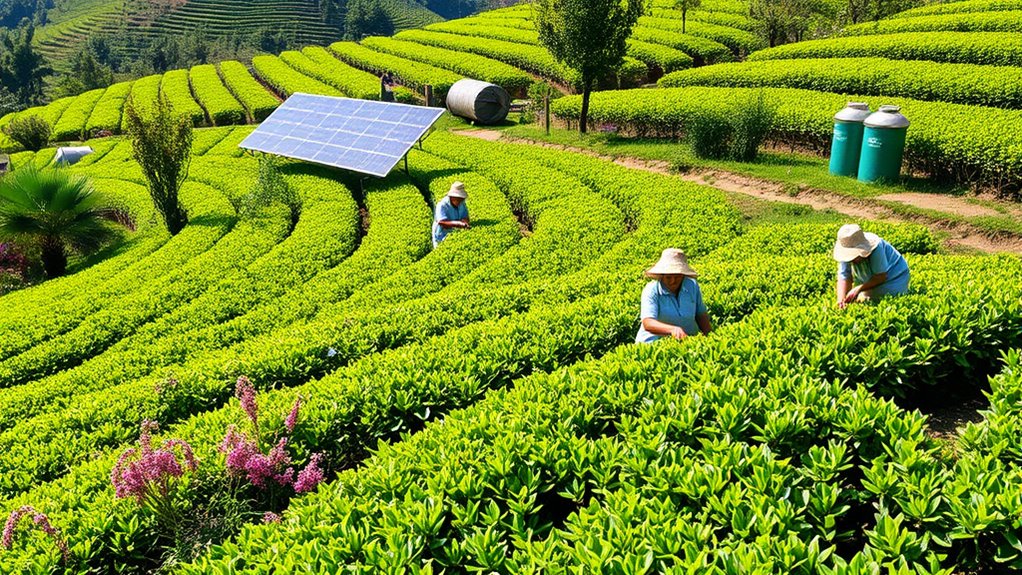

Choosing sustainably cultivated and ethically sourced chai guarantees you enjoy rich flavor while supporting environmentally friendly farming practices and fair treatment of farmers. Organic methods, water conservation, and sustainable techniques protect ecosystems and promote healthier soil. Fair trade certifications guarantee fair wages and safe conditions for growers, leading to better quality leaves. By selecting responsible chai, you help create a more sustainable industry that benefits both the planet and its people—discover more about how your choices make a difference.

Get coffee and tea gear delivered free — and shop member deals
- Fast, free delivery on millions of items
- Access to Prime Big Deal Days deals on October 6–7
- Prime Video, Amazon Music and more included
Key Takeaways
- Sustainable cultivation of chai tea involves organic farming and water conservation to protect soil health and reduce environmental harm.
- Ethical sourcing ensures fair wages and safe working conditions for farmers, promoting social justice and community development.
- Supporting fair trade and sustainable practices encourages higher-quality chai with richer flavors and authentic taste profiles.
- Environmentally responsible farming minimizes chemical use, deforestation, and biodiversity loss, benefiting ecosystems and future generations.
- Consumer choices in ethically sourced chai drive industry change toward more sustainable, equitable, and eco-friendly production methods.

Chai tea has gained popularity worldwide, but its journey from farm to cup often involves complex issues around sustainability and ethics. As a conscious consumer, you might wonder how the chai you enjoy impacts the environment and whether the farmers who grow it are treated fairly. Understanding the environmental impact of chai cultivation and supporting fair trade practices can help you make more mindful choices, ensuring that your favorite beverage contributes to positive change.
The environmental impact of chai tea cultivation largely depends on farming practices. Conventional methods often rely heavily on chemical fertilizers, pesticides, and water-intensive processes, which can degrade soil health, pollute local water sources, and harm biodiversity. These practices can lead to deforestation, habitat destruction, and increased carbon emissions, all of which contribute to climate change. By choosing chai tea produced through sustainable methods, you support farms that prioritize organic farming, reduce chemical usage, and implement water conservation techniques. Sustainable cultivation methods not only protect the environment but also promote healthier soil and ecosystems, ensuring that future generations can enjoy their own cups of chai. Additionally, adopting high-efficiency farming techniques can significantly lessen the environmental footprint of chai production.
Fair trade practices are equally critical in the journey of chai from farm to cup. When you buy fair trade certified chai, you’re supporting farmers who receive fair wages, work under safe conditions, and participate in community development programs. Fair trade certification also encourages ethical labor practices, ensuring that workers aren’t exploited or subjected to unfair treatment. These practices empower farmers to invest in better agricultural techniques, diversify crops, and improve their communities’ overall well-being. Supporting fair trade chai also helps create a more equitable global supply chain, reducing the power imbalance between small farmers and large corporations. By choosing fair trade, you’re advocating for social justice and ethical treatment, making your love for chai an act of positive change.
In addition to environmental and ethical benefits, supporting sustainable and fair trade chai can lead to better quality products. Farmers following sustainable practices tend to produce higher-quality leaves because they focus on long-term soil health rather than short-term yields. This results in richer flavors and more authentic taste profiles, enhancing your overall chai experience. Moreover, many sustainable farms engage in transparent sourcing, so you can often trace your tea back to its origins, giving you confidence in your purchase.
Ultimately, your choices as a consumer matter. By opting for chai tea that emphasizes environmental impact reduction and fair trade practices, you help foster a more sustainable and equitable industry. Your support encourages farmers and producers to adopt responsible cultivation methods, ensuring that the chai you enjoy today doesn’t come at the expense of the planet or the people who grow it.
organic ethically sourced chai tea
As an affiliate, we earn on qualifying purchases.
As an affiliate, we earn on qualifying purchases.
Frequently Asked Questions
How Do Certification Standards Ensure Ethical Sourcing of Chai Ingredients?
Certification standards, like Fair Trade, guarantee ethical sourcing of chai ingredients by setting strict guidelines. You can trust that these standards require fair wages, safe working conditions, and environmentally friendly practices. When a product bears a certification, it confirms that farmers and workers are treated ethically and sustainably. This accountability helps you support ethical sourcing, knowing your chai is made with ingredients that meet these high standards.
What Are the Environmental Impacts of Traditional Chai Cultivation Methods?
You should know that traditional chai cultivation methods can harm the environment by causing soil degradation, which reduces land fertility and increases erosion. Additionally, these practices often lead to water pollution from the use of pesticides and fertilizers that contaminate local water sources. This not only affects plant health but also impacts local communities and wildlife, making sustainable practices essential for minimizing these environmental impacts.
How Can Consumers Verify the Sustainability Claims of Chai Tea Brands?
You can verify a chai tea brand’s sustainability claims by checking for supply chain transparency and organic certifications. Don’t settle for vague promises—look for detailed info on sourcing and production. Brands that openly share their practices and hold recognized certifications demonstrate genuine commitment. Be cautious of greenwashing; ask questions and do your research. Your choices influence farmers, ecosystems, and the future of sustainable tea.
Are There Specific Regions Known for Sustainable Chai Tea Farming?
You’ll find that certain regions, like Assam in India and Sri Lanka, are known for sustainable chai tea farming. These areas employ responsible regional practices and innovative farming techniques that promote environmental health and fair labor. When choosing chai tea, look for certifications or labels indicating regional sustainability efforts. Supporting these regions helps guarantee your tea is ethically sourced and environmentally friendly, aligning with your values for responsible consumption.
What Role Do Local Communities Play in Ethical Chai Tea Production?
Like a essential app in your smartphone, local communities play a crucial role in ethical chai tea production. They drive community empowerment and cultural preservation, ensuring farming practices respect traditions and the environment. By actively participating, they safeguard their heritage and improve livelihoods. Your support encourages them to maintain sustainable methods, fostering a deeper connection to the tea’s story and ensuring future generations can enjoy authentic, ethically sourced chai tea.
Conclusion
By choosing chai tea that’s sustainably cultivated and ethically sourced, you’re making a positive impact on farmers, the environment, and your own well-being. Every sip supports fair trade practices and eco-friendly farming methods. Isn’t it worth savoring a cup that not only warms your soul but also promotes a healthier planet? By being mindful of your choices, you help foster a more just and sustainable world—one cup of chai at a time.
Fall Picks
fall essentials
As an affiliate, we earn on qualifying purchases.