🔍 Read the full analysis: Caffè Al Bar: The Unwritten Rules Of Ordering Coffee In Italy on Mad Tasting

Get coffee and tea gear delivered free with Prime
- Fast, free delivery on millions of items
- Prime Video, Amazon Music and more included
- Member-only deals all year
TL;DR
In Italy, ordering coffee involves specific unwritten rules, such as using a short script, understanding the distinction between counter and table prices, and knowing when and what to order. This guide explains the customs and regional differences, helping visitors navigate Italian coffee culture smoothly.
In Italy, the act of ordering coffee at a bar follows a set of unwritten rules that are deeply ingrained in local culture. Visitors who follow these customs will find it easier to navigate the country’s coffee scene, avoid misunderstandings, and enjoy an authentic experience. For more detailed insights, see Caffè al Bar: The Unwritten Rules of Ordering Coffee in Italy. These practices, which include simple language, specific timing, and payment methods, matter because they reflect Italian social etiquette and help maintain the efficiency of daily routines.
Ordering coffee in Italy typically involves a brief, polite greeting followed by a concise phrase such as “Buongiorno, un caffè, per favore”. Understanding these customs can be helpful; see the original analysis for more context. This ritual emphasizes respect and social courtesy, and skipping it can be seen as rude. The most common coffee ordered is “un caffè”, which refers to an espresso. The choice of drink—such as macchiato or cappuccino—depends on the time of day and personal preference, but the standard espresso remains the default. Payment methods vary: some bars require paying first at a cashier, while others allow paying after drinking, so observing locals or asking “Dove si paga?” is advisable.
Pricing differs significantly between ordering at the counter and at a table. Regional differences and etiquette are explained in detail in this comprehensive guide. Counter prices are usually lower, often around €1.10–€1.30 for a shot of espresso, while table service can cost double or more. Regional differences also influence prices, with tourist areas charging much higher for table service. The customs extend to regional variations, such as Naples or Trieste, where specific practices may differ slightly but follow the same general etiquette.
Regarding drinks, the term “latte” means milk, so ordering “un latte” will give you milk, not a coffee with milk. To avoid confusion, specify “caffè latte”. The cappuccino is traditionally a breakfast drink and is less commonly ordered after 11 a.m., but this is a social convention rather than a strict rule. Regional differences, such as in Naples or Venice, can influence how strictly these customs are followed.
Caffè al Bar: The Unwritten Rules of Ordering Coffee in Italy
In Italy, ordering coffee at the bar follows a set of unwritten rules deeply ingrained in local culture — a short script, precise timing, and payment customs that keep daily routines efficient. Follow them, and a routine coffee break becomes a genuine cultural experience.
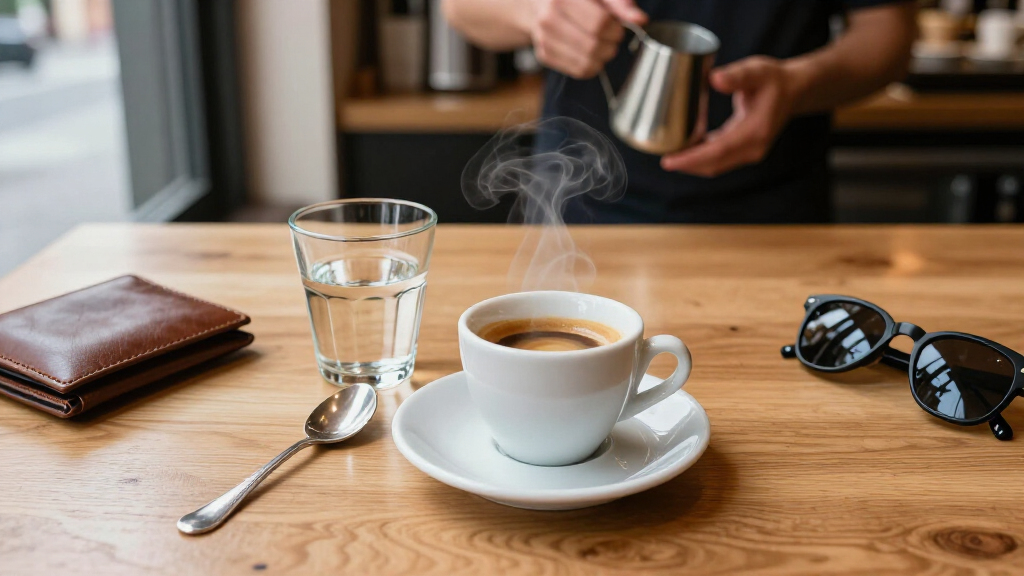
“In Italy, ordering ‘un caffè’ means an espresso, usually drunk standing at the counter in less than five minutes, with a simple script and regional variations.”
— Mad TastingThe Five-Step Bar Ritual
Ordering coffee in Italy is a brief, polite choreography. A greeting, a concise phrase, and a quick drink at the counter — skipping steps can be seen as rude, since the ritual reflects Italian social courtesy.
Greet
Start with “Buongiorno” — a short greeting sets a respectful tone before anything else.
Find the till
Some bars want payment first at a cashier. Observe locals or ask “Dove si paga?”
Order short
“Un caffè, per favore” — this is an espresso. It’s the default order nationwide.
Drink standing
Italians take espresso at the counter, often in under five minutes, then move on.
Pay & go
Settle at the bar if you haven’t already — cards are increasingly accepted, but cash rules in tiny bars.
Counter vs. Table: The Price Gap
Pricing differs significantly by where you drink. Counter prices stay low — around €1.10–€1.30 for an espresso — while table service can cost double or more, especially in tourist-heavy cities like Venice or Rome.
Order Like a Local
The vocabulary is small but precise — misuse it and you may get a glass of milk instead of a coffee. Timing matters too: the cappuccino is a breakfast drink, a social convention rather than a strict rule.
“Latte” = Milk
Ordering “un latte” gets you a glass of milk. For coffee with milk, specify “caffè latte” to avoid confusion.
“Caffè” = Espresso
Ordering “espresso” may confuse locals — the Italian term “un caffè” is what everyone says and expects.
Cappuccino After 11 AM
Traditionally a breakfast drink. Ordering one later marks you as a tourist — not forbidden, just unconventional.
What to Order, and When
The choice of drink — espresso, macchiato, or cappuccino — depends on the time of day and personal preference. Espresso remains the default at every hour.
Early morning is cappuccino territory; after 11 a.m., Italians switch to straight espresso. Regional cities like Naples and Venice may enforce these customs more or less strictly.
City-by-City Customs
Italy’s coffee culture evolved over centuries, and regional differences reflect its diverse local cultures — from Naples’ robust style to Trieste’s Central European influences.
| City / Region | Local Character | Price Pressure | Etiquette Strictness |
|---|---|---|---|
| Naples | Strong, robust espresso tradition; coffee is a civic ritual | Low | Strict |
| Trieste | Central European influence; its own coffee vocabulary | Low | Moderate |
| Rome | Fast, efficient bar culture; classic etiquette intact | Medium | Moderate |
| Venice | Tourist-heavy; prices and customs shift to accommodate visitors | High | Relaxed |
Quick Answers for the Counter
The essentials travelers ask before their first “un caffè” — from cappuccino timing to card payments.
Can I order a cappuccino after 11 a.m.?
Yes — but traditionally it’s a breakfast drink. After 11 a.m. it reads as a tourist habit rather than a local custom, though it is not strictly forbidden.
Is it acceptable to pay by card?
Increasingly yes, even for small amounts. Tiny neighborhood bars may still prefer cash. Asking “Posso pagare con la carta?” is polite and helpful.
What should I say when ordering?
The safest script is “Buongiorno, un caffè, per favore”. Keep it short and polite, and observe local customs on payment and timing.
‘Un caffè’ vs. ‘espresso’ — what’s the difference?
In Italy, “un caffè” means an espresso. Ordering “espresso” may cause confusion — locals prefer the Italian term.
Understanding Italian Coffee Etiquette Enhances Cultural Experience
Following these unwritten rules helps visitors avoid social faux pas and enjoy authentic Italian coffee culture. It also reflects respect for local customs and makes interactions smoother. For travelers, mastering the simple script and understanding the regional variations can turn a routine coffee break into a genuine cultural experience, fostering better connections and appreciation for Italy’s social habits.
As an affiliate, we earn on qualifying purchases.
Historical and Regional Variations in Italian Coffee Customs
Italy’s coffee culture has evolved over centuries, rooted in the country’s long history of social etiquette and café traditions. The espresso was invented in Italy, and the ritual of standing at the bar for a quick coffee has been a daily routine for Italians for generations. Regional differences, from Naples’ strong, robust style to Trieste’s coffee customs influenced by Central Europe, reflect Italy’s diverse local cultures. While the core etiquette remains consistent—short greetings, quick orders, and paying at the counter or bar—the specifics can vary by region and type of establishment.
In tourist-heavy cities like Venice or Rome, prices and customs may shift to accommodate visitors, but the fundamental social norms stay intact. Understanding these regional nuances helps travelers navigate local expectations and enjoy a more authentic experience.
“In Italy, ordering ‘un caffè’ means an espresso, usually drunk standing at the counter in less than five minutes, with a simple script and regional variations.”
— Mad Tasting
Regional Variations and Evolving Customs Still Unclear
While core customs are well established, regional differences and evolving practices—such as the acceptance of card payments or the timing of cappuccino orders—are still developing. It is not yet clear how strictly these customs are followed in every area or how much they are changing with modern influences and tourism.
Monitoring Changes in Coffee Etiquette and Prices
Future developments may include further standardization of payment methods, regional adaptations, and the impact of tourism on traditional customs. Travelers and locals alike will continue to adapt, but core etiquette is likely to remain consistent. Observing local behavior and asking questions like “Dove si paga?” will remain useful for navigating Italy’s coffee culture.
Key Questions
Can I order a cappuccino after 11 a.m. in Italy?
Yes, you can, but traditionally Italians consider cappuccino a breakfast drink. After 11 a.m., ordering one may be seen as a tourist habit rather than a local custom, though it is not strictly forbidden.
Is it acceptable to pay with a card at Italian bars?
Yes, contactless and card payments are increasingly common, even for small amounts. However, at tiny neighborhood bars, cash may still be preferred. Asking “Posso pagare con la carta?” is polite and helpful.
What should I say when ordering coffee in Italy?
The safest script is: “Buongiorno, un caffè, per favore”. Keep it short and polite, and observe local customs regarding payment and timing.
Are regional differences significant in coffee customs?
Yes, practices can vary from city to city. For example, Naples favors a stronger style, and Trieste has influences from Central Europe. Nonetheless, the basic etiquette remains similar across Italy.
What is the main difference between ordering ‘un caffè’ and ‘espresso’?
In Italy, “un caffè” specifically refers to an espresso. Ordering ‘espresso’ may cause confusion or be misunderstood, especially among locals who prefer the Italian term.
Source: Mad Tasting
Halloween Picks
halloween
As an affiliate, we earn on qualifying purchases.