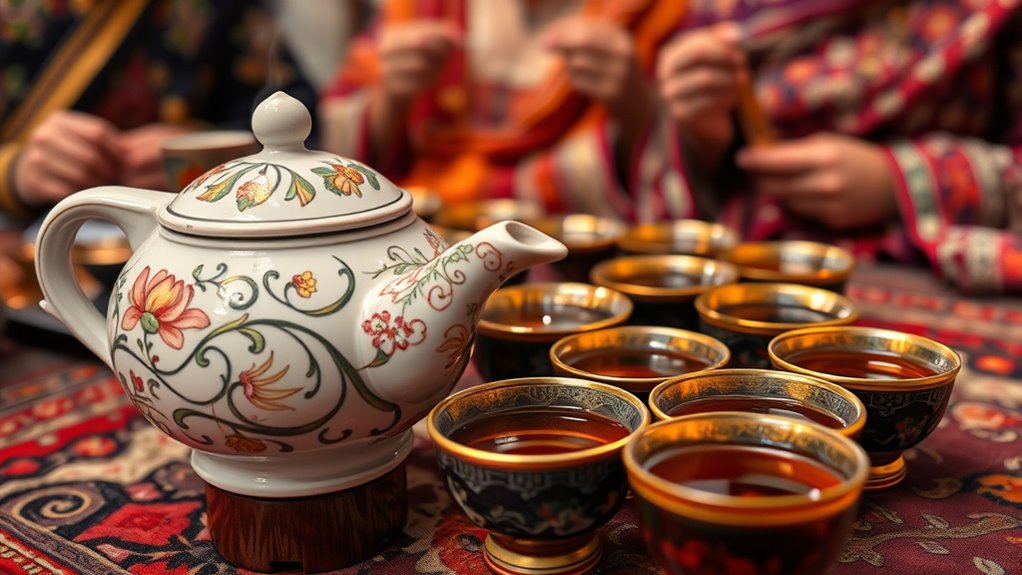
Black tea plays a essential role in local traditions, symbolizing hospitality, respect, and social bonding across cultures. As part of various rituals and ceremonies, it creates meaningful moments of connection and community. Whether during family gatherings or special celebrations, black tea helps reinforce cultural values and shared experiences. Its significance extends beyond the beverage itself, embodying a sense of belonging and continuity. To understand how these traditions shape social life, there’s much more to explore.
Key Takeaways
- Black tea is integral to traditional ceremonies like Chinese Gongfu tea and British afternoon tea, symbolizing respect and social harmony.
- Tea rituals serve as meaningful cultural practices that foster connection, hospitality, and community bonding.
- Serving and sharing black tea during gatherings enhances social bonds and signifies friendship and trust across cultures.
- In many societies, black tea is associated with celebrations, family rituals, and formal events, emphasizing togetherness and respect.
- As a cultural symbol, black tea embodies social cohesion, continuity, and the preservation of cultural heritage through shared traditions.
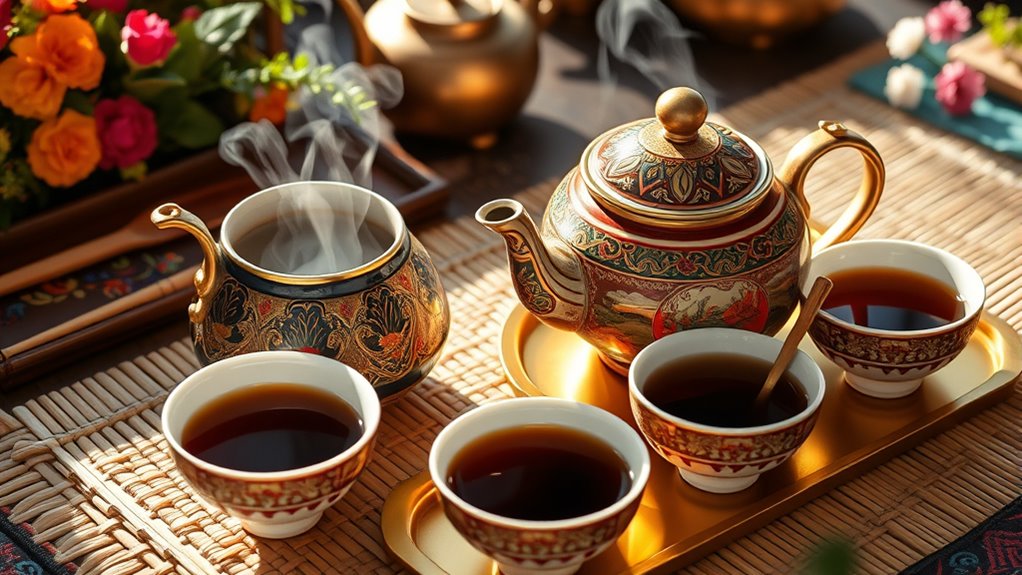
Have you ever wondered why black tea holds such a prominent place in so many cultures? It’s not just a beverage; it’s a symbol woven into the fabric of daily life and tradition. Across the world, black tea plays a crucial role in tea ceremonies, which are often more than simple routines—they’re meaningful rituals that reflect cultural values and social structures. These ceremonies serve as a way to honor guests, mark special occasions, or simply bring people together. Whether it’s the elaborate Chinese Gongfu tea ceremony or the British afternoon tea, these rituals create a sense of reverence and shared experience that transcends mere drinking. They provide an opportunity to slow down, connect, and appreciate the moment. In many cultures, participating in a tea ceremony is a sign of respect and hospitality, demonstrating that you value your relationships and the traditions that hold communities together.
Beyond the formalities of tea ceremonies, black tea also acts as a catalyst for social bonding. When you gather around a steaming cup with friends or family, it becomes a shared experience that fosters conversation and intimacy. In places like India, people often drink black tea during social visits or community gatherings, turning an everyday activity into a moment of connection. The act of pouring and serving tea encourages interaction, creating a warm atmosphere where stories are exchanged and relationships are strengthened. In Middle Eastern cultures, serving black tea to guests isn’t just about hospitality; it’s a gesture of friendship and trust. The ritual of offering and accepting tea emphasizes mutual respect and the importance of community ties. Even in modern settings, sharing a cup of black tea can break down barriers, making conversations more relaxed and genuine. Additionally, the tradition of tea storage helps preserve the flavor and quality, ensuring that each shared cup remains meaningful and enjoyable.
Black tea’s significance extends into cultural celebrations and daily routines, reinforcing its role as a social glue. It’s often associated with hospitality, respect, and togetherness, whether it’s a family gathering or a formal event. The traditions surrounding black tea serve as a reminder that some of the most meaningful moments are rooted in simple acts of sharing. When you partake in these practices, you’re not just drinking tea—you’re participating in a cultural legacy that values social bonds and communal harmony. The enduring popularity of black tea across diverse societies highlights its power to bring people closer, creating a sense of belonging and continuity. It’s this blend of ritual, respect, and social connection that truly elevates black tea beyond a beverage and into a cherished cultural symbol.
Frequently Asked Questions
How Is Black Tea Traditionally Prepared in Different Regions?
You’ll find black tea prepared differently across regions through unique tea leaf processing and brewing techniques. In India, you often use strong, brisk leaves brewed with spices like cardamom, while in China, you prefer more delicate leaves steeped at lower temperatures. In the UK, you typically brew with boiling water and add milk and sugar. Embracing these regional methods highlights how traditions shape black tea’s flavor and cultural role.
Are There Specific Rituals Associated With Black Tea Consumption?
Yes, there are specific rituals associated with black tea consumption. You often follow tea etiquette, like pouring tea for others first or holding the cup properly. In many cultures, ceremonial practices include elaborate preparation and serving, emphasizing respect and tradition. These rituals enhance the experience, making black tea more than just a drink; they symbolize hospitality, social bonds, and cultural heritage.
What Are the Health Benefits Linked to Black Tea in Local Customs?
You’ll notice that black tea is valued for its health benefits in local customs. Its antioxidant properties help protect your cells from damage, promoting overall health. Drinking black tea also offers digestive benefits, easing stomach discomfort and supporting digestion. By including black tea in your routine, you can enjoy these health perks while honoring local traditions that emphasize its importance in daily life.
How Has Black Tea Influenced Local Art and Literature?
Black tea has infused local art and literature like a rich brew, inspiring vivid tea-inspired poetry that captures its deep symbolism. When you investigate these works, you see black tea representing resilience, community, and tradition. Its warm, comforting essence often becomes a metaphor for life’s complexities, making it a recurring motif. As you explore into these creative expressions, you’ll notice how black tea’s influence percolates through cultural storytelling and artistic innovation.
What Festivals Prominently Feature Black Tea Ceremonies?
You’ll find black tea prominently featured in festivals like the Chinese Lunar New Year and the Japanese Cherry Blossom Festival. During these events, tea etiquette plays a crucial role, emphasizing respect and harmony. The black tea ceremonies symbolize renewal and unity, making them central to festival traditions. Participating in these ceremonies helps you connect with cultural values, strengthening community bonds and celebrating shared heritage through meaningful tea practices.
Conclusion
By embracing black tea’s rich traditions, you open a world where every sip is a gateway to centuries of history and cultural grandeur. It’s not just a beverage; it’s an epic saga of rituals, stories, and identity that elevates your daily routine to a majestic celebration of heritage. When you indulge in black tea, you don’t just drink—you partake in a timeless legacy that transforms ordinary moments into extraordinary cultural odysseys.