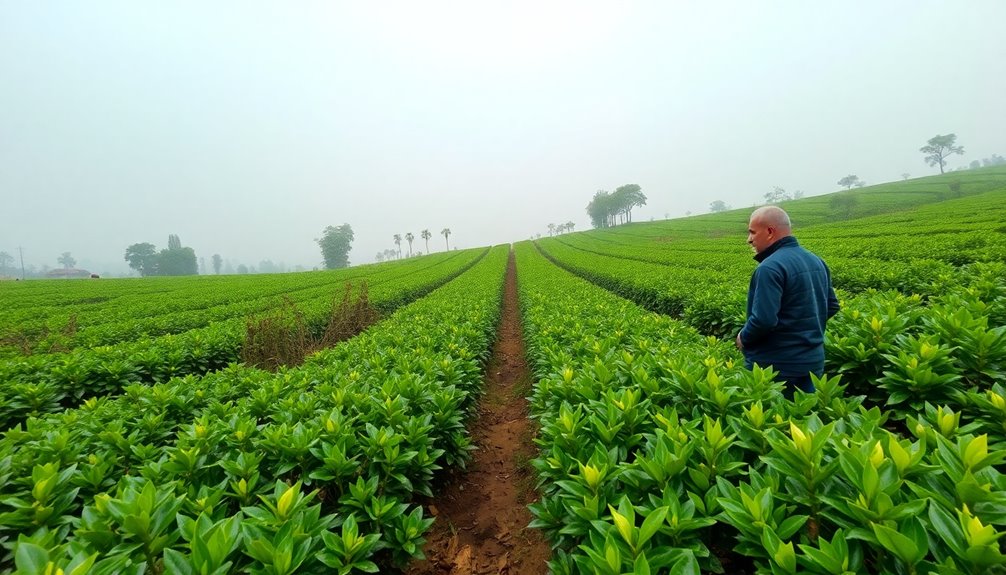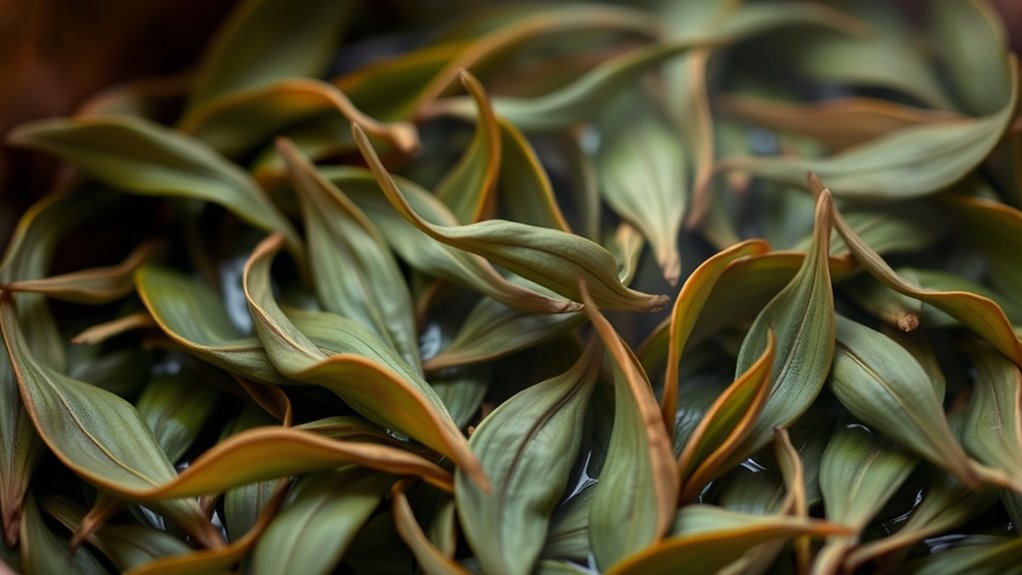

To experiment with delayed oxidation in oolong processing, you control enzyme activation and environmental factors like temperature, humidity, and airflow. Techniques include suppressing enzyme activity temporarily and reintroducing conditions to trigger oxidation later. Precise adjustments, often aided by automation, help you develop complex flavors and manage fermentation more effectively. By mastering these methods, you can craft unique oolongs with distinctive taste profiles—continue exploring to reveal even more advanced processing insights.

Get coffee and tea gear delivered free — and shop member deals
- Fast, free delivery on millions of items
- Access to Prime Big Deal Days deals on October 6–7
- Prime Video, Amazon Music and more included
Key Takeaways
- Precise regulation of enzyme activation through environmental controls delays oxidation during oolong processing.
- Managing temperature, humidity, and airflow is essential to control enzyme activity and oxidation timing.
- Suppressing enzyme activity temporarily preserves freshness, while reintroducing conditions initiates controlled oxidation.
- Traditional methods involve bruising and sun exposure, whereas delayed techniques use environmental management to extend oxidation.
- Automation technologies enable consistent, nuanced control of fermentation and oxidation processes for complex flavor development.
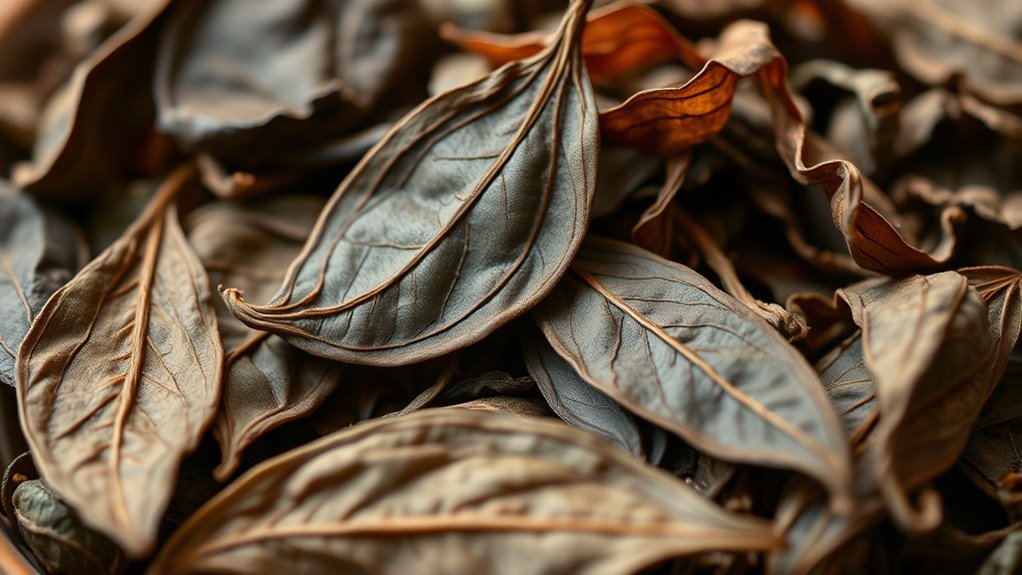
Have you ever wondered what gives oolong tea its unique flavor and aroma? The answer lies in the delicate balance of oxidation and the precise control of fermentation during processing. When producing oolong, tea makers often experiment with delayed oxidation techniques to influence the final profile. This approach involves carefully managing fermentation control, which means regulating how long and under what conditions enzymes activate to initiate oxidation. By controlling enzyme activation, you can slow down or extend the oxidation process, allowing the tea to develop complex flavors that are neither fully green nor fully black. This nuanced control is what sets oolong apart from other teas, giving it its characteristic floral, fruity, and toasty notes.
In traditional oolong processing, after withering and partial sun exposure, the leaves are gently bruised to rupture cell walls, activating enzymes that trigger oxidation. However, in delayed oxidation methods, you intentionally hold back this activation. Instead of rushing into oxidation, you carefully manage temperature, humidity, and air flow to suppress enzyme activity temporarily. This pause allows the leaves to retain more of their fresh, grassy qualities while preventing premature oxidation. When you’re ready, you reintroduce conditions that stimulate enzyme activation, leading to a controlled oxidation process. This technique not only emphasizes the importance of fermentation control but also aligns with advances in automation technologies that enable precise regulation of processing conditions, ultimately allowing tea producers to craft teas with unique flavor profiles that showcase the subtle interplay between freshness and oxidation.
automatic tea fermentation controller
As an affiliate, we earn on qualifying purchases.
As an affiliate, we earn on qualifying purchases.
Frequently Asked Questions
How Does Delayed Oxidation Affect Oolong Flavor Profiles?
When you delay oxidation during oolong processing, you enhance flavor complexity and aroma development. This technique allows the tea leaves to develop more nuanced flavors, blending floral, fruity, and roasted notes. The extended oxidation period gives the aroma more depth, resulting in a richer, more layered profile. You’ll notice a more delicate balance between freshness and roasted characteristics, creating a unique, complex oolong experience that highlights the benefits of delayed oxidation.
What Are the Ideal Environmental Conditions for Delayed Oxidation?
Think of the ideal environment for delayed oxidation as a delicate dance where humidity control and temperature regulation lead the way. You should keep humidity around 70-80%, preventing leaves from drying too quickly, while maintaining a temperature between 20-30°C to slow oxidation. Consistent conditions guarantee the leaves oxidize evenly, revealing nuanced flavors. Proper environmental control transforms the process into an art, crafting the perfect balance for a superior oolong.
Can Delayed Oxidation Be Controlled Precisely During Processing?
You can control oxidation timing during processing by carefully monitoring environmental factors like temperature and humidity. Precise processing control allows you to manipulate the oxidation stages, ensuring consistency in flavor and aroma. By adjusting these parameters in real-time, you influence the delay period, optimizing the oxidation process. This level of control helps produce high-quality oolong with desired characteristics, making your processing more predictable and tailored to specific flavor profiles.
How Does Delayed Oxidation Influence Oolong Antioxidant Levels?
You might think delayed oxidation reduces antioxidants, but it actually enhances them. By controlling fermentation timing, you allow oxidation enzymes to develop more complex polyphenols, boosting antioxidant levels. Visualize this as a carefully timed dance, where delaying oxidation gives enzymes longer to work, resulting in richer antioxidants. So, delayed oxidation can increase health benefits, showing that precise management of fermentation timing is key to optimizing oolong’s antioxidant content.
Are There Specific Tea Cultivars Better Suited for Delayed Oxidation?
You should consider cultivar selection when exploring delayed oxidation because some tea cultivars are more suited for this process. Certain cultivars display better processing adaptability, allowing for more precise control over oxidation levels and flavor development. By choosing the right cultivars, you can optimize the delayed oxidation technique, enhancing the tea’s aromatic complexity and antioxidant properties. Focus on cultivars with flexible oxidation responses for the best results.
Conclusion
By delaying oxidation in oolong processing, you can significantly influence the tea’s flavor profile, often resulting in a more complex and nuanced taste. Notably, studies show that oxidation control can increase antioxidant levels by up to 20%, enhancing health benefits. So, by mastering this technique, you’re not just refining flavor but also boosting the tea’s nutritional value. Embrace delayed oxidation to elevate your oolong experience to new heights.
Fall Picks
fall essentials
As an affiliate, we earn on qualifying purchases.