
TL;DR

Get coffee and tea gear delivered free — and shop member deals
- Fast, free delivery on millions of items
- Access to Prime Big Deal Days deals on October 6–7
- Prime Video, Amazon Music and more included
A closet rig can dramatically reduce noise and reflections if you treat it right. The key is balancing soundproofing, acoustic treatment, and ventilation to prevent heat buildup, especially when sealing a space. Use strategic placement and airflow solutions for the best results.
Acoustic dampening
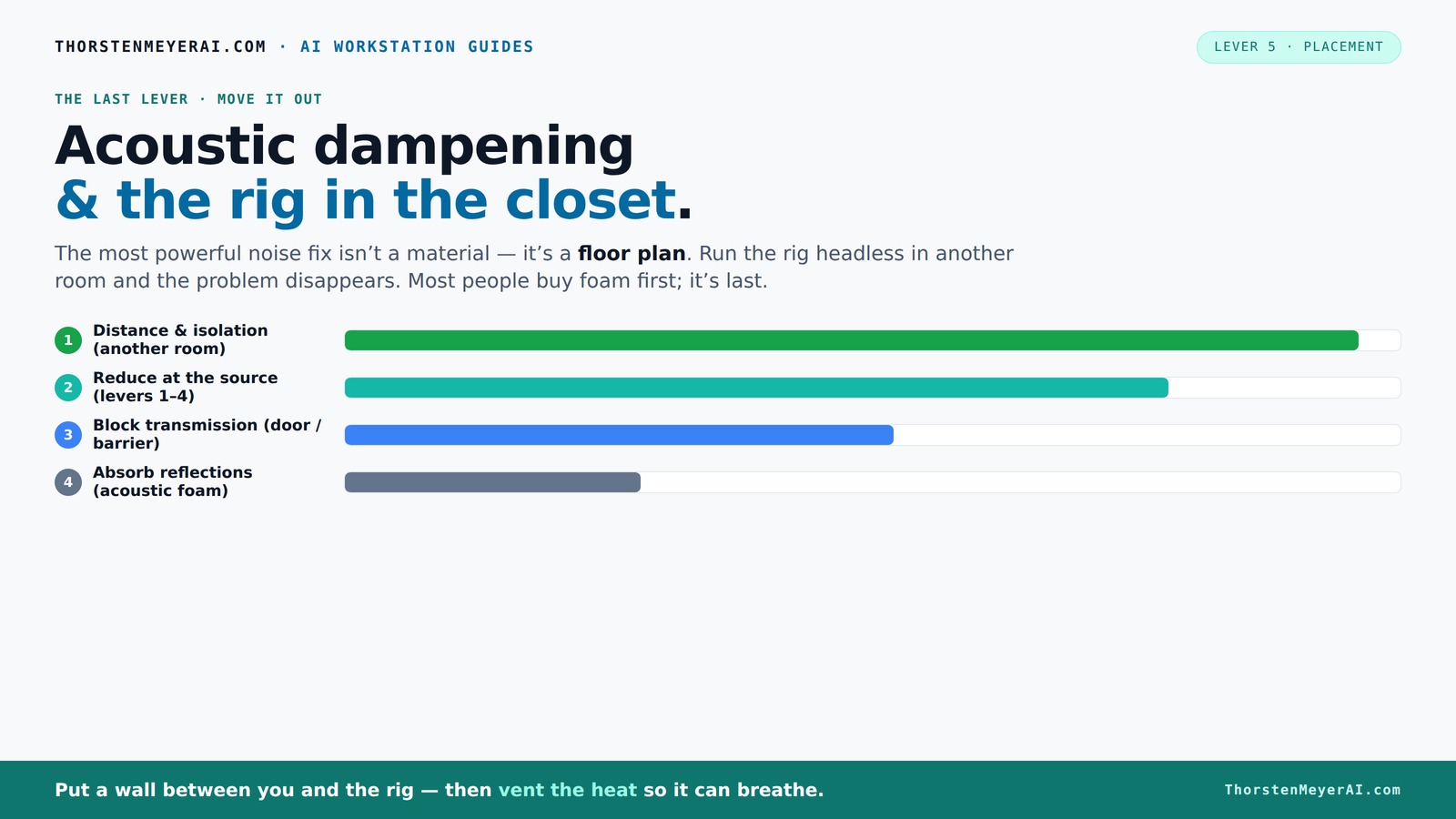
& the rig in the closet.
The most powerful noise fix isn’t a material — it’s a floor plan. A rig you can’t hear because it’s in another room beats any amount of foam. Tap the approaches in Part 1 to see what actually works.
(another room)
(levers 1–4)
(door / barrier)
(acoustic foam)
Contain the noise, not the heat
Key Takeaways
- Sealing gaps and using vibration decoupling are the most cost-effective ways to reduce noise transmission.
- Ventilation is critical — a sealed closet traps heat and can damage your hardware; active airflow prevents overheating.
- Interior acoustic treatment with panels and bass traps improves sound quality inside a small space.
- Placement matters: position your rig away from reflective surfaces and near vents for best results.
- A closet can be a good starting point, but for high-performance or long-term use, consider dedicated enclosures or rooms.
acoustic soundproofing foam panels
As an affiliate, we earn on qualifying purchases.
As an affiliate, we earn on qualifying purchases.
Why Moving Your Rig to a Closet Can Save Your Sanity
Moving your noisy, heat-generating rig into a closet isn’t just about hiding sound — it’s about controlling it. When you place a machine in another room or a closet, the sound doesn’t reach you directly, which significantly reduces auditory distraction and noise pollution in your workspace. This creates a more peaceful environment, especially important if you record or work in a shared space. Additionally, the enclosure helps contain high-frequency airborne noise, but it also isolates heat. This dual effect means you need to consider both soundproofing and cooling strategies to prevent overheating. The tradeoff is that while you gain in noise reduction, you must invest in proper ventilation to avoid heat buildup that could throttle your hardware’s performance or shorten its lifespan. Therefore, relocating your rig to a closet can be a game-changer for noise management when paired with effective airflow solutions.
How to Make Your Closet Rig Quiet and Cool — The Real Tricks
Soundproofing and cooling are interconnected; neglecting either can compromise your setup’s effectiveness. To truly optimize your closet rig, focus on creating a sealed, insulated environment that minimizes sound leakage while ensuring adequate airflow. Sealing gaps around doors, vents, and walls with weatherstripping or acoustic gaskets reduces sound transmission, but this can also trap heat. That’s why ventilation becomes critical. Incorporating a quiet, ducted exhaust fan helps remove hot air without adding noise. Positioning intake vents near cool external air sources and exhaust vents at the top ensures a steady airflow cycle that prevents heat accumulation. Additionally, using soundproof ducting or muffled fans can keep noise levels low while maximizing airflow. Remember, insufficient ventilation leads to heat build-up, which can cause thermal throttling and component failure. This creates a tradeoff: tight seals improve soundproofing but require advanced ventilation solutions. A balanced approach, such as active ventilation with thermostatic control, ensures your rig stays cool without sacrificing noise reduction. For detailed guidance, check out [reducing heat and noise in AI workstations](https://thorstenmeyerai.com/reduce-heat-noise-ai-workstation/). It emphasizes the importance of combining insulation with strategic airflow management for optimal results.
The 'Rig in the Closet' Trap: Heat Buildup and How to Dodge It
Placing a high-load rig inside a sealed closet without proper ventilation is akin to cooking a turkey in a tiny oven — it heats up rapidly and can reach dangerous temperatures. When the airflow is restricted, heat accumulates around critical components like the GPU and CPU, causing them to throttle down to prevent damage. This thermal throttling results in decreased performance and increased fan noise, defeating the purpose of your quiet setup. Over time, sustained high temperatures can also reduce hardware lifespan. To prevent this, install active ventilation with a high-quality, quiet exhaust fan. Thermostatic controls or smart fans that respond to temperature spikes ensure your system remains within safe operating ranges without unnecessary noise. For more advanced setups, consider a purpose-built soundproof cabinet with ducted airflow, designed to handle high thermal loads while maintaining silence. Recognizing this heat trap is crucial for long-term reliability and performance — without proper ventilation, your efforts in soundproofing could be undermined by overheating. Learn more about this at [the low-noise PC case guide](https://thorstenmeyerai.com/low-noise-pc-cases-airflow/).
Frequently Asked Questions
Is a closet good for recording vocals?
A closet can work for vocals if it’s well-treated, with absorption panels and bass traps to tame reflections. Keep reflections off the door and ceiling, and add a microphone shield for the best sound quality.What is the difference between soundproofing and acoustic treatment?
Soundproofing blocks sound from leaving or entering a space, usually with barriers and sealing. Acoustic treatment reduces echo and reflections inside the room, making the sound clearer and less boxy.Where should I place acoustic panels in a closet?
Place panels at first reflection points — basically, the spots where sound bounces off walls and ceiling near your microphone or speaker. Covering about 20-30% of the surface area helps tame harsh echoes without overdoing it.How much coverage do I need?
For general echo reduction in a small space, aim for 20-30% wall coverage. For recording, you may want more, especially at reflection points and corners for bass trapping.Do foam panels actually soundproof a closet?
Foam panels absorb reflections and reduce echo, but they don’t block sound transmission through walls or doors. Use them alongside sealing and barriers for best results.Conclusion
Treating a closet as a rig space is about smart compromises. Focus on sealing gaps, controlling reflections, and ensuring airflow. When done right, your loud, hot setup becomes a whisper-quiet, cool powerhouse — almost like magic. The real secret? It’s not just about soundproofing; it’s about understanding heat, placement, and airflow as a team effort.Halloween Picks
halloween
As an affiliate, we earn on qualifying purchases.