
You should explore how tea and philosophy connect because they reveal deeper truths about life, culture, and ourselves. Through rituals, they emphasize mindfulness, balance, and interconnectedness with nature. These practices transform simple acts into spiritual moments, encouraging reflection on impermanence and authenticity. By appreciating the depth of tea and philosophy, you’ll discover meaningful ways to slow down and find harmony amid chaos. Continue exploring, and you’ll uncover even more insights into this profound relationship.

Get coffee and tea gear delivered free with Prime
- Fast, free delivery on millions of items
- Prime Video, Amazon Music and more included
- Member-only deals all year
Key Takeaways
- Tea rituals embody philosophical principles like mindfulness, impermanence, and interconnectedness, offering deeper insights into life and self-awareness.
- Both tea and philosophy foster contemplative practices that encourage reflection on existence, identity, and our relationship with nature.
- Tea ceremonies transform ordinary acts into spiritual experiences, revealing profound truths about simplicity, authenticity, and mindfulness.
- Exploring tea and philosophy highlights their role in promoting ecological awareness and harmony with the environment.
- The shared exploration of tea and philosophy connects tradition with innovation, emphasizing meaningful engagement with everyday moments.

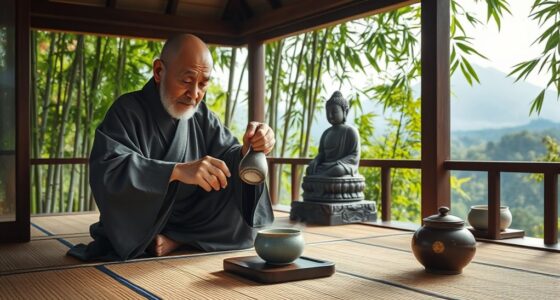
Tea rituals exemplify how simple acts can carry profound significance. They often reflect cultural values, emphasizing harmony, respect, and tranquility. By observing or practicing these rituals, you gain insight into different philosophical perspectives that stress the importance of mindfulness and interconnectedness. For instance, Zen Buddhism’s tea ceremonies embody the idea of living fully in the present moment, transforming an ordinary act into a spiritual practice. Such perspectives challenge you to reconsider your hurried daily routines and to find meaning in the mundane. The ritualistic process of preparing and drinking tea becomes a meditation on balance, impermanence, and the interconnected nature of all things.
Engaging with tea and its rituals also prompts you to reflect on concepts like simplicity and authenticity. In a world saturated with complexity and distraction, the act of brewing tea can symbolize stripping away superficial layers to access what is genuine and essential. Philosophically, this aligns with ideas from minimalism and existentialism—stripped-down acts reveal deeper truths about life and yourself. The quiet moments of waiting during a tea ritual foster a contemplative space where you can ponder questions about identity, mortality, and the meaning of life. Interestingly, the slow and deliberate movements in tea ceremonies also mirror mindful practices found in many meditation traditions, emphasizing focus and awareness. These practices are rooted in a long history of philosophical inquiry that encourages a deeper understanding of oneself and the universe. Recognizing the interconnectedness of all things within these rituals can deepen your appreciation for ecological balance and harmony with nature. This contemplative state often leads to insights that aren’t easily accessible amid the chaos of everyday life.
Ultimately, tea and philosophy are intertwined because both invite you to explore the depths of human experience. The simple act of sharing a cup of tea can become a profound philosophical dialogue—between tradition and innovation, mind and body, self and other. By paying attention to tea rituals and embracing their philosophical perspectives, you open yourself to a richer understanding of life’s mysteries. It’s a reminder that sometimes, the smallest acts can carry the most meaningful reflections.
Products Worth Considering

De'Longhi Classic Signature Espresso Machine

Cuisinart Core Custom 10-Cup Food Processor, Anchor Gray

KitchenAid Artisan Series 5-Quart Tilt-Head Stand Mixer, Juniper (KSM150PS)
As an affiliate, we earn on qualifying purchases.
Frequently Asked Questions
How Did Tea Influence Philosophical Thought Historically?
Tea influenced philosophical thought by emphasizing tea aesthetics and mindful brewing, encouraging reflection on simplicity and harmony. As you engage in mindful brewing, you embrace a meditative practice that fosters awareness and presence, inspiring philosophical ideas about balance and nature. Historically, tea’s calming ritual influenced thinkers to value contemplation and serenity, shaping perspectives on mindfulness and the pursuit of inner peace, which remain central themes in philosophical discussions today.
Are There Specific Philosophies Centered Around Tea Practices?
They say “a cup of tea is an act of mindfulness,” and indeed, some philosophies center around tea practices. You’ll find traditions emphasizing tea aesthetics and philosophical mindfulness, like Zen Buddhism, where tea rituals symbolize harmony, respect, and tranquility. These philosophies encourage you to appreciate the present moment, fostering inner calm and clarity through mindful tea preparation and consumption. Such practices turn everyday tea into a spiritual experience.
Can Tea Rituals Enhance Philosophical Insights or Meditation?
Yes, tea rituals can profoundly enhance philosophical insights and meditation. By practicing tea mindfulness, you focus on each step, cultivating presence and clarity. Ritual meditation with tea encourages you to slow down, deepen your awareness, and reflect more profoundly. These practices foster a calming environment, helping you connect with your thoughts and emotions more intentionally, ultimately enriching your understanding of yourself and broader philosophical concepts.
What Are the Cultural Differences in Tea Philosophy Worldwide?
You might think tea philosophy is universal, but cultural differences in tea etiquette and symbolism tell a different story. In Japan, tea embodies Zen mindfulness and ritual precision, while in Britain, it’s about politeness and social bonding. China’s tea culture emphasizes harmony and tradition. These diverse philosophies reveal that tea isn’t just a beverage—it’s a mirror of each society’s values, irony intact, showing how much we project meaning onto a simple cup.
How Does Tea Symbolism Relate to Philosophical Concepts?
Tea symbolism in literature often represents tranquility, reflection, or life’s transient nature, connecting deeply with philosophical ideas. When you explore tea and existentialism, you see how tea embodies the search for meaning amid life’s fleeting moments. Through tea, writers and thinkers express themes of acceptance, authenticity, and the passage of time, illustrating how this simple beverage can mirror profound philosophical concepts and encourage introspection.
Conclusion
So, as you sip and ponder, you’ll see that tea and philosophy aren’t just about taste or theory—they’re about taking time, embracing insight, and igniting imagination. By blending brews and beliefs, you break barriers and build bridges between mind and matter. Let each leisurely latte or calming cup be a catalyst for curiosity, connection, and contemplation. Remember, the more you explore, the richer your reflection becomes—because in the union of tea and thought, true understanding unfolds.