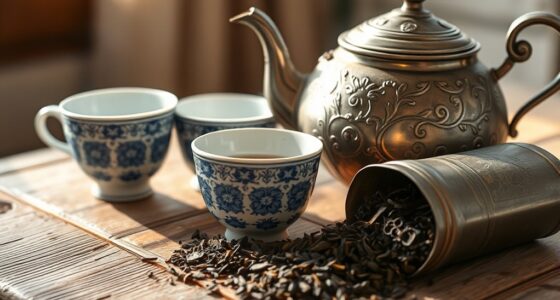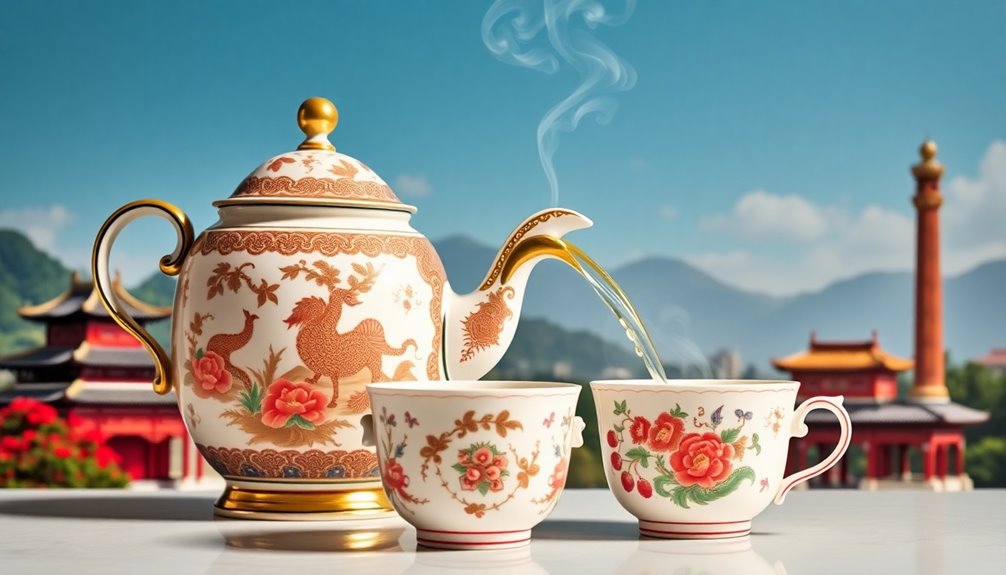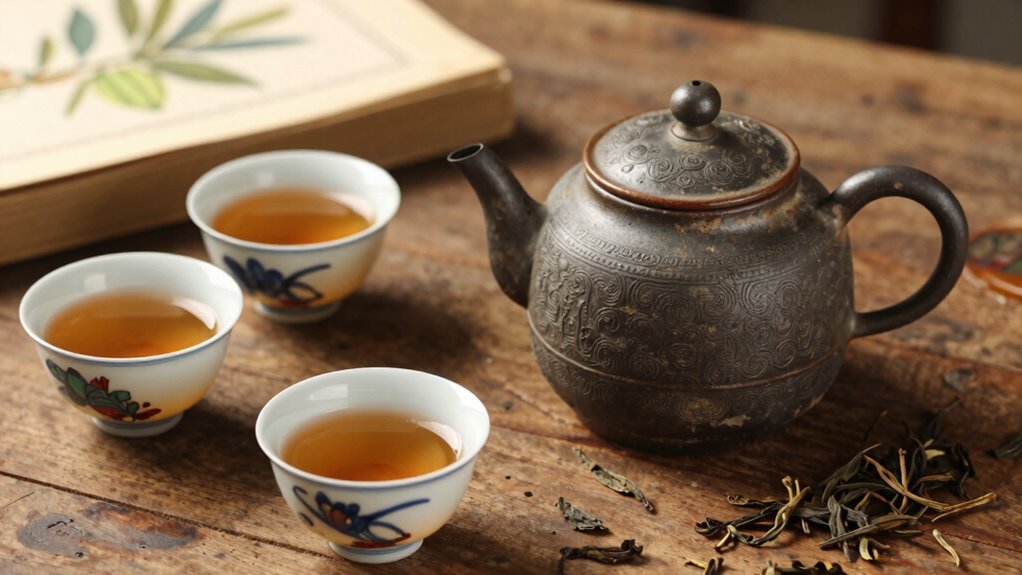

Many tea lovers overlook how deeply tea’s history shaped cultures, diplomacy, and social classes over centuries. It’s more than just a comforting drink—it’s a symbol of status, spirituality, and community. Traditional ceremonies and rituals reveal values like respect, harmony, and mindfulness. The global trade of tea helped build connections between distant societies and influenced politics. By understanding this rich past, you’ll see tea as a powerful force in history and culture that’s worth exploring further.

Get coffee and tea gear delivered free with Prime
- Fast, free delivery on millions of items
- Prime Video, Amazon Music and more included
- Member-only deals all year
Key Takeaways
- Many tea lovers overlook how tea historically served as a symbol of social hierarchy and diplomatic diplomacy.
- The cultural rituals and ceremonies surrounding tea embody centuries of tradition and spiritual significance often missed today.
- The global trade routes that spread tea also facilitated cultural exchange and shaped international relations.
- The meticulous care and local knowledge in tea cultivation preserve regional flavors, reflecting deep cultural histories.
- Appreciating tea’s history reveals its role beyond a beverage, as a connector of communities, cultures, and histories worldwide.
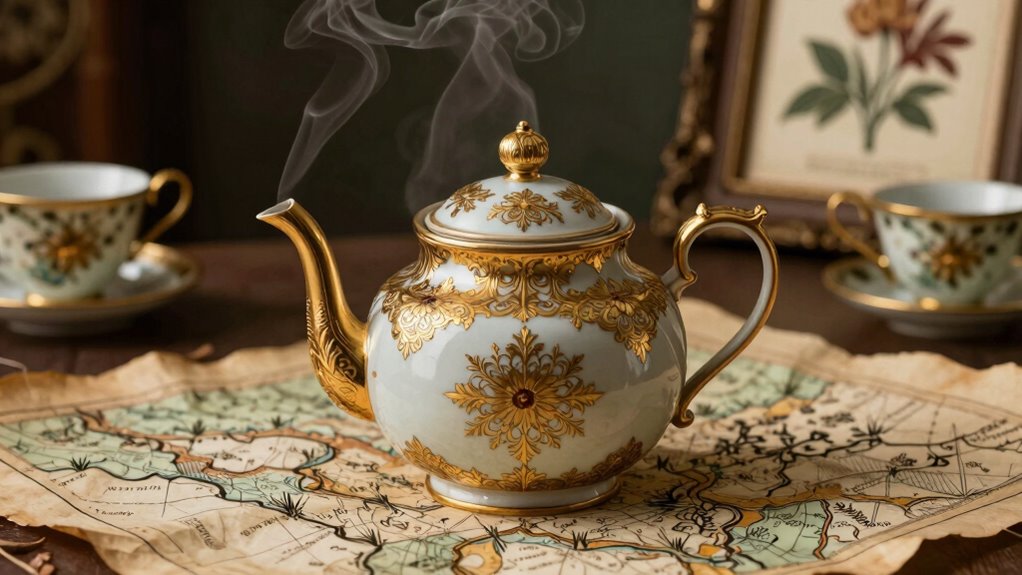
Tea has played a crucial role in shaping cultures and societies for centuries, transcending borders and bringing people together. When you sip your favorite brew, it’s easy to forget how deeply intertwined tea is with history and tradition. Most tea lovers miss how the act of tea cultivation was once a complex process involving meticulous care and local knowledge, passed down through generations. It’s more than just planting leaves; it’s about understanding the land, climate, and timing, which all influence the flavor and quality. You might think of tea as simply a drink, but for centuries, it was a symbol of status, spirituality, and community.
Tea’s rich history reveals its role in culture, spirituality, and social bonds across centuries and borders.
Cultural rituals surrounding tea are often taken for granted today, yet they carry centuries of significance. When you observe a traditional tea ceremony, you’re witnessing a ritual that embodies respect, harmony, and mindfulness. These rituals weren’t just about drinking tea—they were acts of social cohesion and spiritual reflection. Historically, each culture developed its own way of preparing and serving tea, making it an art form that reflected their values and beliefs. In Japan, for example, the tea ceremony emphasizes precision, grace, and tranquility, while in China, tea-drinking was linked to scholarly pursuits and philosophical ideas. These rituals helped foster identity and continuity within communities, creating a shared sense of history that persists even now.
What many tea lovers overlook is how these customs and practices shaped social hierarchies and diplomatic relations. Tea wasn’t just a beverage; it was a currency of diplomacy, a means of negotiation, and a way to build alliances. The exchange of tea, along with its associated rituals, helped forge connections between distant cultures and facilitated trade routes like the Silk Road. Moreover, the traditions surrounding tea often served as a form of cultural diplomacy, showcasing a society’s values and hospitality. These cultural exchanges were further supported by the development of trade routes, which played a crucial role in spreading tea and its customs globally. Additionally, understanding the cultural significance of tea reveals how it contributed to social structures and intercultural exchanges over centuries. The meticulous care involved in tea cultivation also highlights how tradition and local knowledge have preserved unique flavors and qualities across regions. The global history of tea trade further underscores how this ancient beverage became a symbol of international relations and cultural identity. An awareness of the global history of tea trade deepens our appreciation for this ancient beverage. So, when you enjoy a cup, you’re participating in a centuries-old tradition that has influenced politics, art, and social structures.
traditional Japanese tea ceremony set
As an affiliate, we earn on qualifying purchases.
As an affiliate, we earn on qualifying purchases.
Frequently Asked Questions
How Did Tea Influence Global Trade Routes Historically?
You see, tea cultivation played a vital role in shaping global trade routes. As demand for tea grew in Europe and beyond, traders expanded routes, connecting Asia, Europe, and Africa. This led to the development of maritime trade routes like the Silk Road and later the Atlantic routes. The flow of tea fueled economic growth, cultural exchanges, and even colonization, making tea a catalyst for worldwide trade and interaction.
What Role Did Tea Play in Ancient Diplomatic Relations?
You might not realize it, but tea played a key role in ancient diplomacy through “Tea diplomacy” and “Imperial brews.” Rulers used tea to build alliances, foster trust, and negotiate peace, turning cups into tools of diplomacy. These rituals created bonds beyond words, making tea more than a beverage—it was a symbol of power and diplomacy. So, next time you sip tea, remember its historic diplomatic significance.
Were There Any Significant Cultural Rituals Associated With Tea?
You might not realize how deeply tea ceremonies hold ritual significance across cultures. In Japan, the tea ceremony emphasizes harmony, respect, and tranquility, transforming tea into an art form. Similarly, Chinese Gongfu tea rituals highlight precision and mindfulness. These cultural rituals elevate tea from a simple beverage to a spiritual experience, showcasing its profound role in social bonding and tradition that many modern tea lovers overlook.
How Did Tea Impact Social Hierarchies in History?
You see, tea’s symbolism often masked its role in social stratification. While it united people in shared rituals, it also reinforced hierarchies, distinguishing classes through exclusive ceremonies and luxury tea ware. In history, tea became a marker of status, elevating the elite and deepening social divides. So, beneath its calming surface, tea subtly shaped social hierarchies, making it both a unifier and a divider in different eras.
Did Tea Have Any Medicinal or Health Significance in Ancient Times?
In ancient times, tea was valued for its medicinal and health benefits, often used in herbal remedies. You might not realize that people believed tea could improve digestion, boost energy, and even prevent illnesses. Its natural antioxidants and calming effects made it a popular health tonic across cultures. By drinking tea, you’re connecting with centuries of tradition, where it served as a natural remedy for various ailments, emphasizing its medicinal significance.
Conclusion
So, while you savor that perfect brew, it’s ironic to think you might overlook how tea’s history shaped nations, sparked revolutions, and bridged worlds. You chase the latest blends, yet miss the centuries of stories steeped in every cup. It’s funny—what you think is just a moment of calm is actually a centuries-old legacy of power, trade, and rebellion. Next time you sip, remember: you’re drinking centuries of history, often forgotten.
Halloween Picks
halloween
As an affiliate, we earn on qualifying purchases.