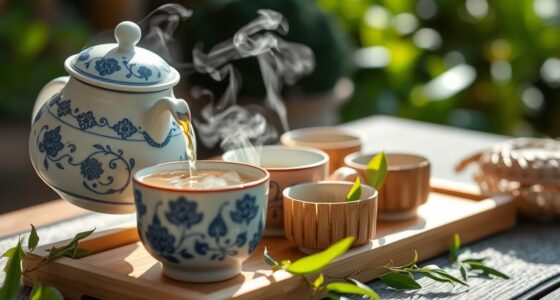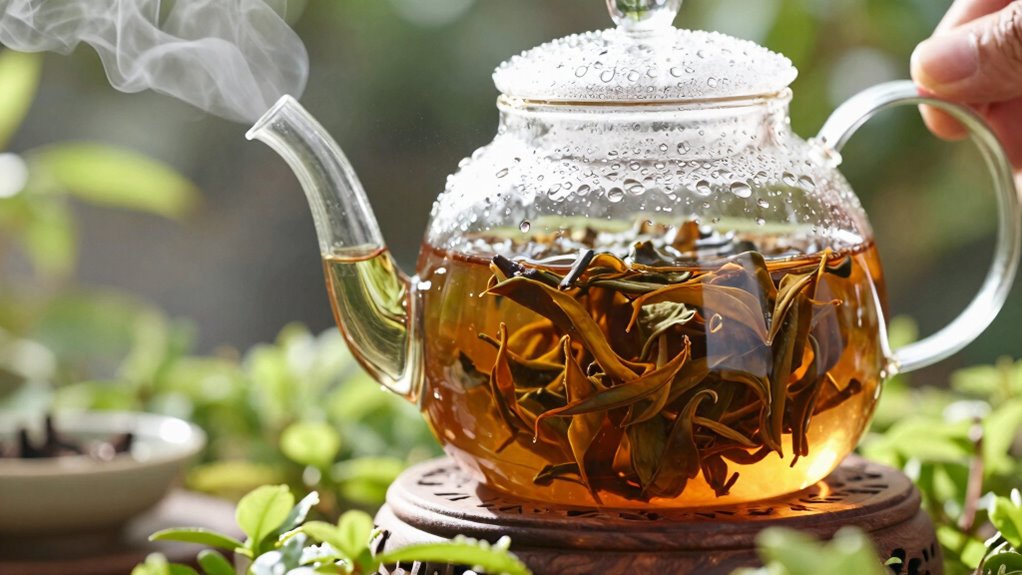

Understanding tea brewing techniques is essential because they directly shape the flavor, aroma, and quality of your cup. Different processing methods, harvest timings, and fermentation levels require specific brewing temperatures and times to bring out the best qualities. If you overlook these details, your tea might taste flat, bitter, or dull. By exploring these techniques further, you’ll reveal a richer, more satisfying tea experience and appreciate the craftsmanship behind every brew.
Key Takeaways
- Proper brewing enhances the flavors developed through careful harvesting and fermentation processes.
- Matching steeping temperature and time preserves the tea’s aroma and prevents bitterness or weak taste.
- Understanding processing techniques allows for optimal extraction of the tea’s complex chemical compounds.
- Different teas require specific brewing methods to reveal their unique flavor profiles and craftsmanship.
- Mindful brewing honors the artistry and quality controls involved from leaf to cup.
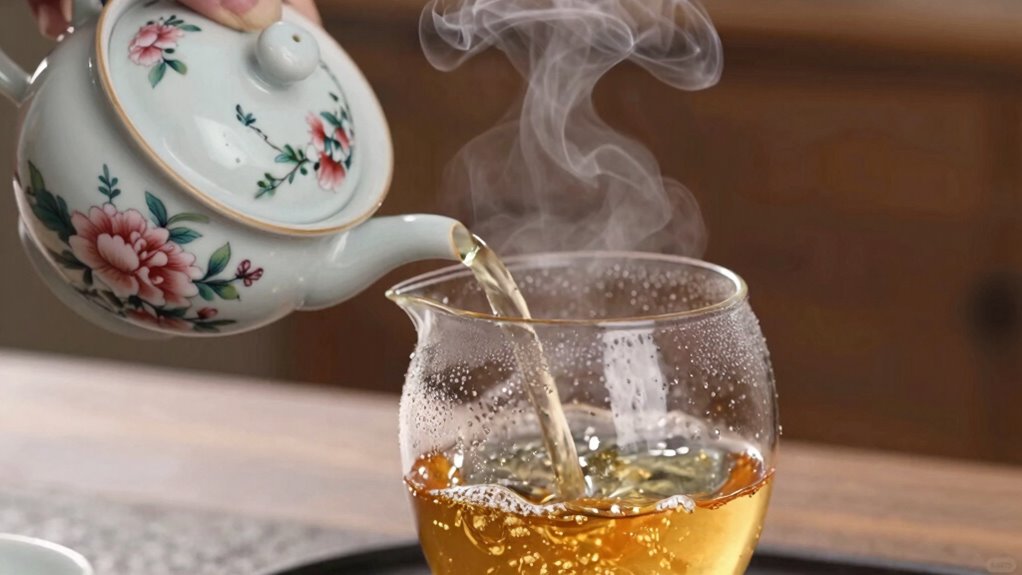
Brewing the perfect cup of tea is both an art and a science, and mastering the right techniques can considerably enhance its flavor and aroma. To truly appreciate the nuances of tea, you need to understand how each step—especially tea fermentation and tea leaf harvesting—impacts the final brew. These processes are fundamental, yet often overlooked, elements that shape the taste profile you experience in your cup. When you learn how tea leaves are harvested, you gain insight into the quality and freshness of your tea. Skilled tea leaf harvesting involves selecting the right leaves at the peak of their maturity, often through careful plucking methods. Whether it’s a single bud with two leaves or a more mature set, the timing influences the delicate balance of flavors. Freshly harvested leaves retain more essential oils and antioxidants, which contribute to a richer aroma and a more vibrant taste.
Once the leaves are picked, the journey to your cup continues with tea fermentation, a critical step especially for black and some oolong teas. During fermentation, enzymes within the leaves react with oxygen, transforming their chemical composition. This process develops complex flavors and deepens the tea’s color. If fermentation is rushed or improperly controlled, you might end up with a flat or overly astringent brew. Conversely, well-managed fermentation reveals a spectrum of flavors—notes of caramel, fruit, or floral undertones—that can’t be achieved otherwise. As a tea enthusiast, understanding this process helps you appreciate the craftsmanship behind each brew and why some teas require specific fermentation times. Understanding fermentation enhances your ability to select and brew teas that align with your taste preferences. Additionally, the harvesting methods used can influence the overall quality and flavor profile, making it essential to recognize how different techniques impact your tea.
Proper fermentation enhances complex flavors and deepens tea color, revealing caramel, fruity, or floral notes.
The careful timing of harvesting and fermentation not only influences flavor but also affects the overall quality control of the final product. Your brewing technique can either highlight or mask these intricate qualities. For example, over-extracting tea leaves can amplify bitterness, while under-extraction may leave you with a weak flavor. The temperature and steeping time should align with the type of tea you’re brewing, which is often influenced by how the leaves were processed during harvesting and fermentation. For instance, teas that undergo longer fermentation or oxidation generally need a hotter water temperature to reveal their full potential. Paying attention to these details guarantees you don’t just drink tea, but truly enjoy its full complexity.
In essence, understanding the art behind tea fermentation and tea leaf harvesting allows you to make more informed choices and craft better brews. It’s about more than just pouring hot water over leaves; it’s about respecting the journey each leaf has taken from harvest to fermentation, and finally, to your cup. When you recognize these connections, brewing becomes a mindful act—an appreciation of craftsmanship that elevates your everyday tea experience.

Tea Brewing Temperature Guide Mug – Temperature And Time Make Tea – 11 oz C
- Tea Brewing Guide: Includes brewing temps and times for six teas
- Double-Sided Design: Printed on both sides for visibility from any angle
- Durable Ceramic Material: Microwave and dishwasher safe for everyday use
As an affiliate, we earn on qualifying purchases.
As an affiliate, we earn on qualifying purchases.
Frequently Asked Questions
How Does Water Quality Affect Tea Flavor?
Water quality directly impacts your tea’s flavor. When water has the right mineral content, it enhances the tea’s natural notes, making them more vibrant. The pH balance also matters — slightly acidic water boosts brightness, while alkaline water can dull flavors. Using clean, well-balanced water guarantees your tea tastes its best, allowing the subtle nuances to shine through and creating a more enjoyable brewing experience.
What’s the Ideal Tea-To-Water Ratio?
Did you know that the ideal tea-to-water ratio for most teas is about 1 teaspoon of tea leaves per 8 ounces of water? When you focus on this ratio during tea steeping, you maximize flavor extraction without making it too bitter. Adjusting the amount of tea allows you to fine-tune strength and aroma, ensuring your brew hits just the right note every time.
How Does Altitude Influence Brewing Times?
Altitude effects your brewing duration because higher elevations cause water to boil at lower temperatures, which means your tea might need a longer steeping time to fully develop flavors. You’ll notice that at high altitudes, tea often requires more patience, as the lower boiling point slows extraction. Adjust your brewing times accordingly, experimenting until you find the perfect balance to enjoy a rich, flavorful cup despite the altitude.
Can Brewing Temperature Change the Tea’s Antioxidant Levels?
You might think brewing temperature doesn’t matter, but it actually affects antioxidant stability. Higher temperatures can break down delicate antioxidants, reducing their health benefits, while lower temps may preserve them better. Tea is temperature-sensitive, so adjusting your brewing heat can influence antioxidant levels. Experimenting helps you find the perfect balance, ensuring you enjoy both flavorful tea and maximum health benefits. Keep temperature in mind for a healthier, tastier brew!
How Do Different Tea Types Require Different Techniques?
You need different techniques because each tea type’s leaf oxidation varies, affecting flavor and strength. For delicate green teas, use cooler water and shorter steeping times, while black teas benefit from hotter water and longer brewing. Choosing the right brewing vessel enhances heat retention and flavor extraction. By tailoring your approach to each tea’s oxidation level and vessel, you’ll discover richer, more nuanced flavors every time.
Conclusion
Mastering tea brewing techniques isn’t just about flavor—it’s about connection. Imagine you’re hosting a friend, carefully brewing a delicate green tea, knowing your attention to detail elevates the experience. Like Sarah, who discovered that adjusting her steeping time transformed her daily cup into a moment of mindfulness. When you pay closer attention to your brewing process, you reveal richer flavors and create meaningful, memorable moments—making every sip truly worth savoring.