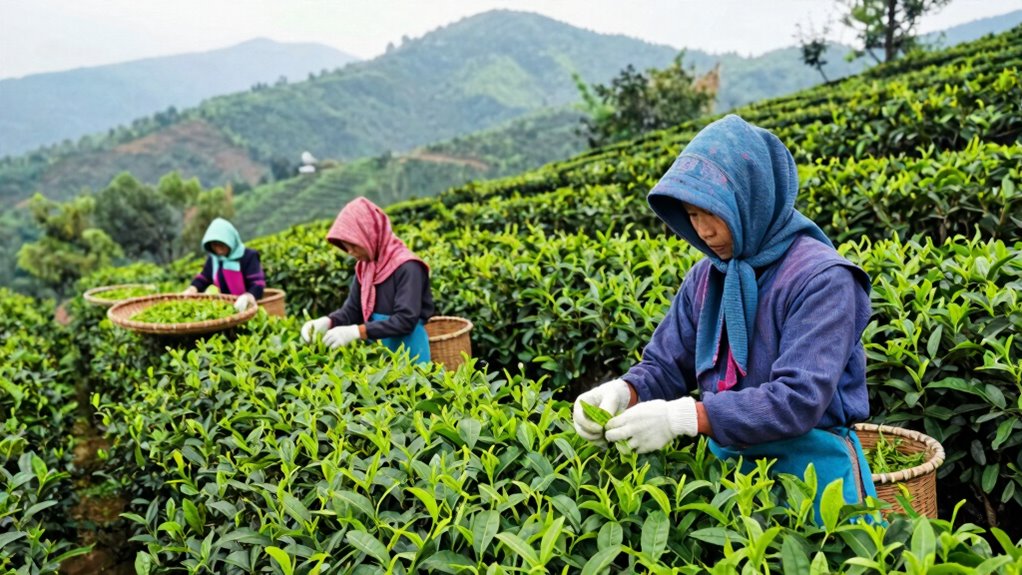

You might think tea just comes from leaves, but its journey is intricate. It starts with careful plucking of the right leaves and quick handling to keep freshness. The leaves are then processed through withering, rolling, and sometimes fermenting, which determines the tea’s flavor. Heating stops fermentation, and sorting guarantees quality. Skilled craftsmanship and precise steps shape every sip of tea you enjoy. Continue exploring to discover the detailed secrets behind this centuries-old tradition.
Key Takeaways
- Tea harvesting begins with selective plucking of tender leaves to ensure optimal flavor and quality.
- Processing involves withering, rolling, and fermentation, which shape the tea’s final flavor profile.
- Fermentation is a chemical process, crucial for developing the aroma and character of black and oolong teas.
- Post-fermentation heating and drying lock in flavors and prevent spoilage, maintaining leaf freshness.
- Skilled sorting and grading during packaging preserve quality, reflecting craftsmanship and traditional practices.
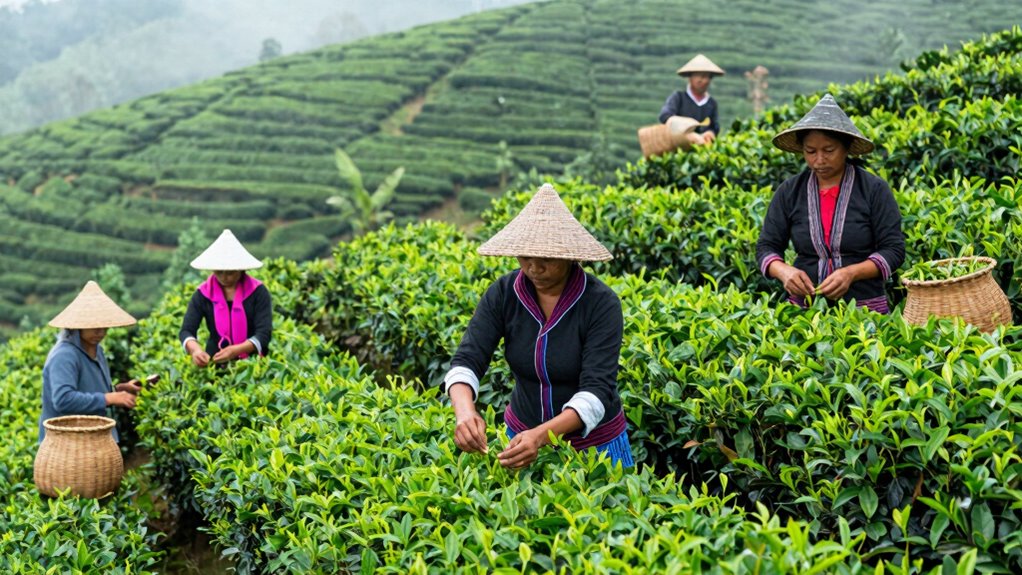
Have you ever wondered how tea goes from a simple leaf to your favorite cup? The journey begins long before the boiling water hits the leaf. It’s a process that involves careful harvesting, precise tea processing techniques, and an essential step called tea leaf fermentation. This fermentation isn’t like wine or beer; in tea, it’s a chemical process that transforms the leaf’s flavor and aroma. When you pick the tea leaves, you’re starting a delicate sequence that will determine the tea’s final character. The fresh leaves are quickly processed to preserve their freshness, which involves withering and rolling to break down cell walls. This step is necessary because it prepares the leaves for fermentation, where enzymes interact with oxygen, changing the leaf’s biochemical makeup. During fermentation, the leaves darken and develop complex flavors, which is especially important for black teas. Not all teas undergo fermentation—green teas skip this step to retain their grassy, fresh taste, while oolong teas are partially fermented, striking a balance between green and black tea flavors.
The tea processing techniques are what truly shape the final product. After fermentation, the leaves are heated to halt the process—either through pan-firing or steaming—depending on the tea type. This step locks in the flavors and prevents further fermentation. Once heated, the leaves are dried thoroughly, which guarantees they don’t spoil during storage. Skilled workers may also sort and grade the leaves based on size, shape, and quality, which influences the brewing experience. Every step in the process requires precision and timing; too much or too little fermentation can drastically change the taste, aroma, and quality of the tea. Proper environmental control is crucial during processing to ensure consistency and quality in each batch. Understanding the importance of biodiversity in tea cultivation helps ensure sustainable practices that protect local ecosystems and support the health of tea plantations.
From the moment the leaves are plucked to the final packaging, the entire process is designed to preserve the leaf’s essential qualities while enhancing the flavors through fermentation and proper processing techniques. When you finally brew your cup, you’re enjoying the culmination of these carefully executed steps. It’s a fascinating journey that transforms a simple leaf into a comforting beverage with rich flavors, all thanks to meticulous harvesting, fermentation, and processing. Next time you sip your tea, remember the craftsmanship and tradition behind every leaf—an intricate dance of science and skill that makes your favorite drink truly special.

Tiesta Tea Ultimate Live Loose Leaf Kit, Tea Starter Kit with High to Non-Caffeinated Blends, Hot & Iced Brews, Includes Black, Green, Herbal Sample Bags and 16oz Brewmaster Dispensing Infuser
- Six Fall Tea Blends: Includes Blueberry Wild Child, Maui Mango, and more
- Premium Loose Leaf Tea: High-quality, full-leaf blends with wellness ingredients
- Ideal Gift Set: Perfect for tea lovers on any occasion
As an affiliate, we earn on qualifying purchases.
As an affiliate, we earn on qualifying purchases.
Frequently Asked Questions
How Does Climate Change Affect Tea Cultivation Globally?
Climate change impacts tea cultivation globally by causing unpredictable weather patterns, droughts, and temperature shifts. You need to focus on building climate resilience, which helps tea plants adapt to these changes. Diversifying crops becomes essential, too, as it reduces reliance on a single crop and mitigates risks. By adopting these strategies, you can better safeguard tea production and guarantee a sustainable future despite changing climate conditions.
What Are the Most Sustainable Practices in Tea Harvesting?
Ever wondered how you can make a difference in tea harvesting? You can adopt sustainable practices like organic farming, which avoids synthetic chemicals and preserves soil health. Supporting fair trade certification ensures fair wages and ethical treatment of workers. By choosing these methods, you promote environmentally friendly cultivation and social responsibility, making your tea consumption more sustainable. Isn’t it rewarding to enjoy tea knowing you’re helping the planet and its people?
How Do Different Tea Varieties Influence Harvesting Methods?
Different tea varieties influence your harvesting methods considerably. For delicate teas like white and green, you focus on gentle tea leaf plucking to preserve quality, often using selective hand-picking techniques. For sturdier varieties like black or oolong, you might employ more extensive harvesting techniques, including stripping or mechanical harvesting. Your approach depends on the tea’s desired flavor profile and quality, ensuring the best tea leaf plucking for each type.
What Are Common Challenges Faced by Tea Farmers?
Ever wondered what hurdles tea farmers face? You’ll find pest management a constant battle, as pests threaten crops and quality. Labor shortages also pose significant challenges, making it hard to harvest at peak times and maintain consistent quality. These issues force farmers to innovate or seek help, but without sufficient resources, their struggles continue. Managing pests and staffing remains critical for sustaining successful tea production.
How Is Technology Transforming Tea Production Processes?
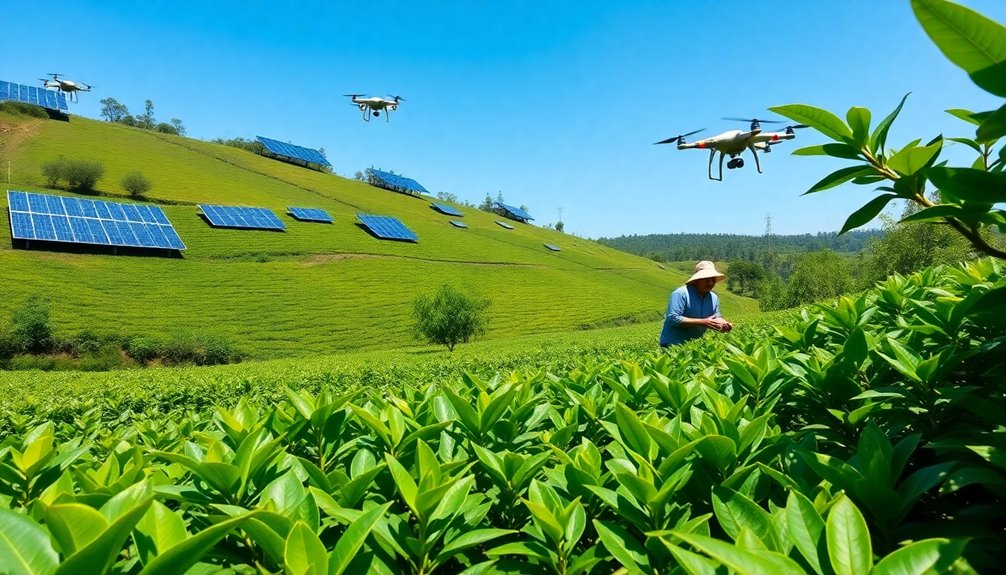
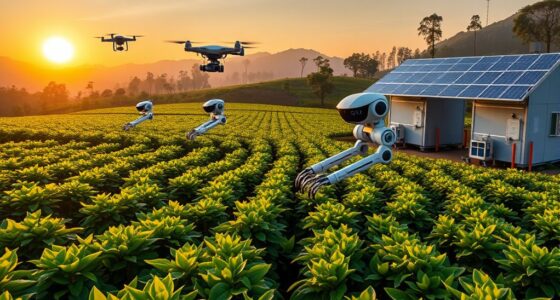
You see, technology is revolutionizing tea production through innovative machinery and precision agriculture. These advancements allow you to harvest more efficiently, reduce waste, and improve tea quality. Automated pluckers and sensors help monitor crop health and optimize resource use, making your farming more sustainable. By adopting these tools, you streamline processes, boost yields, and stay competitive in a rapidly evolving industry.
Conclusion
Now that you know the incredible journey your tea takes—from lush mountains to your cup—you’re holding more than just a drink. You’re holding a tiny miracle crafted by tireless hands and nature’s finest magic. Every sip reveals a secret world of dedication, patience, and passion so immense, it could fill an entire universe. So next time you sip your tea, remember—you’re tasting a legendary story so extraordinary, it could only be true in the world of tea.