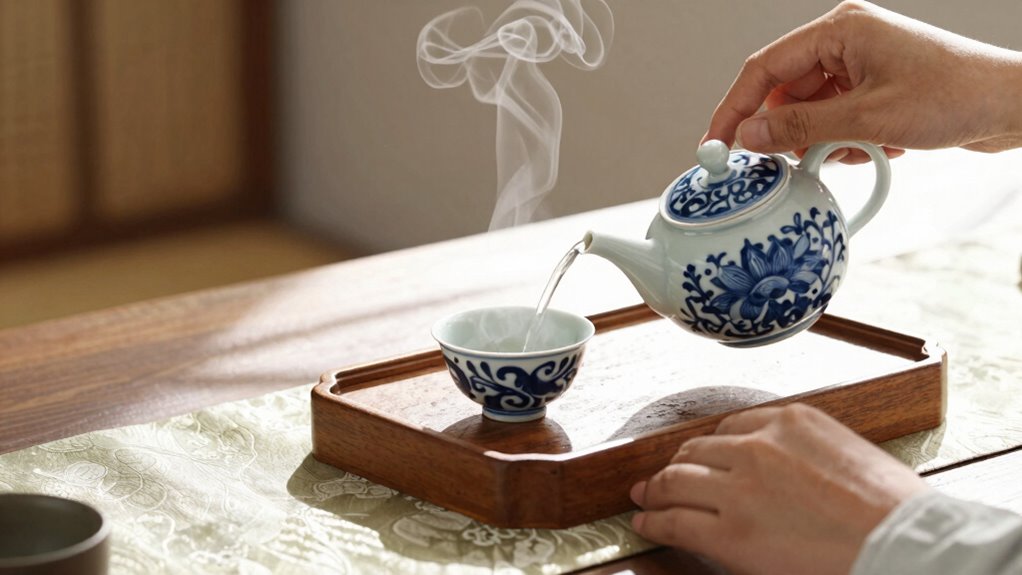
Tea ceremonies deserve a closer look because they offer more than just making tea; they’re mindful practices filled with cultural symbolism and artistry. By paying attention to etiquette and tools, you can appreciate the respect and harmony behind each movement. These rituals encourage you to slow down, reflect, and connect deeply with tradition. Exploring this meaningful experience reveals the craftsmanship and cultural stories behind every step, inspiring a greater appreciation for the art and heritage involved. Keep exploring to uncover even more.
Key Takeaways
- They embody mindfulness, encouraging presence, calmness, and reflection beyond simple tea preparation.
- The rituals and etiquette showcase cultural values, fostering respect and deeper understanding.
- The craftsmanship of traditional tools reflects artistic heritage and cultural identity.
- The ceremonies highlight the importance of small details, elevating tea drinking into a meaningful art form.
- Exploring these rituals fosters appreciation for cultural heritage and the artistry behind the tradition.
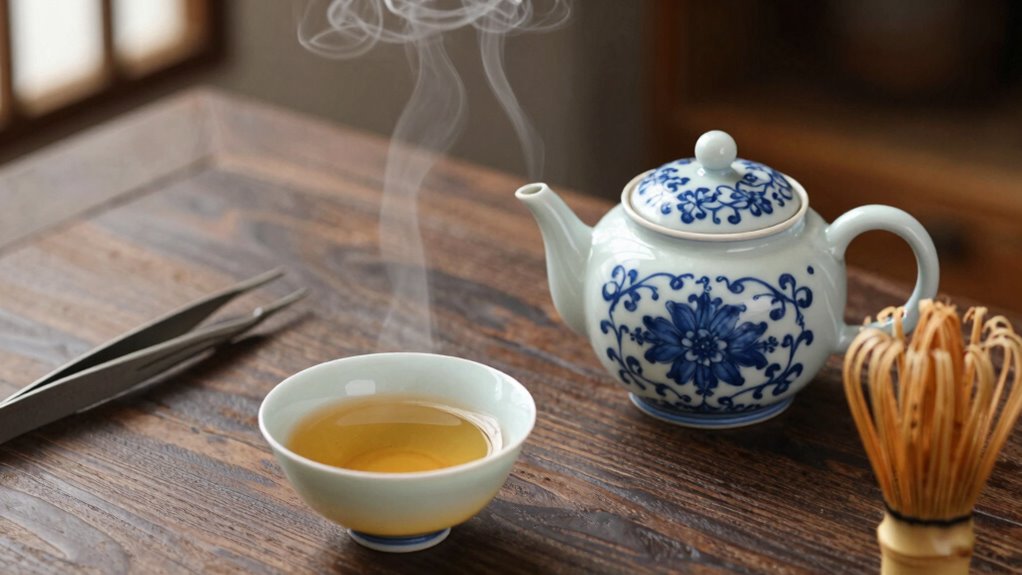
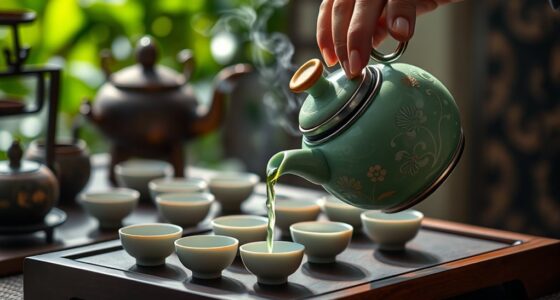
Tea ceremonies are more than just preparing a cup of tea; they are a mindful practice that embodies tradition, etiquette, and cultural symbolism. When you participate in a tea ceremony, you’re not merely drinking tea—you’re engaging in a ritual that emphasizes respect, harmony, and mindfulness. Every movement and choice you make reflects a deep-rooted cultural heritage, making the process more meaningful than just a quick refreshment.
Tea ceremonies embody tradition, respect, and mindfulness, transforming simple tea into a meaningful cultural ritual.
Understanding tea etiquette is central to appreciating these ceremonies. Every gesture, from how you hold the teacup to the way you bow or position your hands, follows specific customs designed to show respect for the tradition and your host. These rules might seem precise or even rigid, but they serve to create a sense of harmony and shared experience. Paying attention to tea etiquette transforms a simple act into a respectful exchange, emphasizing mindfulness in every step. Recognizing the significance of cultural symbolism helps deepen your connection to the ritual and its origins.
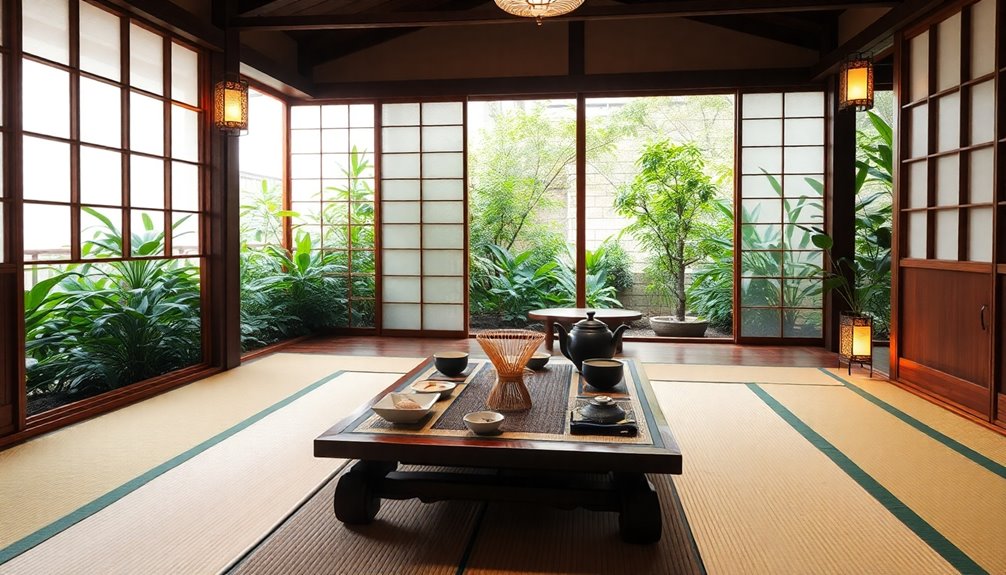
The ceremonial tools used during these rituals are equally significant. You’ll notice a variety of tools—such as a tea scoop, whisk, bowl, or tray—each with its own purpose and symbolism. These ceremonial tools are crafted with care and intention, often reflecting the aesthetic values of the culture they originate from. Handling these tools properly isn’t just about technique; it’s about honoring the tradition and the people who created them. Using these tools with mindfulness helps you stay present and connected to the ritual, deepening your appreciation for the ceremony. Additionally, understanding the artistry and craftsmanship behind these tools enhances the appreciation for their cultural importance. In fact, the craftsmanship involved often incorporates traditional techniques passed down through generations, making each piece a unique expression of cultural identity.
Participating in a tea ceremony invites you to slow down and focus on the present moment. It’s an act of mindfulness that encourages you to savor not only the tea but also the experience itself. Each step—whether it’s preparing the tea, serving it, or drinking—serves as a reminder to be attentive and respectful. This deliberate pace fosters a sense of calm and reflection, which can be rare in everyday life.
Ultimately, tea ceremonies deserve a closer look because they combine artistry, tradition, and mindfulness into a single experience. They teach you to value the small details—like the way you handle tools or observe proper etiquette—that elevate a simple act into a meaningful cultural practice. Recognizing the cultural heritage behind these rituals helps deepen your appreciation and fosters a respectful connection to the traditions they embody. When you embrace these elements, you gain a deeper understanding of the cultural significance behind each sip, turning a moment of tea drinking into a ritual of connection and respect.

ZENSO Premium Matcha Whisk Set – 10 Piece Japanese Matcha Tea Ceremony Kit | Matcha Bowl, Tea Canister, Purple Bamboo Whisk, Whisk Holder, Sifter, Scoop & Scoop Holder, Cup, Cloth, Spoon – Dark Gray
COMPLETE 10-Pcs MATCHA CEREMONY SET – Inspired by the timeless Japanese tea ritual, ZENSO brings you an all-inclusive…
As an affiliate, we earn on qualifying purchases.
As an affiliate, we earn on qualifying purchases.
Frequently Asked Questions
How Did Tea Ceremonies Originate Historically?
You might find that tea ceremonies originated in ancient China, where they symbolized respect, purity, and harmony. Over time, they evolved to incorporate ceremonial attire, highlighting the ritual’s significance. These ceremonies emphasized tea symbolism, representing more than just a drink—it’s a spiritual practice. As they spread to Japan and Korea, each culture added unique elements, making tea ceremonies a profound expression of tradition, mindfulness, and social connection.
Are Tea Ceremonies Practiced Differently Worldwide?
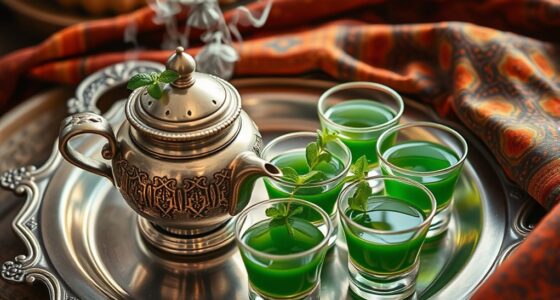
Tea ceremonies are like a global mosaic, each piece shining with unique colors. You’ll find cultural variations and ritual differences from Japan’s quiet precision to Morocco’s lively mint tea gatherings. These practices reflect local traditions, values, and histories, making every ceremony a distinct experience. By exploring these differences, you gain deeper insight into how cultures connect through a shared love for tea, turning simple sips into meaningful rituals.
What Are the Health Benefits of Participating in Tea Ceremonies?
Participating in tea ceremonies offers you numerous health benefits. It acts as a mindfulness practice, helping you relax and stay present, reducing stress. The slow, deliberate process encourages calmness and mental clarity. Plus, it promotes social bonding, strengthening your connections with others. The ritualistic aspect can improve your focus and emotional well-being, making it a holistic way to nurture both your mind and body through mindful, shared experience.
Can Beginners Easily Learn Traditional Tea Ceremonies?
As a beginner, you’ll find that learning traditional tea ceremonies is quite accessible. Start by familiarizing yourself with essential tea accessories like teapots, cups, and utensils, and practice ceremonial etiquette step-by-step. Many workshops and tutorials are available to guide you through the process. With patience, you’ll quickly grasp the rituals, allowing you to enjoy the calming experience and deeper appreciation of tea’s cultural significance.
How Do Tea Ceremonies Influence Modern Tea Culture?
Tea ceremonies shape modern tea culture through their emphasis on tea etiquette and ceremonial aesthetics. When you observe or participate in these rituals, you adopt a mindful approach to brewing and drinking tea, fostering respect and appreciation. This influence encourages contemporary tea enthusiasts to value presentation and tradition, blending old-world elegance with modern relaxation. As a result, tea culture becomes more meaningful, connecting you to a rich history while enhancing your everyday tea experience.

Hdtyyln 4 Pcs Gongfu Tea Set, Chinese Kung Fu Tea Set, Tea Scoop for Loose Tea, Bamboo Tea Ceremony Utensils, Tea Accessories include Tea Scoop Needle Clip Spatula, for Tea House Restaurant Household
You wii get: 4Pcs Gongfu Tea Set Chinese Tea Tool Set. Include tea spoon, tea clip, tea spatula…
As an affiliate, we earn on qualifying purchases.
As an affiliate, we earn on qualifying purchases.
Conclusion
So, next time you glimpse a tea ceremony, don’t just see the ritual—see the soul behind it. Feel the harmony, the precision, the tradition whispering through every movement. It’s more than tea; it’s a dance of history and mindfulness, inviting you to pause and reflect. Embrace the deeper story in each steaming cup, for in every sip lies a world waiting to be discovered—an invitation to connect, to slow down, and truly appreciate life’s simple beauty.

Matcha Whisk – Bamboo Whisk for Matcha Powder, Handcrafted Organic Traditional Japanese Chasen, 100-Prong Matcha Stirrer Wisk Mixer Brush for Authentic Tea Preparation
Exquisite Craftsmanship: Expertly handcrafted from a single piece of natural bamboo, this matcha whisk features OVER 100 finely…
As an affiliate, we earn on qualifying purchases.
As an affiliate, we earn on qualifying purchases.

Jade Leaf Matcha Traditional Porcelain Tea Bowl with Pour Spout – Hand Made with White Matte Glaze – 18 Ounce – Great Gift for Matcha Lovers
HISTORIC CHAWAN, MADE MODERN: The Ceremonial Bowl is a traditional piece for re-creating matcha tea ceremonies at home
As an affiliate, we earn on qualifying purchases.
As an affiliate, we earn on qualifying purchases.