Many tea lovers miss the deeper cultural and spiritual meanings behind traditional tea rituals. These practices aren’t just about preparing a drink; they embody respect, patience, and mindfulness passed down through generations. By focusing only on taste, you might overlook how gestures and movements symbolize important values and history. Recognizing these elements can transform your experience, revealing the true essence of tea beyond just flavor. If you continue exploring, you’ll uncover even more about the rich significance behind every pour and gesture.
Key Takeaways
- The deep cultural symbolism and historical significance behind traditional tea rituals often go unnoticed.
- The precise gestures and movements embody respect, discipline, and spiritual mindfulness beyond mere ceremony.
- Rituals foster a sense of harmony, patience, and connection to cultural values often overlooked by casual tea enjoyment.
- Understanding the rituals’ roots enhances appreciation, transforming tea from a beverage to a meaningful cultural experience.
- Many miss the opportunity to engage mindfully, recognizing tea rituals as acts of respect, tradition, and present-moment awareness.
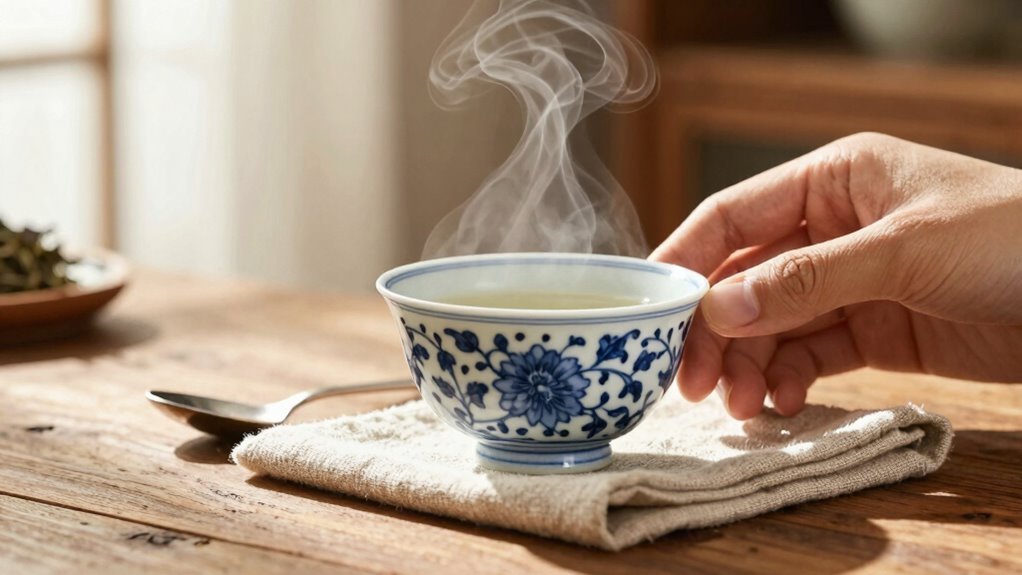
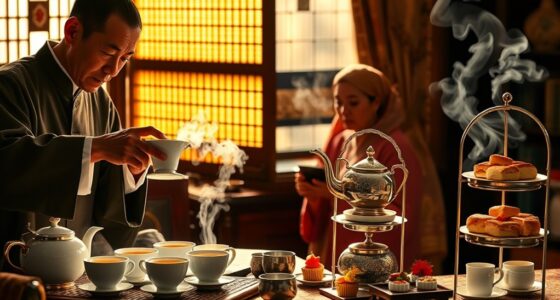
What many tea enthusiasts miss is how these rituals serve as a bridge to understanding cultural values. In Japan, the tea ceremony becomes a way to honor guests and cultivate harmony, fostering a sense of community and respect. In China, the ceremony symbolizes reverence for tradition and the importance of patience, discipline, and attentiveness. Recognizing this cultural symbolism offers a richer perspective on why certain gestures—like the precise way the tea is poured or the specific movements involved—are so meaningful. They’re not merely ceremonial steps but expressions of cultural identity and spiritual mindfulness. When you engage with these practices, you’re participating in a centuries-old dialogue that emphasizes respect for nature, harmony, and the fleeting beauty of the present moment. Understanding the cultural significance behind these rituals can deepen your appreciation for the traditions and values they embody. Many tea lovers tend to view tea as just a beverage to relax or energize, but the ceremonial aspects remind you that tea can be a profound cultural experience. It’s about more than just the taste; it’s about connecting with traditions that have been passed down through generations. These rituals invite you to slow down, pay attention, and appreciate the moment fully. By embracing the origins and symbolism behind tea practices, you deepen your connection to the beverage and the cultures it represents. In doing so, you transform a simple cup of tea into an act of mindfulness, respect, and cultural appreciation—elements that often get lost in everyday tea drinking but are essential to truly understanding and enjoying the depth of tea rituals worldwide. Recognizing the deep cultural roots of tea rituals can help you see beyond the surface and appreciate their historical significance. Exploring the historical context of these traditions reveals how they have evolved and endured through centuries, enriching your understanding even further. Additionally, understanding the social and spiritual aspects of these practices can foster a greater sense of connection and reverence during your own tea experiences.

ZENSO Premium Matcha Whisk Set – 10 Piece Japanese Matcha Tea Ceremony Kit | Matcha Bowl, Tea Canister, Purple Bamboo Whisk, Whisk Holder, Sifter, Scoop & Scoop Holder, Cup, Cloth, Spoon – Dark Gray
COMPLETE 10-Pcs MATCHA CEREMONY SET – Inspired by the timeless Japanese tea ritual, ZENSO brings you an all-inclusive…
As an affiliate, we earn on qualifying purchases.
As an affiliate, we earn on qualifying purchases.
Frequently Asked Questions
How Do Different Cultures Customize Their Tea Rituals?
Different cultures customize their tea rituals through unique ceremonies like the Japanese tea ceremony, which emphasizes mindfulness and precision, or the British afternoon tea, featuring delicate sandwiches and scones. You experience a cultural infusion as you engage in these traditions, appreciating the significance behind each step. These rituals are more than just brewing tea—they’re a reflection of history, values, and social bonds, making each cup a meaningful experience.
What Are Common Mistakes Beginners Make in Tea Preparation?
Did you know over 60% of beginners ruin their tea by neglecting proper brewing temperature? You might make this mistake by using boiling water on delicate teas or storing tea improperly. To avoid this, store your tea in a cool, airtight container and always check recommended brewing temperatures. This simple step enhances flavor and prevents bitterness, ensuring a perfect cup every time.
Are There Specific Teas Suited for Particular Times of Day?
Yes, certain teas suit specific times of day. For morning brews, opt for energizing black or green teas to kickstart your day. In the afternoon, enjoy calming herbal teas like chamomile or mint for relaxation. Tea pairing enhances your experience, so choose lighter teas for the evening, such as decaffeinated options. Embracing these rituals helps you appreciate tea’s role throughout your daily routine.
How Does Water Quality Impact the Tea-Tasting Experience?
You might find it surprising how water quality influences your tea-tasting journey. When water has the right mineralization and pH balance, it brings out the tea’s true flavors perfectly. Too hard or too soft, and the taste can become dull or overly sharp. Coincidentally, the water you use often unnoticed impacts every sip, making quality water essential for a delightful, authentic tea experience.
Can Tea Rituals Promote Mindfulness and Relaxation?
Yes, tea rituals can promote mindfulness and relaxation. When you practice tea meditation, you focus on each step, engaging all your senses, which helps calm your mind. Ritual mindfulness encourages you to be present, savoring every sip and moment. By intentionally slowing down during tea preparation and drinking, you foster a sense of tranquility, making the experience more meaningful and stress-relieving.

1PC Bamboo Cha He Chinese Tea Scoop Loose Tea Leaf Presentation Tea Tray Shovel Chinese Tea Ceremony Vessel Accessories for Tea Room Home Office Use
Material: made of bamboo, smooth polishing with no burrs on the surface, strong and durable for use
As an affiliate, we earn on qualifying purchases.
As an affiliate, we earn on qualifying purchases.
Conclusion
As you rush through your busy days, you might overlook the quiet elegance of true tea rituals. Yet, in slowing down, you find a mindful pause, a moment of connection amid chaos. Just as a delicate teacup holds more than tea, these practices hold a depth that transcends taste. Embrace the ritual, and you’ll discover that amid the hustle, serenity quietly brews—reminding you that sometimes, the smallest acts hold the greatest significance.

ACORUS Rituals Tea Set – Natural Fruit and Herbal Variety Pack, Tea Gift Set of 6 Different Teas, Sampler of 60 Bags Individually Wrapped
60 NATURAL HERBAL AND FRUIT TEA BAGS IN ONE SELECTED TEA SAMPLER. We created a tea box that…
As an affiliate, we earn on qualifying purchases.
As an affiliate, we earn on qualifying purchases.

Matcha Whisk Set, Ceramic Bowl Matcha Kit & Handcrafted Bamboo Chasen, Complete 5 Pcs Matcha Set Whisk and Bowl, Stainless Steel Sifter, Bamboo Scoop & Holder for Matcha Lovers
【Complete Ceremony in a Box】This 5-in-1 matcha tea set includes a bamboo whisk, chasen holder, matcha scoop, stainless…
As an affiliate, we earn on qualifying purchases.
As an affiliate, we earn on qualifying purchases.