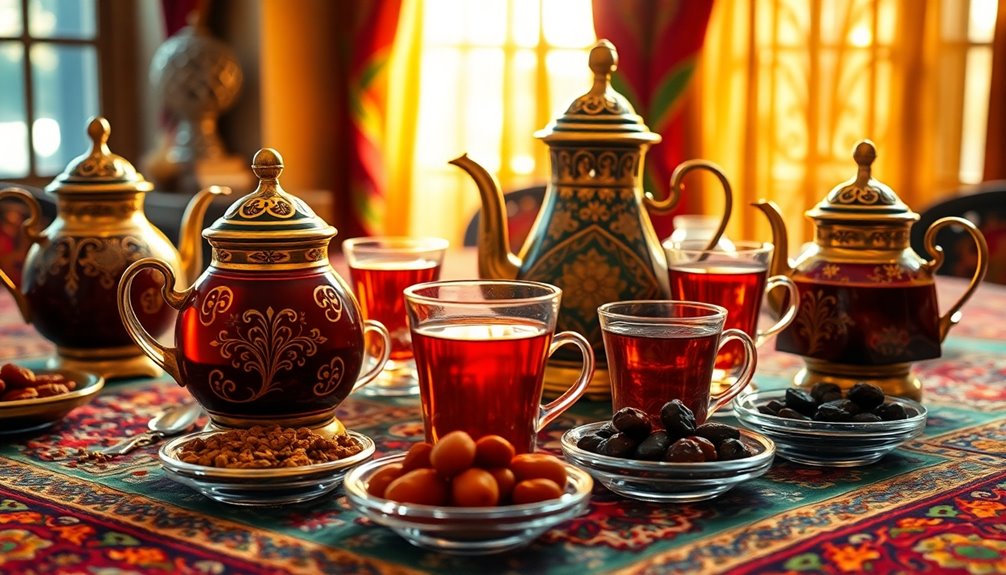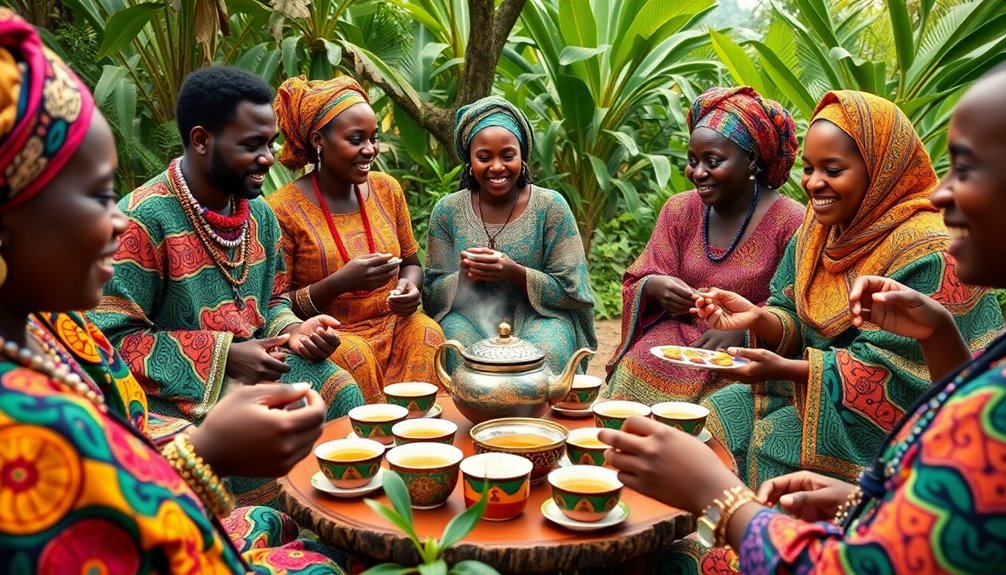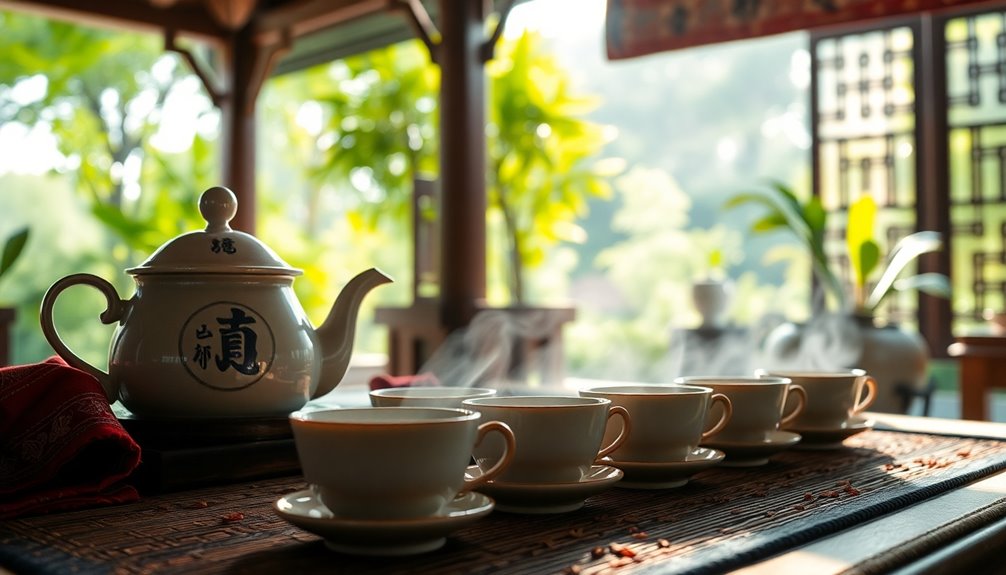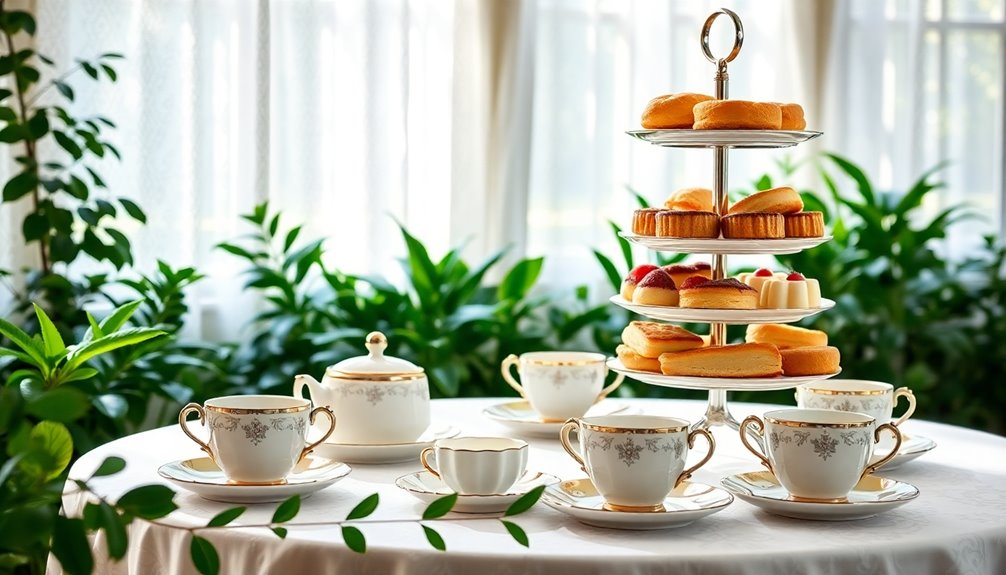
Most tea lovers overlook the rich stories behind each culture’s rituals, etiquette, and brewing methods. These traditions symbolize respect, social bonds, and identity passed down through generations. For example, Japanese tea ceremonies and Moroccan mint tea reveal more than just flavors—they express history and community values. By exploring these customs, you can see tea as a cultural expression, not just a drink. Keep exploring to uncover the deeper stories hidden in each sip.

Get coffee and tea gear delivered free — and shop member deals
- Fast, free delivery on millions of items
- Access to Prime Big Deal Days deals on October 6–7
- Prime Video, Amazon Music and more included
Key Takeaways
- Many overlook the cultural rituals and etiquette that embody respect, humility, and social bonds behind each tea tradition.
- The craftsmanship and techniques in brewing, like Chinese Gongfu or Japanese ceremonies, reveal deeper cultural values.
- Tea rituals often tell stories of history, identity, and community that go beyond just flavor or aroma.
- Understanding and appreciating the symbolic gestures and customs enriches the tea-drinking experience.
- Recognizing the cultural significance behind tea practices fosters a deeper connection and respect for global traditions.
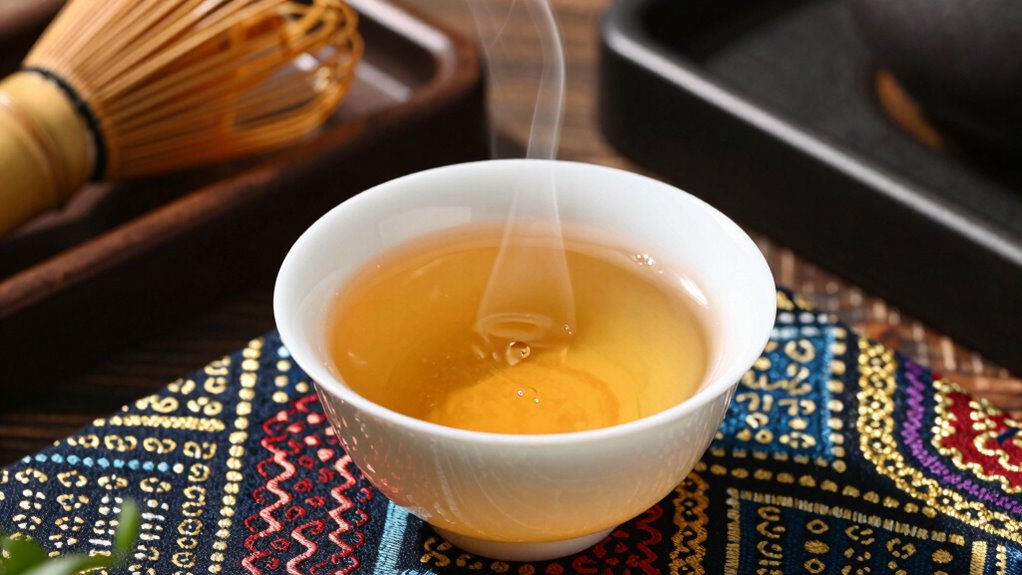
Have you ever wondered how tea shapes the traditions and social customs of different cultures? It’s more than just a warm beverage; it’s a bridge to understanding how people connect, celebrate, and show respect. When you explore tea in various cultures, you quickly realize there’s a deep-rooted history behind each sip—embodied in tea etiquette and brewing techniques that often go unnoticed by casual drinkers. These rituals aren’t just about making tea; they’re about expressing hospitality, humility, and harmony.
Tea connects cultures through rituals, etiquette, and traditions that embody respect, humility, and harmony across the world.
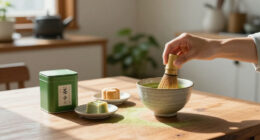
In many cultures, tea etiquette guides how you approach the drink. For example, in Japan, serving and receiving tea involves precise gestures—bowing, using specific utensils, and pouring with both hands. These actions aren’t arbitrary but symbolize respect and mindfulness. Similarly, across parts of Africa, pouring tea involves a deliberate, graceful motion that signifies warmth and community. You might overlook these subtle gestures if you’re only focused on tasting; however, they carry the weight of centuries of tradition. Appreciating these customs deepens your understanding of the cultural significance behind each cup.
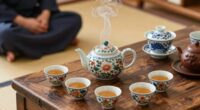
Brewing techniques are equally essential, yet often underappreciated by those unfamiliar with the traditions. In China, the Gongfu method emphasizes patience, multiple short infusions, and precise control of water temperature. This technique highlights the skill involved and enhances the tea’s flavor, transforming a simple act into an art form. In contrast, British tea culture tends to favor a straightforward approach—boiling water, steeping a bag or loose leaves, and adding milk or sugar. While less elaborate, this method is rooted in a different social context, reflecting comfort and practicality. Recognizing these differences reveals how each culture’s approach to brewing mirrors its values and way of life. Additionally, understanding these brewing traditions offers insight into the cultural identity and history behind each method. Exploring the history of tea helps uncover the evolution of these techniques and their significance in shaping cultural identities. A deeper awareness of these brewing methods allows tea enthusiasts to appreciate the craftsmanship that goes into each cup.
Most tea lovers miss the stories embedded within these rituals. They often focus only on the flavor or aroma, neglecting the cultural expressions woven into each step. They might not realize that tea ceremonies serve as a form of cultural expression and identity that has been passed down through generations. The elegance in a Japanese tea ceremony or the communal joy of shared Moroccan mint tea tells a story of identity, history, and social bonds. When you pay attention to the etiquette and techniques, you’re not just drinking tea—you’re participating in a centuries-old dialogue that connects people across borders. These customs might seem intricate or overly formal at first, but they’re ultimately about honoring tradition and fostering genuine connection. Recognizing the rich cultural significance behind these customs allows tea lovers to deepen their appreciation and truly understand the essence of each culture’s approach. By understanding what most tea lovers overlook, you open yourself to a richer, more meaningful experience with every cup.
As an affiliate, we earn on qualifying purchases.
Frequently Asked Questions
How Do Tea Preparation Methods Vary Across Different Cultures?
You’ll notice that tea preparation methods vary widely across cultures, shaping unique tea flavor profiles. In some places, you might use traditional brewing techniques like Gong Fu for a rich, complex taste, while others prefer quick steeping for a milder flavor. These diverse methods influence the aroma, texture, and overall experience, making each tea journey special. Embracing these differences helps you appreciate tea’s cultural richness beyond just the taste.
What Are the Traditional Tea Serving Customs Worldwide?
You should know that traditional tea serving customs vary worldwide, often emphasizing tea etiquette and ceremonial rituals. In Japan, you participate in the precise Japanese tea ceremony, focusing on grace and mindfulness. In Britain, you enjoy afternoon tea with delicate scones and etiquette emphasizing politeness. Meanwhile, in Morocco, you partake in communal mint tea rituals, emphasizing hospitality and shared experience. Each culture’s customs enrich your understanding and appreciation of tea’s cultural significance.
Which Teas Are Considered Sacred or Ceremonial in Various Cultures?
You’ll find that many cultures hold certain teas as sacred brews, central to their ceremonies. For example, Japan’s matcha is essential in the traditional tea ceremony, symbolizing purity and respect. In China, pu-erh tea is often part of spiritual rituals, while in Morocco, mint tea signifies hospitality and unity. These tea ceremonies elevate the experience, transforming simple tea into a meaningful, sacred ritual that connects tradition and spirituality.
How Do Cultural Attitudes Influence Tea Drinking Habits?
Did you know that nearly 60% of tea drinkers say cultural attitudes shape their habits? Cultural attitudes greatly influence your tea etiquette and brewing rituals, making each tradition unique. You might find yourself following specific steps, like a precise pouring technique or a silent ceremony, depending on the culture. These customs create a sense of respect and connection, turning a simple drink into an enriching experience tailored to each society’s values.
Are There Unique Health Benefits Associated With Specific Cultural Teas?
You’ll find that specific cultural teas, like herbal infusions and functional teas, offer unique health benefits. For example, herbal infusions such as chamomile can promote relaxation, while matcha provides antioxidants that boost your energy. These traditional teas are often crafted with health in mind, making them more than just flavorful drinks—they support your immune system, digestion, or mental clarity, depending on the cultural practices behind them.
Conclusion
As you sip your favorite brew, remember that tea is more than just a drink—it’s a bridge to countless traditions and stories. Each cup holds a whisper of ancient rituals, a symbol of hospitality, and a moment of serenity. When you embrace these cultural nuances, you’re not just tasting tea; you’re savoring a world of shared memories. Let your cup be a vessel that connects you to the rich tapestry of global tea traditions, forever inviting curiosity and reflection.
Fall Picks
fall essentials
As an affiliate, we earn on qualifying purchases.