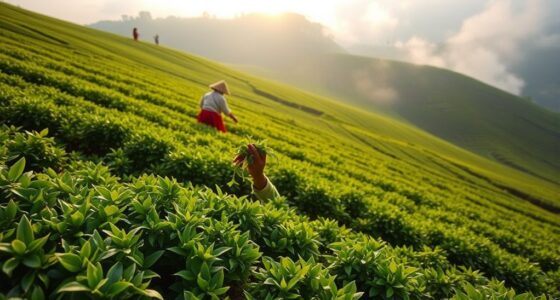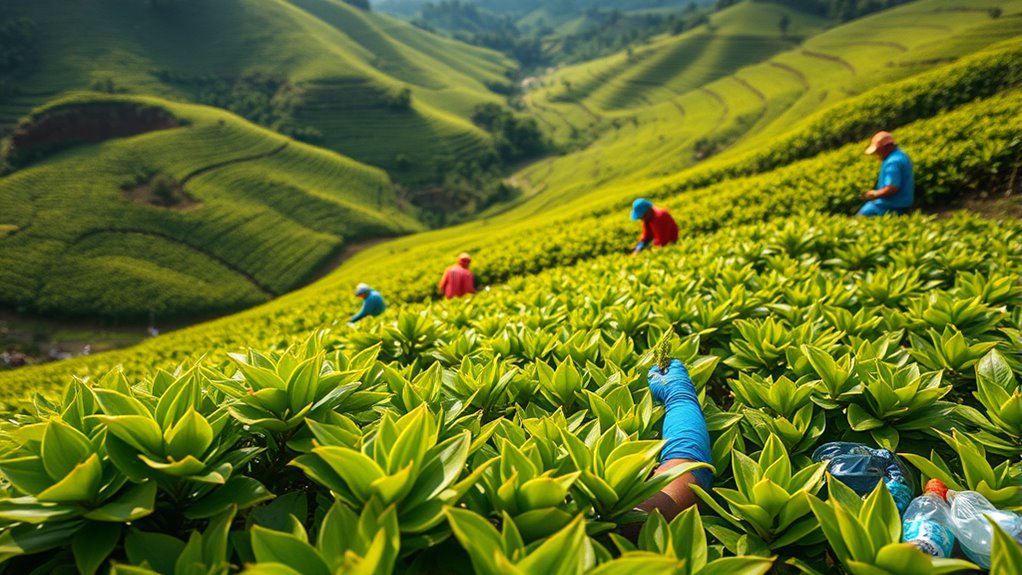
Sustainable tea production faces challenges like water scarcity, as tea plants need large amounts of water, which can deplete local sources. Deforestation from expanding plantations harms ecosystems and biodiversity, while chemical use can pollute water and soil. Social issues, such as poor wages and unfair labor practices, also affect the industry’s progress. Supporting eco-friendly practices and responsible brands can help address these issues, and if you keep exploring, you’ll discover how solutions are shaping a more sustainable future.
Key Takeaways
- Overreliance on chemical pesticides and fertilizers harms ecosystems and complicates sustainable farming efforts.
- High water consumption and inefficient irrigation practices exacerbate regional water scarcity issues.
- Deforestation for expanding plantations destroys habitats and accelerates biodiversity loss.
- Poor working conditions and lack of fair trade practices raise social and ethical concerns.
- Implementing eco-friendly methods like shade-grown tea and reforestation remains a challenge for many producers.
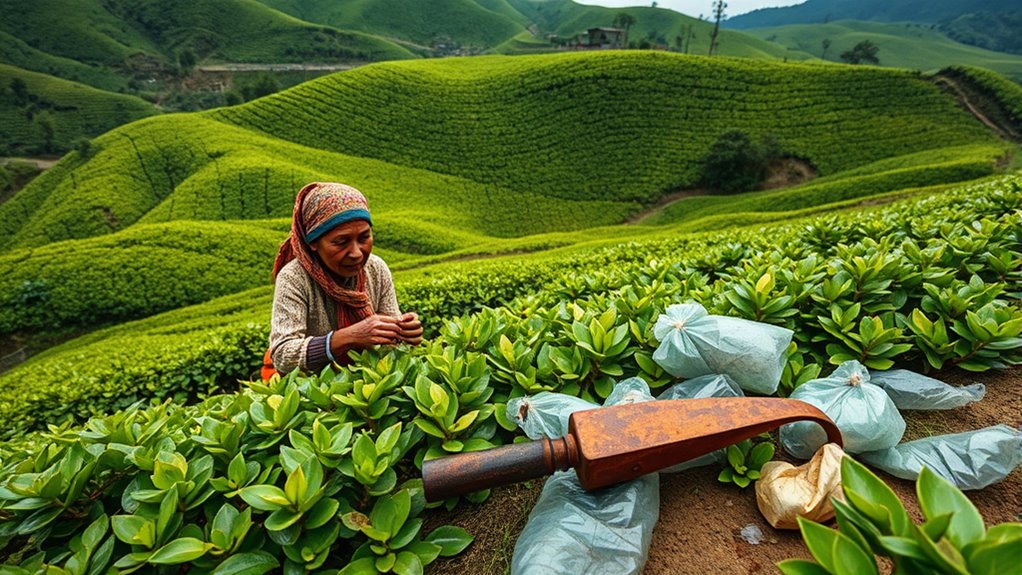
Have you ever wondered about the environmental and social impact behind your favorite cup of tea? The truth is, tea production involves several challenges that can affect ecosystems and communities. One key aspect is the importance of organic certification. When tea farms pursue organic certification, they commit to avoiding synthetic pesticides and fertilizers. This approach reduces chemical runoff into nearby water bodies, helping to preserve local water quality and protect wildlife. Certified organic tea farms often implement sustainable practices that prioritize soil health and biodiversity, fostering a healthier environment overall. By choosing organic, you support farmers who are mindful of their ecological footprint and committed to reducing harmful chemical usage.
Water conservation is another critical issue in tea cultivation. Tea plants require significant amounts of water, and in many regions, water scarcity is a pressing concern. Unsustainable water use can deplete local water sources, affecting both ecosystems and local communities’ access to clean water. Farmers often face the dilemma of balancing productivity with conservation, especially in areas prone to drought or where water resources are limited. Implementing efficient irrigation systems and rainwater harvesting techniques can help mitigate water consumption. As a consumer, opting for teas produced with water conservation practices encourages farms to adopt more responsible water management. It also raises awareness about the importance of preserving water resources for future generations. Sustainable farming practices play a vital role in reducing the environmental footprint of tea cultivation.
The environmental impact extends beyond water and chemicals. Deforestation is a pressing issue in regions where tea plantations expand rapidly. Clearing forests for new plantations destroys habitats, reduces biodiversity, and contributes to climate change. Reforestation and shade-grown tea practices can help address these concerns by maintaining forest cover and providing habitat for wildlife. Socially, many tea workers face poor working conditions and low wages, which raises questions of equity and fair trade. Supporting brands that prioritize fair labor practices and transparent supply chains can make a difference.
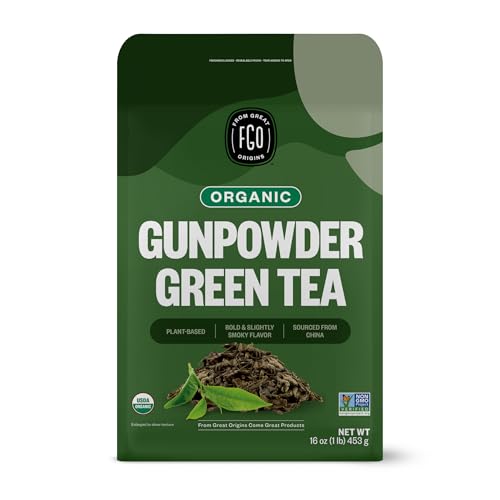
FGO Organic Gunpowder Green Tea, Loose Leaf, 16oz Bulk Resealable Bag, Packaging May Vary (Pack of 1)
SMILE SIP & FEEL GOOD – Brew 200 cups of tea with this premium loose leaf variety!
As an affiliate, we earn on qualifying purchases.
As an affiliate, we earn on qualifying purchases.
Frequently Asked Questions
How Do Climate Change Impacts Vary Across Different Tea-Growing Regions?
You’ll notice climate change impacts vary across tea-growing regions, requiring regional climate adaptation strategies. In some areas, rising temperatures cause droughts, while others face increased rainfall and flooding. To cope, you should focus on improving varietal resilience, selecting tea strains better suited to changing conditions. This helps guarantee consistent quality and yield, regardless of regional climate shifts. Adapting effectively safeguards your tea production against the unpredictable effects of climate change.
What Are the Most Effective Community-Based Solutions for Sustainable Tea Farming?
You can enhance sustainable tea farming by joining farmer cooperatives, which promote shared resources and collective bargaining, improving environmental practices. Pursuing organic certifications demonstrates your commitment to eco-friendly methods, reducing chemical use and conserving biodiversity. These community-based solutions empower you to adopt sustainable techniques, access better markets, and support environmental stewardship. Implementing cooperative efforts and organic standards helps make certain long-term viability for your farm and the surrounding ecosystem.
How Can Consumers Support Sustainable Tea Production Practices?
Think of your tea cup as a passport to change. You can support sustainable practices by choosing Fair Trade and Organic certified teas, ensuring farmers get fair wages and avoid harmful chemicals. For example, when you pick organic, you’re helping protect local ecosystems. Your choices matter—by buying certified teas, you help create a more sustainable future for tea growers and the environment. Every sip supports positive change.
What Innovations Are Emerging to Reduce Environmental Impacts in Tea Harvesting?
You can support innovations like automated harvesting, which reduces labor costs and minimizes environmental damage, and eco-friendly pesticides that protect ecosystems while maintaining crop health. These advancements help lower the environmental impact of tea harvesting, ensuring sustainable practices. By choosing teas produced with these innovations, you actively promote eco-conscious farming, encouraging the industry to adopt greener, more sustainable methods that benefit both the planet and local communities.
How Do Labor Practices Influence Sustainability in the Global Tea Industry?
You see, ethical labor and fair wages directly influence sustainability in the tea industry. When you support brands that prioritize fair wages, you promote better working conditions, reduce exploitation, and encourage responsible practices. Fair labor practices ensure workers are treated with dignity, which sustains local communities and preserves traditional methods. By choosing ethically produced tea, you help foster a more sustainable industry that values both people and the environment.

Aksuaple Eco-Fil Disposable Tea Filter Bags for Loose Tea, Wood Pulp Material, Biodegradable and Compostable, Unbleached Empty Tea Infuser Sachets with Drawstring, 100 Pack (3.2inch x 4.0inch)
Biodegradable Material: The Ultra-violet ray sterilized tea bags are made of wood pulp paper, sealed by heat press,…
As an affiliate, we earn on qualifying purchases.
As an affiliate, we earn on qualifying purchases.
Conclusion
As you explore tea production, you’ll notice that addressing sustainability challenges isn’t just a choice—it’s a necessity. The coincidence of climate change, resource depletion, and growing demand means your choices matter more than ever. By supporting sustainable practices, you help guarantee future harvests and protect the environment. Remember, what you sip today can shape the world of tomorrow. So, stay mindful and choose wisely—your cup of tea holds more power than you realize.

5.3” Large Reusable Thai Tea Filter – Traditional Cloth Strainer with Metal Handle for Tea, Coffee, Coconut Milk, Almond Milk, and Juice
Authentic and Traditional Made in Thailand
As an affiliate, we earn on qualifying purchases.
As an affiliate, we earn on qualifying purchases.

Senbird Premium Gyokuro – Japanese Shade Grown Green Tea – From Kyoto Japan – Imperial Loose Leaf Green Tea In Airtight Tea Tin (1.76oz/50g) (Isshin)
Authentic Japanese Gyokuro – Premium shaded green tea grown and carefully crafted in small batches by our partner…
As an affiliate, we earn on qualifying purchases.
As an affiliate, we earn on qualifying purchases.