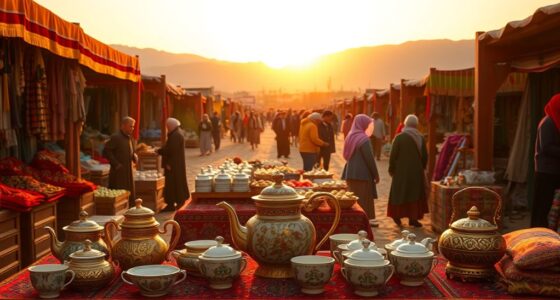
To understand the historical significance of tea, start by exploring its role in global trade routes like the Silk Road and maritime pathways, which expanded its reach and influence. Discover how tea cultivation transformed economies and created communities across regions such as China, India, and Ceylon. Learn about cultural rituals like Chinese Gongfu and the British afternoon tea, which elevated tea from a daily drink to a symbol of social status. Continuing will reveal how tea shaped history through exploration, diplomacy, and cultural exchange.
Key Takeaways
- Trace the origins of tea cultivation and its role in ancient trade routes like the Silk Road.
- Explore how tea shaped regional economies and fostered cultural exchanges across Asia and beyond.
- Examine the development of tea rituals and ceremonies that reflect social values and spiritual symbolism.
- Understand tea’s influence on social status, refinement, and diplomatic relations throughout history.
- Analyze tea’s impact on global trade, exploration, and cultural identity from its beginnings to modern times.
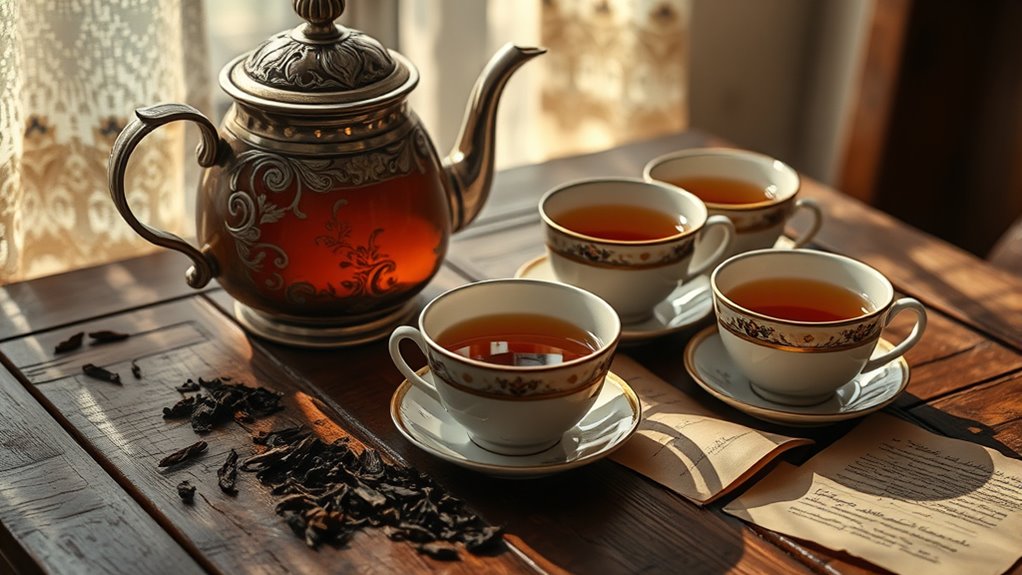
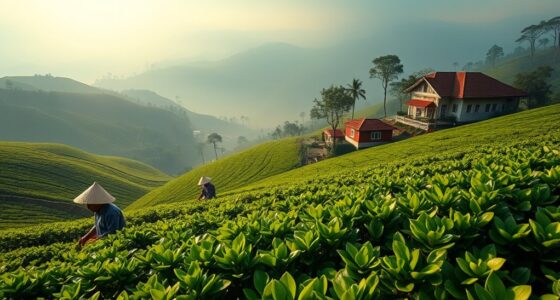
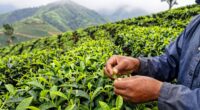
Tea has played an essential role in shaping history, influencing trade routes, cultural exchanges, and social customs across the world. As you explore its historical impact, you’ll see how tea cultivation became a cornerstone of economic development in many regions. It wasn’t just about growing leaves; it was about establishing a livelihood, building communities, and fueling international commerce. From the lush plantations in China and India to the sprawling estates in Ceylon and beyond, tea cultivation transformed landscapes and economies. You’ll notice that each region developed its own methods and traditions, which contributed to the rich tapestry of global tea culture. Additionally, the techniques used in tea harvesting and processing contributed significantly to regional identities and economic growth.
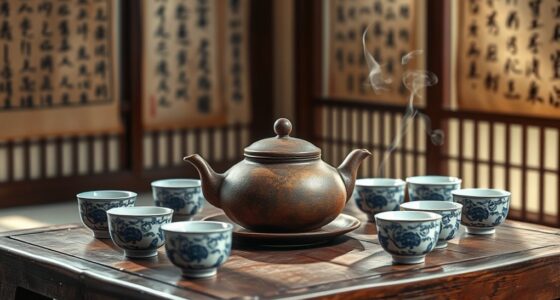
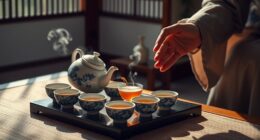
Cultural rituals surrounding tea are equally significant in understanding its historical prominence. When you observe traditional tea ceremonies, you see more than just a beverage—you witness centuries of social customs, spiritual symbolism, and artistry. For example, the Chinese Gongfu tea ceremony emphasizes mindfulness and precision, reflecting a deep appreciation for harmony and patience. Similarly, the Japanese tea ceremony embodies Zen principles, emphasizing respect, purity, and tranquility. These rituals weren’t merely about drinking tea but about creating a shared experience that reinforced social bonds and cultural identity. They often served as a form of diplomacy or social cohesion, bringing people together across classes and regions.
Throughout history, the importance of tea in social rituals helped elevate it from a simple drink to a symbol of refinement and status. In Britain, for instance, afternoon tea became a sign of sophistication, influencing social customs and hospitality practices. In India, chai gatherings foster community and connection, blending local spices and traditions into a daily ritual. These cultural rituals evolved over time, adapting to local tastes and customs, but they all retained the core idea of tea as a medium for connection and cultural expression. The development of tea-related innovations also played a role in expanding its cultural influence worldwide.
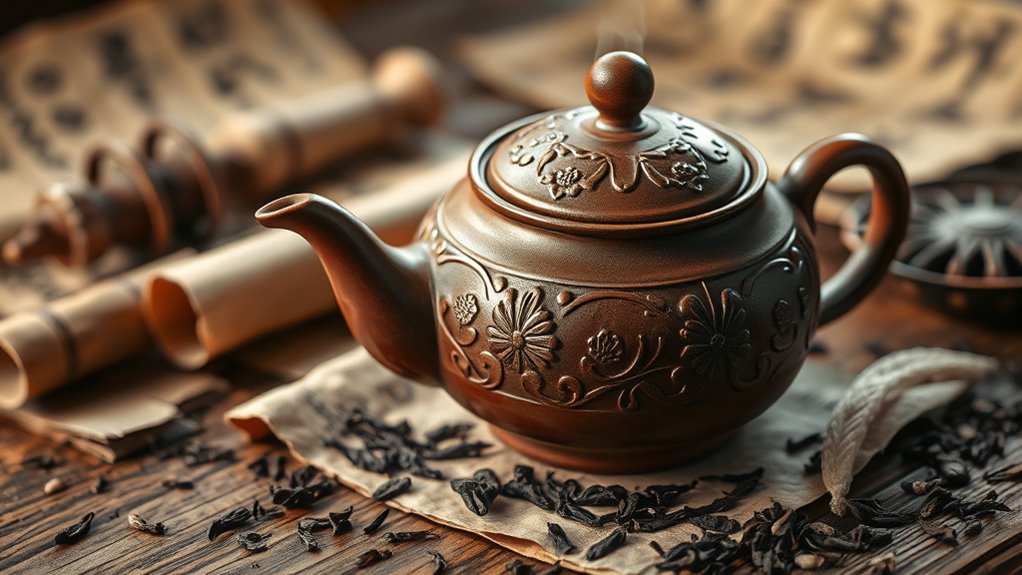
Your understanding of tea’s significance is incomplete without recognizing how these rituals and cultivation practices intersected with historical events. As tea spread along trade routes like the Silk Road and maritime pathways, it facilitated cultural exchanges and diplomatic ties. The demand for tea drove exploration, colonization, and economic policies that shaped nations. So, as you sip your tea today, remember that behind each cup lies a complex history intertwined with cultural rituals and cultivation practices that have left a lasting mark on world history.

LURRIER Porcelain Chinese Gongfu Tea Set,Portable Teapot Set with 360 Rotation Tea maker and Infuser,Portable All in One Gift Bag for Travel,Home,Gifting,Outdoor and Office (Floral Blue)
Patented Distinctive Design: Officially licensed product. Tired of "just brewing and pouring" your lovely tea in the same…
As an affiliate, we earn on qualifying purchases.
As an affiliate, we earn on qualifying purchases.
Frequently Asked Questions
How Did Tea Originate in Ancient China?
You discover that tea originated in ancient China over 2,000 years ago, likely as a medicinal herb. Early on, Chinese people developed tea ceremonies to honor its cultural significance, and they refined tea cultivation techniques to improve flavor and quality. These practices helped spread tea throughout Asia and beyond, establishing it as a key part of Chinese tradition and influence that still persists today.
What Role Did Tea Play in Global Trade Routes?
You might think tea’s journey was just a cozy sip, but it actually fueled global trade routes. As you trade silk and spices, tea’s economic impact blooms, connecting distant lands and creating bustling markets. Ironically, this simple beverage transformed into a essential commodity, shaping economies and diplomacy. Its role in trade routes underscores how something so ordinary can ignite extraordinary economic and cultural exchanges worldwide.
How Did Tea Influence Cultural Rituals Worldwide?
Tea influences cultural rituals worldwide through tea ceremonies that symbolize respect, harmony, and tradition. You participate in these rituals, which often emphasize mindfulness and social connection. Tea’s cultural symbolism varies across societies, from the Zen-inspired Japanese tea ceremony to British afternoon tea, reflecting values and history. By engaging in these rituals, you preserve cultural heritage, foster community bonds, and appreciate tea’s role beyond mere consumption, making it a meaningful tradition globally.
When Did Tea Become Popular in Europe?
Tea became popular in Europe around the 17th century, like a wave sweeping through a crowded harbor. You’ll notice this shift as tea brewing and tea ceremonies gained popularity among the wealthy, who imported and cherished this new beverage. As trade routes expanded, more Europeans embraced tea, transforming it into a symbol of sophistication and social ritual. By the 18th century, tea was a staple in European households, changing daily life forever.
What Are the Environmental Impacts of Tea Cultivation?
You should know that tea cultivation impacts the environment through intensive water usage and land clearing. Unsustainable farming practices can lead to deforestation, loss of biodiversity, and soil erosion. To reduce these effects, you can support sustainable farming methods that conserve water and protect ecosystems. Choosing tea from certified producers encourages environmentally friendly practices, helping to preserve natural resources and ensure the long-term health of tea-growing regions.

Artcome 12Pcs Japanese Matcha Tea Set – Bowl, Bamboo Whisk, Holder, Brush and Screen – Handmade Ceremony Kit for Traditional Tea Ceremony
COMPELETE SET: Matcha bowl, matcha whisk, whisk holder, traditional scoop, tea spoon, tea cloth, bamboo holder, scoop holder,…
As an affiliate, we earn on qualifying purchases.
As an affiliate, we earn on qualifying purchases.
Conclusion
Tea has shaped cultures, economies, and traditions for centuries. Did you know that over 3 billion cups are consumed worldwide daily? This staggering number highlights tea’s lasting influence and universal appeal. As you explore its history, remember that each sip carries stories of ancient trade routes, cultural exchanges, and social rituals. Embrace tea’s significance, and you’ll appreciate its role in connecting people across time and borders. Cheers to its enduring legacy!

fanquare British Porcelain Tea Coffee Set 22 Piece New Bone China Gold Tulip Tea Service for Afternoon Tea, 6 TeaCup and Saucers with Metal Holder for Home Wedding Birthday
GUARANTEE: This set is wrapped in foam and put in a shockproof box to keep it from breaking…
As an affiliate, we earn on qualifying purchases.
As an affiliate, we earn on qualifying purchases.

Identifying and Harvesting Edible and Medicinal Plants in Wild (and Not So Wild) Places
As an affiliate, we earn on qualifying purchases.
As an affiliate, we earn on qualifying purchases.