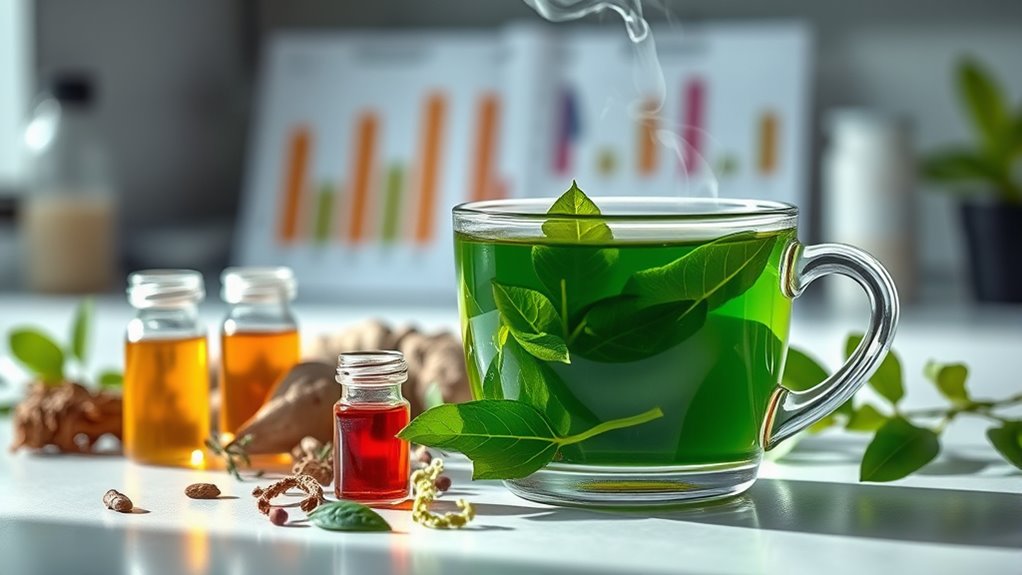
Scientific evidence shows that drinking tea regularly can boost your immune system through its antioxidants like catechins and flavonoids. These compounds help reduce inflammation, enhance immune cell activity, and support gut health—all essential for defending your body against infections. Studies confirm that tea’s bioactive components play a role in maintaining immune resilience. If you’re interested, there’s more to discover about how tea can help strengthen your natural defenses.
Key Takeaways
- Numerous studies show tea’s antioxidants, like catechins, reduce oxidative stress and inflammation, supporting immune health.
- Clinical trials indicate regular tea consumption enhances immune markers, including T-cell and cytokine activity.
- Research demonstrates tea compounds promote gut microbiome balance, indirectly strengthening immune responses.
- Evidence suggests tea’s bioactive components modulate immune cell function, boosting pathogen defense.
- Ongoing scientific studies confirm tea’s role in reducing chronic inflammation and improving overall immune resilience.

Have you ever wondered if that comforting cup of tea really supports your immune system? Scientific research suggests there’s more to your favorite brew than just warmth and flavor. Tea, especially varieties like green, black, and white, is rich in tea antioxidants—powerful compounds that combat oxidative stress and help maintain your body’s defenses. These antioxidants, including catechins and flavonoids, are believed to play a significant role in immune modulation, which is how your immune system adapts and responds to threats.
When you drink tea regularly, you’re providing your body with these bioactive compounds that may influence immune function. Studies have shown that tea antioxidants can help reduce inflammation, a key factor in supporting immune health. By lowering chronic inflammation, tea antioxidants create a more balanced immune response, preventing it from overreacting or becoming weakened. This immune modulation helps your body better defend against pathogens like viruses and bacteria, making tea a potentially valuable part of your overall health strategy.
Research also indicates that tea compounds can boost the activity of immune cells such as T-cells and macrophages, which are essential for identifying and destroying harmful invaders. For example, catechins found in green tea can enhance the production of cytokines—molecules that regulate immune responses—thereby improving your body’s ability to respond swiftly to infections. This isn’t just about preventing illness; it’s about supporting your immune system to function ideal when it’s needed most.
Furthermore, the bioactive components in tea may influence gut health, which is closely linked to immune function. A healthy gut helps regulate immune responses and prevents unnecessary inflammation. Drinking tea can promote a healthy microbiome, which in turn supports immune modulation from within. Additionally, regular tea consumption has been linked to antioxidant capacity, strengthening your body’s natural defense mechanisms. While research continues to explore these connections, the evidence points to tea as a beneficial beverage that actively participates in maintaining a resilient immune system.

Nature's Bounty Green Tea Pills and Herbal Health Supplement, Supports Heart and Antioxidant Health, 315mg, 100 Capsules
Contains antioxidant properties.*
As an affiliate, we earn on qualifying purchases.
As an affiliate, we earn on qualifying purchases.
Frequently Asked Questions
Does Drinking Tea Prevent Specific Illnesses or Infections?
Drinking tea can help prevent specific illnesses or infections by boosting your immune system. The antioxidant properties in tea enhance your body’s pathogen resistance, making it better equipped to fight off germs. Though tea isn’t a cure-all, regularly consuming it may lower your chances of getting certain illnesses by supporting your immune defenses. Incorporate tea into your routine to potentially enjoy these protective benefits.
How Much Tea Should I Consume Daily for Immune Benefits?
You’re on the right track, but don’t put all your eggs in one basket. For immune benefits, aim for about 3-4 cups of tea daily, following general tea consumption guidelines. This amount provides antioxidants without overdoing caffeine. Remember, moderation is key—balance your tea intake with a healthy diet and lifestyle to truly support your immune system and stay resilient against illnesses.
Are Certain Types of Tea More Effective Than Others?
You’ll find that certain types of tea, like green and black, contain higher levels of tea antioxidants, which may support your immune system. Herbal infusions, such as echinacea or ginger tea, also offer immune-boosting benefits. While all teas can be beneficial, choosing a variety with rich antioxidants and herbal infusions can maximize your immune support. Remember, consistency is key to reaping these potential health benefits.
Can Tea Supplements Replace Traditional Immune Medicines?
Think thoroughly before replacing traditional treatments with tea supplements. While tea supplement efficacy shows promise in supporting your immune system, it shouldn’t substitute immune medicine alternatives prescribed by healthcare providers. You can incorporate tea supplements as part of a healthy lifestyle, but they aren’t a replacement for proven medical remedies. Always consult your doctor to ensure your health choices complement your overall treatment plan effectively and safely.
Does Tea Have Any Side Effects Related to Immune Health?
Yes, tea can have side effects related to immune health. If you’re sensitive to caffeine, drinking too much tea may cause jitters or sleep issues, which can weaken your immune system. Additionally, some people may experience tea allergies, leading to symptoms like rashes or swelling. It’s best to enjoy tea in moderation and pay attention to how your body reacts to avoid any adverse effects.
immune boosting tea bags
As an affiliate, we earn on qualifying purchases.
As an affiliate, we earn on qualifying purchases.
Conclusion
You can see that tea isn’t just a comforting beverage—it’s a potential ally in boosting your immune system. The scientific evidence points to its rich antioxidants and immune-supporting compounds working behind the scenes. So, don’t overlook the power of that warm cup; it might just be your secret weapon in staying healthy. Remember, when it comes to your health, every little bit counts, and tea could be the missing piece in your wellness puzzle.
white tea for immune health
As an affiliate, we earn on qualifying purchases.
As an affiliate, we earn on qualifying purchases.
tea with catechins and flavonoids
As an affiliate, we earn on qualifying purchases.
As an affiliate, we earn on qualifying purchases.