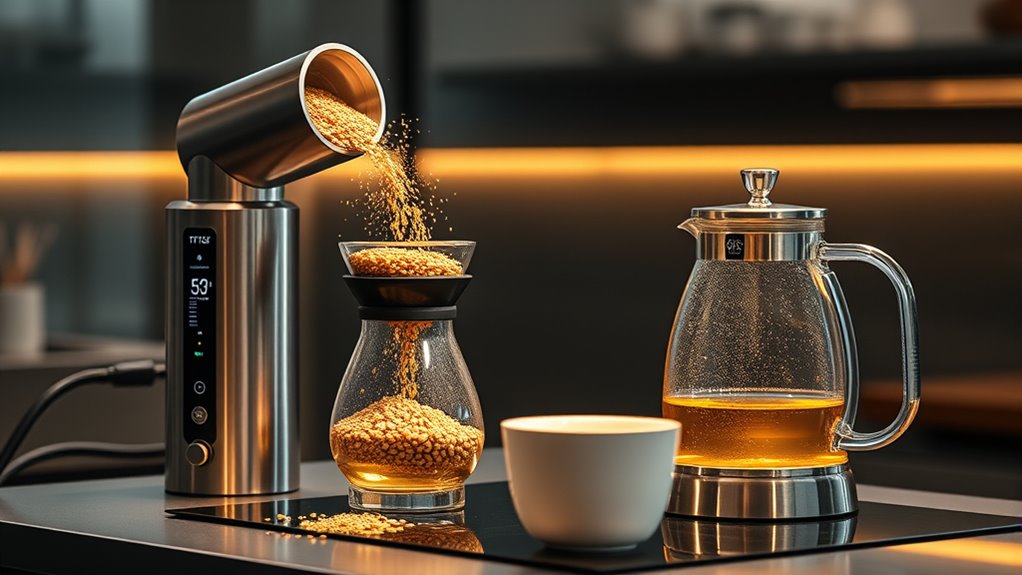

Modern innovations in barley tea production and preparation include using controlled fermentation methods that add depth and complex flavors, along with blending different barley varieties and incorporating natural herbs. Advanced roasting techniques optimize taste, while sustainable processing reduces waste and energy consumption. Packaging innovations like vacuum sealing preserve freshness, and specialized brewing equipment ensures consistent, flavorful steeping. Exploring these advancements reveals how new techniques are elevating barley tea beyond traditional methods—there’s much more to discover behind these improvements.

Get coffee and tea gear delivered free with Prime
- Fast, free delivery on millions of items
- Prime Video, Amazon Music and more included
- Member-only deals all year
Key Takeaways
- Implementing controlled fermentation techniques introduces unique microorganisms, enhancing flavor complexity and adding subtle sour or umami notes.
- Utilizing modern roasting parameters and blending barley varieties optimize flavor profiles and aroma development.
- Incorporating natural herbs or spices during processing expands flavor options and health benefits.
- Advancements in packaging, like vacuum sealing and light-proof containers, preserve freshness and extend shelf life.
- Using specialized brewing equipment ensures precise control over steeping, improving consistency and overall drinking experience.

In recent years, innovations in barley tea production and preparation have transformed how you enjoy this traditional beverage. New techniques have made it easier to craft a more flavorful, aromatic drink that appeals to modern tastes while preserving its classic qualities. One key development involves the understanding and application of tea fermentation. Traditionally, barley tea is simply roasted or toasted to develop its signature nutty flavor, but recent innovations explore controlled fermentation processes. By introducing specific microorganisms during roasting or subsequent storage, producers can enhance the tea’s complexity, creating layers of flavor that weren’t available before. This fermentation not only deepens the taste but also introduces subtle sour or umami notes, which add to the depth and richness of each sip. As a result, you get a more nuanced beverage, elevating barley tea from a simple refreshment to a sophisticated drink suitable for a variety of occasions.
Alongside fermentation, flavor enhancement techniques have also advanced considerably. Modern methods involve maximizing roasting parameters—temperature, duration, and even the type of barley used—to boost aroma and taste profiles. These adjustments ensure that every batch delivers a consistent, high-quality flavor experience. Some producers now experiment with blending different barley varieties or incorporating other grains to create unique flavor profiles that cater to diverse palates. Additionally, innovations in flavor infusion, such as adding natural herbs or spices during processing, have expanded the range of barley tea options you can enjoy. These enhancements not only boost aroma and taste but also provide potential health benefits, appealing to health-conscious consumers. Moreover, the development of innovative processing techniques continues to improve the efficiency and sustainability of barley tea production, reducing waste and energy consumption.
Furthermore, advancements in packaging and storage help preserve the freshness and flavor of barley tea longer than ever before. Vacuum-sealed pouches, nitrogen flushing, and light-proof containers prevent oxidation and preserve the integrity of delicate aromas. This means you can enjoy a fresher, more flavorful cup at home or on the go, with confidence that the tea retains its intended profile. Modern brewing equipment also plays a role; specially designed tea makers allow precise control over steeping times and temperatures, ensuring the best extraction of flavors for each batch.
Products Worth Considering

KitchenAid KF6 Fully Automatic Espresso Machine, Porcelain White

De'Longhi Dinamica Plus Fully Automatic Espresso Machine

Breville Bambino Espresso Machine, Brushed Stainless Steel
As an affiliate, we earn on qualifying purchases.
Frequently Asked Questions
What Are the Health Benefits of Barley Tea?
Barley tea offers several health benefits, including antioxidant properties that help protect your cells from damage. It also promotes digestive health by soothing your stomach and improving digestion. Drinking barley tea regularly can boost your immune system and keep you hydrated. Its natural nutrients support overall wellness, making it a healthy choice to enjoy daily. So, sipping on barley tea can be both revitalizing and good for your health.
How Does Barley Variety Affect Tea Flavor?
Imagine tasting a cup of barley tea made from a sweet, nutty barley cultivar—its flavor profile differs markedly from one with a more roasted, smoky taste. The barley cultivar directly influences the tea’s flavor, with some varieties offering a milder, floral note, while others give a robust, earthy taste. Choosing the right barley cultivar allows you to tailor your tea’s flavor profile to match your preferences perfectly.
Can Barley Tea Be Brewed Cold?
Yes, you can brew barley tea using cold infusion. Simply steep roasted barley in cold water for several hours or overnight. This method preserves the tea’s delicate flavors and results in a smoother, less bitter taste. Cold infusion also helps retain more of the subtle aromatic qualities, making it a revitalizing alternative to hot brewing. Just remember to strain the tea before drinking and enjoy its naturally crisp flavor.
What Are Traditional vs. Modern Brewing Techniques?
Imagine a timeless dance, where traditional brewing uses simple boiling methods and natural fermentation processes, relying on clay pots or teapots to extract rich flavors. Modern techniques, however, employ advanced brewing equipment like precision-controlled machines, speeding up steeping and enhancing consistency. While traditional methods evoke a sense of ritual, contemporary approaches focus on efficiency and uniformity, blending old-world charm with new-world innovation for a perfect cup of barley tea.
Are There Environmentally Sustainable Barley Tea Production Methods?
Yes, there are environmentally sustainable barley tea production methods. You can support sustainable farming practices that reduce water and energy use, minimizing environmental impact. Additionally, eco-friendly packaging options like biodegradable or recyclable materials help lessen waste. By choosing brands that prioritize these methods, you contribute to a healthier planet while enjoying your tea. Sustainable production not only benefits the environment but also promotes responsible consumption.
Conclusion
By embracing modern innovations, you enhance the quality, efficiency, and flavor of barley tea. You streamline production, preserve natural nutrients, and perfect preparation techniques. You innovate with technology, adapt with creativity, and elevate your experience. You guarantee every sip offers freshness, health benefits, and tradition. You transform everyday brewing into a modern ritual. You embrace progress, harness tradition, and enjoy the perfect cup—today, tomorrow, and beyond.