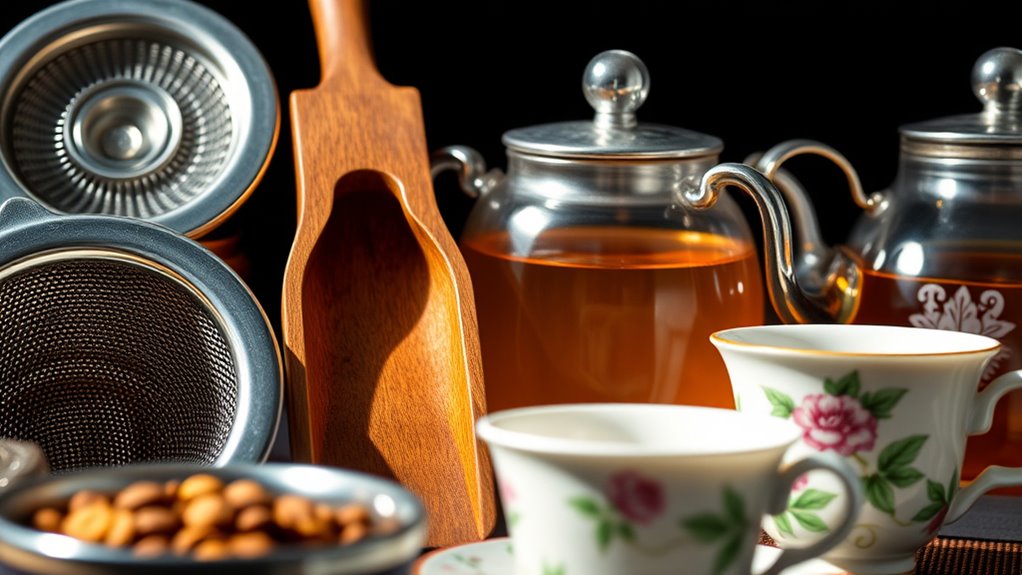
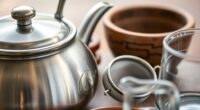
Choosing materials for your tea accessories impacts flavor, durability, and look. Clay teapots, like Yixing, enhance flavor over time but are porous and fragile. Glass offers a sleek view but doesn’t retain heat well. Metal containers are sturdy and airtight but can sometimes impart metallic tastes. Ceramic and porcelain balance insulation and aesthetic appeal, though they can be fragile. Continuing to explore will help you pick the best materials for your tea ritual.
Key Takeaways
- Clay teapots, like Yixing, enhance flavor over time but are porous and require careful handling.
- Glass accessories allow visual monitoring of brewing but have lower heat retention and are more fragile.
- Metal containers are durable and airtight, preventing oxidation, but may impart metallic tastes if not properly lined.
- Ceramic and porcelain jars provide good insulation and decorative appeal, with some risk of odor absorption if unglazed.
- Material impacts safety, durability, flavor preservation, and aesthetics, influencing overall tea brewing and storage experience.
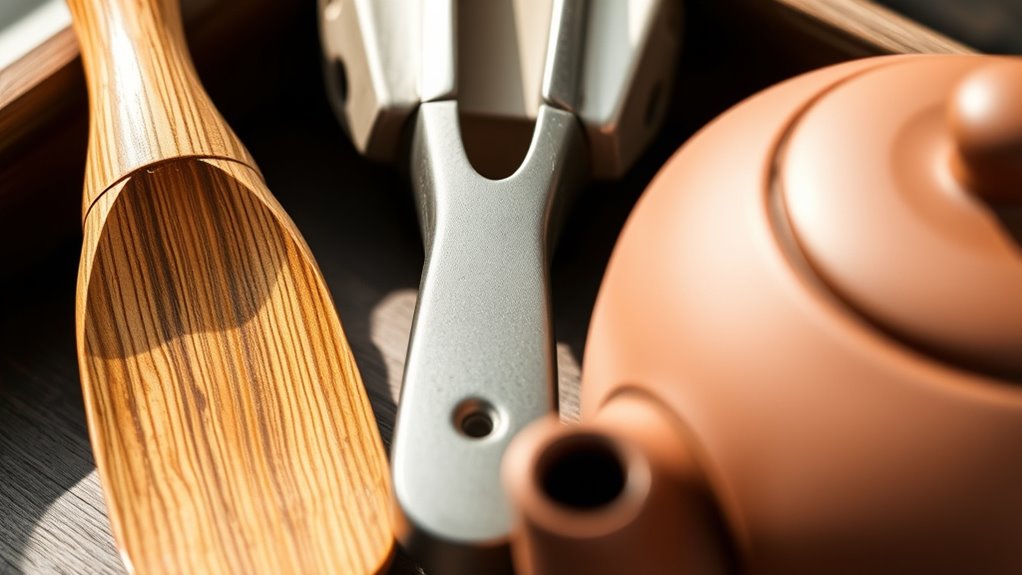
When it comes to preparing and enjoying tea, the materials used in tea accessories and tools play a crucial role in enhancing your experience. The choice of materials affects not only the aesthetics but also the functionality and durability of your tea set. For example, tea pot shapes can be influenced by the materials used, impacting how heat is retained and how easy it is to handle the pot. Traditional clay teapots, like Yixing, are prized for their porous nature, which absorbs tea oils and enhances flavor over time. These shapes often have intricate designs that reflect cultural artistry, but they require careful handling and seasoning. On the other hand, glass teapots feature sleek, modern shapes that allow you to observe the brewing process, making them perfect for visual learners. Their transparent design also means heat retention isn’t as strong as with clay, so they’re better suited for shorter infusions.
Storage container materials are equally important because they influence how well your tea stays fresh. Tea leaves are sensitive to air, moisture, and light, so selecting the right storage container can preserve their aroma and flavor longer. Metal containers, such as stainless steel or tin, are durable and airtight, preventing oxidation. However, some metals can impart a metallic taste or interact with the tea, especially if the container isn’t lined properly. Glass containers are another popular choice—they’re non-reactive and allow you to see the contents, but they’re more fragile and less effective at blocking light. Ceramic or porcelain storage jars are excellent for maintaining tea freshness; they’re non-reactive, insulate against temperature changes, and come in various styles that complement your kitchen decor. Just keep in mind that porous ceramics may absorb odors over time if not glazed properly.
When choosing your tea accessories, you’ll want to consider how the materials influence the overall experience. For example, a ceramic or cast iron teapot might provide excellent heat retention, allowing your tea to steep evenly, whereas a lightweight glass or stainless steel option might cool too quickly. Similarly, your storage container materials should match your priorities—whether it’s maximum preservation, visual appeal, or durability. Ultimately, the right combination depends on your tea-drinking habits, aesthetic preferences, and the types of tea you enjoy. Selecting the proper materials ensures your tea remains flavorful, your accessories last longer, and your tea ritual becomes a more satisfying experience. Material selection also plays a key role in ensuring safety and preserving the integrity of your tea accessories over time.

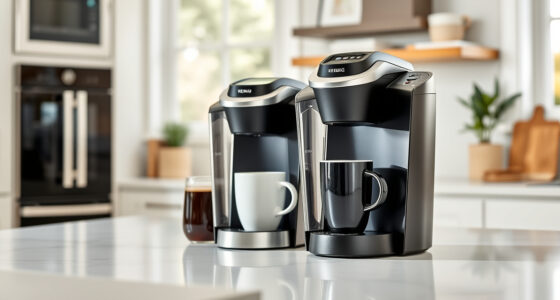
Keurig K-Mini Single Serve K-Cup Pod Coffee Maker, 6 to 12oz Brew size, with Cord Storage, Perfect for Small Spaces, Black
- Compact Design: Fits small spaces under 5 inches wide
- Adjustable Brew Size: Brew 6-12oz cups with Keurig pods
- Removable Water Reservoir: Add fresh water for each brew
As an affiliate, we earn on qualifying purchases.
Frequently Asked Questions
How Do Material Choices Affect Tea Flavor?
Material choices directly impact tea flavor because porous materials like clay can enhance the tea flavor impact by absorbing and releasing aroma over time. Non-porous materials like glass or stainless steel don’t affect the taste but won’t add any flavor nuances. You’ll notice that porous materials may develop a richer, more complex flavor profile, while non-porous options keep the pure taste of your tea intact.
Are Certain Materials More Durable Than Others?
You might think heavier materials are always more durable, but research suggests that durability depends on both material composition and construction quality. For example, stainless steel and cast iron are particularly resistant to wear and tear, making them more durable than lighter, brittle ceramics. Their sturdy build also enhances aesthetic appeal, ensuring your tea accessories last longer. So, when choosing tools, consider material weight and craftsmanship for lasting durability and visual charm.
Which Materials Are Best for Maintaining Temperature?
You should choose materials with high insulation effectiveness for better heat retention. Double-walled glass, ceramic, and stainless steel with insulation layers excel at maintaining temperature, keeping your tea warm longer. These materials trap heat effectively, providing excellent heat retention. Avoid thin or porous options like plastic or uninsulated glass, which quickly lose their warmth. Using well-insulated materials enhances your tea experience by preserving ideal temperature throughout your sip.
Do Some Materials Pose Health Risks?
You might worry about health concerns with certain tea materials, but many are safe when used properly. Some plastics or metals can pose risks of chemical leaching, especially if they’re poorly made or damaged. To protect yourself, choose high-quality, food-grade materials like glass or unglazed porcelain. Always inspect your tools regularly, and avoid using damaged items to prevent potential health issues from harmful chemicals.
How Eco-Friendly Are Different Tea Accessory Materials?
You’ll find that eco-friendliness varies among tea accessory materials. Recyclability plays a big role—stainless steel and glass are highly recyclable and have low manufacturing environmental impacts. Bamboo is renewable and biodegradable, making it eco-friendly, but some plastics, while recyclable, have higher environmental costs during manufacturing. Choosing materials with low environmental impact and good recyclability helps reduce your ecological footprint, making your tea rituals more sustainable.
Conclusion
Choosing the right materials for your tea accessories transforms each brewing session into a sensory journey. Imagine the warmth of a ceramic teapot cradling your favorite brew or the gleam of polished stainless steel as you pour. Whether you prefer the earthy feel of bamboo or the elegance of glass, your selections create a unique tea experience. So, pick wisely, and let each sip be a moment of serenity etched in the perfect material’s embrace.