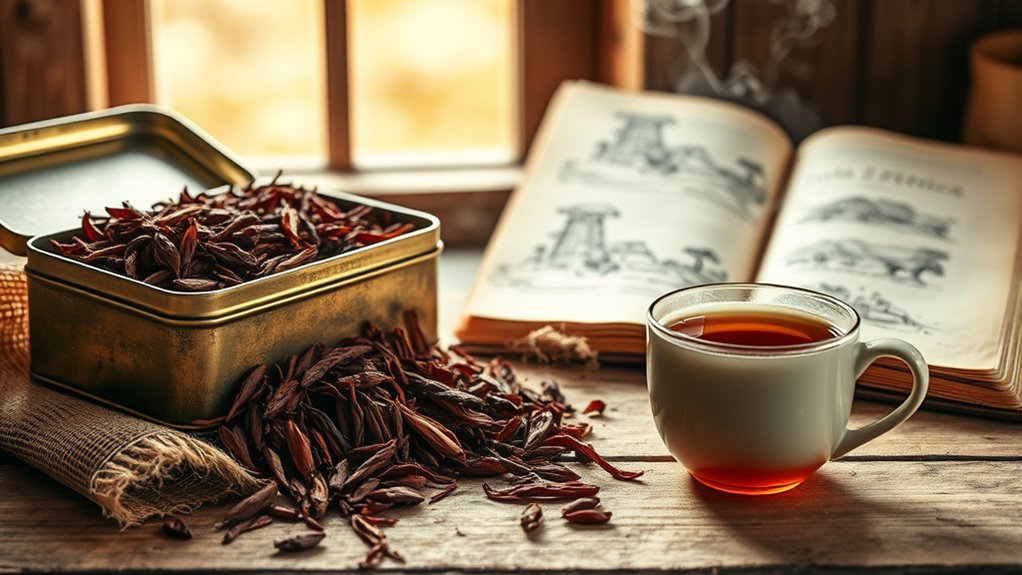
Rooibos tea comes from the Aspalathus linearis plant native to South Africa’s Cederberg region. Known for its distinctive red leaves, it has been used by indigenous communities for centuries for its health properties and cultural value. Traditionally, the leaves are harvested, dried, and steeped to produce a naturally caffeine-free, antioxidant-rich infusion. Its rich history and unique origins make it a fascinating beverage to explore further. Discover more about its cultural importance and health benefits as you continue.

Get coffee and tea gear delivered free with Prime
- Fast, free delivery on millions of items
- Prime Video, Amazon Music and more included
- Member-only deals all year
Key Takeaways
- Rooibos tea is an herbal infusion made from the Aspalathus linearis plant native to South Africa’s Cederberg region.
- It has been used traditionally by indigenous communities for centuries, valued for its natural health properties.
- The tea’s name means “red bush” in Afrikaans, referencing its reddish leaves that turn amber when brewed.
- Historically, local harvesting methods preserved the plant’s natural qualities and cultural significance.
- Today, rooibos has gained global popularity for its health benefits and rich cultural heritage.
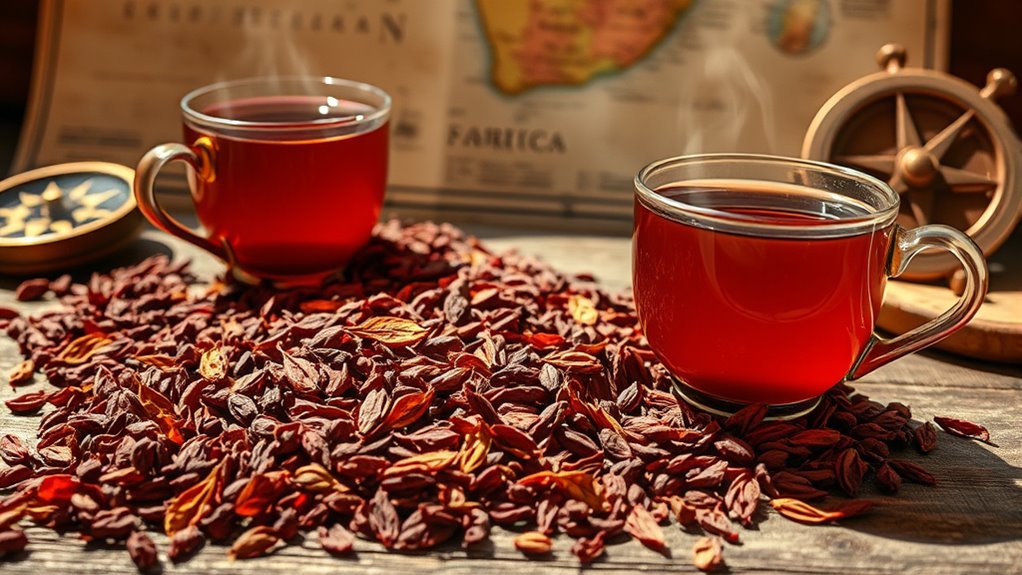
Have you ever wondered what makes rooibos tea a popular choice for health-conscious tea drinkers? This vibrant herbal infusion has gained worldwide recognition, not just for its rich, earthy flavor but also for its impressive health benefits. When you explore its history and origins, you’ll discover a story rooted in South Africa’s unique landscape, where indigenous communities first recognized its potential. The name “rooibos” means “red bush” in Afrikaans, referencing the plant’s striking red-colored leaves that turn deep amber when brewed. These leaves come from the Aspalathus linearis plant, a shrub native to the Cederberg region. Indigenous peoples have been harvesting and consuming rooibos for centuries, appreciating its natural properties long before it became a global phenomenon. Traditional harvesting methods contributed to the preservation of its natural qualities and flavor profile.
The traditional method of preparing rooibos is simple yet effective. You typically start by placing the dried leaves into a teapot or infuser. Pour boiling water over the leaves, then let it steep for about five to seven minutes. This brewing method releases the tea’s full flavor and accesses its health benefits. You can enjoy it plain or add a touch of honey or lemon for extra flavor. Because rooibos is naturally caffeine-free, it’s a versatile beverage you can enjoy any time of day without concern over disrupting your sleep or increasing your jitteriness. Its smooth, mellow taste makes it accessible to a wide range of palates, and the brewing process is straightforward, making it easy to incorporate into your daily routine.
Beyond its delightful taste, rooibos offers numerous health benefits that attract health-conscious individuals. It’s packed with antioxidants, which help combat free radicals and reduce oxidative stress. Drinking rooibos regularly can support your immune system, improve skin health, and even assist in reducing inflammation. Because it’s free from caffeine and tannins, it’s gentle on your stomach and can be consumed without worry about upset stomachs or caffeine crashes. The brewing methods for rooibos are flexible, allowing you to customize the strength and flavor to suit your preferences. Whether you prefer a light, delicate infusion or a stronger, more robust brew, adjusting the steeping time and leaf quantity makes it easy to liberate each cup.
In essence, the history and origins of rooibos reveal a tradition of natural healing and simplicity. Its long-standing cultural significance in South Africa, combined with its health benefits and easy brewing methods, make it a compelling choice for anyone seeking a flavorful, healthful beverage. As more people discover its unique qualities, rooibos continues to grow in popularity worldwide, offering a taste of South Africa’s rich heritage with every sip.
Frequently Asked Questions
Is Rooibos Tea Suitable for Children?
Yes, rooibos tea is suitable for children because it supports children’s hydration and is generally considered safe for consumption. You can give it to your kids as a healthy alternative to sugary drinks, but always guarantee it’s served without added sugar or sweeteners. While most children can enjoy rooibos tea, consult your pediatrician if your child has allergies or specific health concerns to ensure safe consumption.
How Does Rooibos Tea Compare to Green Tea Health Benefits?
Rooibos tea is a powerhouse, rivaling green tea in health benefits. You’ll find it has a lower caffeine content, making it perfect for sensitive drinkers or kids. When comparing antioxidants, rooibos is rich in unique polyphenols, while green tea boasts catechins known for their health perks. Both support your health, but rooibos shines as a caffeine-free, antioxidant-packed alternative that’s gentler on your system.
Can Rooibos Tea Be Used in Cooking or Baking Recipes?
Yes, you can incorporate rooibos tea into cooking and baking. Use it to make tea-infused desserts like panna cotta or ice cream, which add a subtle, earthy flavor. It also works well in savory applications such as marinades or rubs for meats, providing a unique depth of flavor. Simply brew a strong rooibos infusion and incorporate it into your recipes for a creative twist.
Are There Any Known Allergens Associated With Rooibos Tea?
You might experience Rooibos allergies or tea sensitivity, though it’s rare. Some people report mild reactions like skin irritation or stomach discomfort. If you’re concerned, start with small amounts to see how your body reacts. Keep in mind that allergic responses vary, so monitor for symptoms like itching or swelling. If you notice any adverse effects, consult a healthcare professional to determine if Rooibos tea is suitable for you.
How Has Rooibos Tea Influenced South African Culture Historically?
You see rooibos tea as a thread woven into South Africa’s cultural tapestry, shaping traditions and identity. It’s a symbol during traditional ceremonies, where its warm, earthy aroma acts like a bridge connecting generations. Rooibos has fostered a sense of pride and unity, becoming more than a beverage—it’s a cultural icon that reflects the rich history and resilience of South African communities.
Conclusion
Now that you’ve uncovered the fascinating history of rooibos tea, imagine what other secrets this ancient brew might hold. Its rich origins hint at even more stories waiting to be discovered, from traditional ceremonies to modern health benefits. As you sip your next cup, consider what surprising twists and cultural tales are still hidden within its vibrant leaves. The journey into rooibos is far from over—you’ve only just begun to scratch the surface.
Halloween Picks
halloween
As an affiliate, we earn on qualifying purchases.