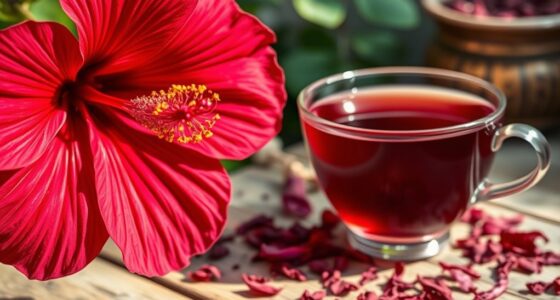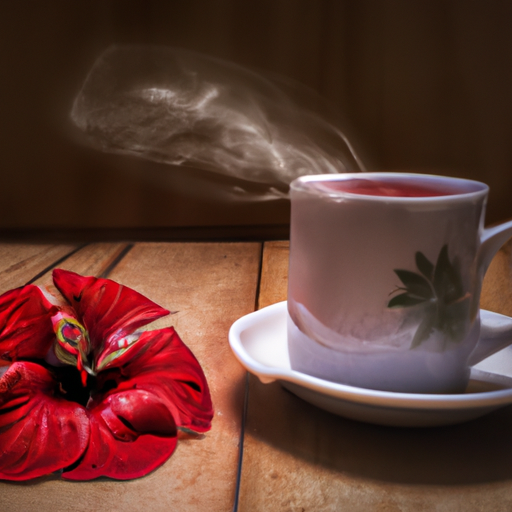
To brew the perfect cup of hibiscus tea, start with fresh, dried petals or a quality tea bag and use filtered water heated just below boiling, around 200°F. Pour the hot water over the hibiscus, then steep for 5-10 minutes, adjusting based on your taste preference for strength and flavor. Add honey or lime if desired, and enjoy a vibrant, tangy brew. Keep exploring for tips to customize your perfect cup even further.

Get coffee and tea gear delivered free — and shop member deals
- Fast, free delivery on millions of items
- Access to Prime Big Deal Days deals on October 6–7
- Prime Video, Amazon Music and more included
Key Takeaways
- Use fresh, filtered water heated to about 200°F (93°C) for optimal extraction.
- Measure 1-2 tablespoons of loose hibiscus petals per cup or use a tea bag for convenience.
- Steep for 5-10 minutes, adjusting time for desired strength and flavor intensity.
- Remove petals or tea bag promptly to prevent bitterness and over-extraction.
- Enhance flavor with honey, lime, or mint, and customize steeping time to achieve your ideal taste.

Have you ever wondered how to make a revitalizing cup of hibiscus tea? If so, you’re in the right place. The key to a perfect brew lies in understanding tea varieties and mastering the right brewing techniques. Hibiscus tea isn’t just one flavor; it comes in various forms, from loose dried petals to tea bags. Each variety has its own characteristics, influencing how you should approach brewing. Loose leaf hibiscus allows for more control over steeping time and strength, giving you a richer, more customizable experience. Tea bags offer convenience and consistency, ideal if you want a quick, reliable cup. Whichever variety you choose, the method of brewing makes all the difference in extracting the vibrant flavor and color.
When it comes to brewing techniques, the goal is to maximize flavor without over-extracting. Start by heating fresh, filtered water to just before boiling—about 200°F or 93°C. If you’re using loose hibiscus, measure approximately one to two tablespoons per cup. Place the hibiscus in a teapot or infuser, then pour the hot water over it. For tea bags, simply steep the bag in the hot water. Let it steep for about 5 to 10 minutes, depending on your preferred strength. The longer you steep, the more intense the flavor and color, but avoid overdoing it, as that can lead to bitterness.
Pay attention to the steeping time, as this is *vital*. A shorter steep yields a lighter, more floral taste, while a longer steep results in a bold, tangy flavor. After steeping, remove the hibiscus petals or tea bag promptly to prevent over-extraction. If you like your tea a bit sweeter, add a touch of honey or agave while it’s still warm. You might also consider adding a slice of lime or a sprig of mint for extra flavor. Remember, brewing is all about balance—adjust the steeping time and ingredients to suit your taste. Additionally, understanding the importance of proper water temperature can significantly impact the extraction process and flavor profile.
Frequently Asked Questions
Can I Reuse Hibiscus Tea Leaves for Multiple Brews?
Yes, you can reuse hibiscus tea leaves for brewing multiple times. After your first brew, the leaves still contain some flavor, so reusing tea leaves allows you to enjoy a milder, but still tasty, cup. Just keep in mind that with each subsequent brew, the flavor diminishes. To get the best results, rebrew for a slightly longer time and store the leaves properly between uses.
What Are the Best Sweeteners to Pair With Hibiscus Tea?
When it comes to sweetening hibiscus tea, you’re in the driver’s seat. Natural sweeteners like honey, agave nectar, or stevia bring out its vibrant flavor without overpowering it. Flavored syrups add a fun twist, but use them sparingly. Remember, a little sugar goes a long way, so start slow — you don’t want to spoil the brew. Sweeten to taste and enjoy every sip!
How Long Does Brewed Hibiscus Tea Stay Fresh in the Refrigerator?
Brewed hibiscus tea stays fresh in the refrigerator for about 3 to 5 days. To maximize freshness, store it in an airtight container and keep it chilled at or below 40°F. Follow these refrigeration tips to prevent spoilage and preserve its vibrant flavor. Always check for any off smell or appearance before drinking, and if in doubt, it’s best to discard it to stay safe.
Is Hibiscus Tea Suitable for People With Allergies to Citrus?
Citrus allergy awareness shows that many people react to citrus fruits, but hibiscus tea is generally safe for those with citrus allergies. Since hibiscus isn’t related to citrus, it’s a popular alternative allergy friendly tea. However, always check ingredients and consult your allergist, as individual sensitivities vary. You might find hibiscus tea a revitalizing, safe choice, especially if you’re seeking allergy-friendly options that avoid citrus components.
Can I Add Herbs or Fruits to Enhance Hibiscus Tea Flavor?
Yes, you can definitely add herbs or fruits to enhance hibiscus tea flavor. For flavor enhancement, try pairing with ingredients like mint, ginger, or citrus slices. These additions complement the tartness of hibiscus and create a delightful taste experience. Simply add your chosen herbs or fruits during brewing or as a garnish, allowing the flavors to meld and elevate your tea. Experiment with different ingredient pairings to find your perfect blend.
Conclusion
As you sip your freshly brewed hibiscus tea, let each taste remind you of the vibrant bloom’s journey from blossom to cup. Like the sun’s warmth nurturing the flower, your patience and care infuse life into every sip. Embrace this moment as a symbol of renewal and serenity, where simple ingredients unite to create something beautiful. With each cup, you carry a piece of nature’s artistry—deliberate, colorful, and invigoratingly pure.
Fall Picks
fall essentials
As an affiliate, we earn on qualifying purchases.