The history and evolution of tea sets reflect rich cultural traditions, craftsmanship, and modern innovations that influence how you enjoy and gift tea. From ancient Chinese porcelain to Japanese cast iron and British fine china, each style embodies unique aesthetic and social values. Contemporary designs blend traditional techniques with new materials, making tea sets meaningful symbols of heritage and artistry. If you’re curious about how these styles developed and their cultural significance, there’s plenty more to explore.
Open a free Amazon Business account
Business pricing, bulk buying and tax-exempt orders.
As an affiliate, we earn on qualifying purchases.
Key Takeaways
- Tea sets have centuries-long origins, reflecting cultural traditions, craftsmanship, and regional aesthetics.
- Development was influenced by cultural exchanges, incorporating materials like porcelain, silver, and bamboo.
- Design variations reveal societal values, with styles from Chinese porcelain to Japanese minimalism and British floral patterns.
- Modern evolution blends traditional techniques with innovative materials, embracing minimalism and contemporary tastes.
- Tea sets serve as cultural symbols and meaningful gifts, celebrating heritage, artistry, and personal taste.
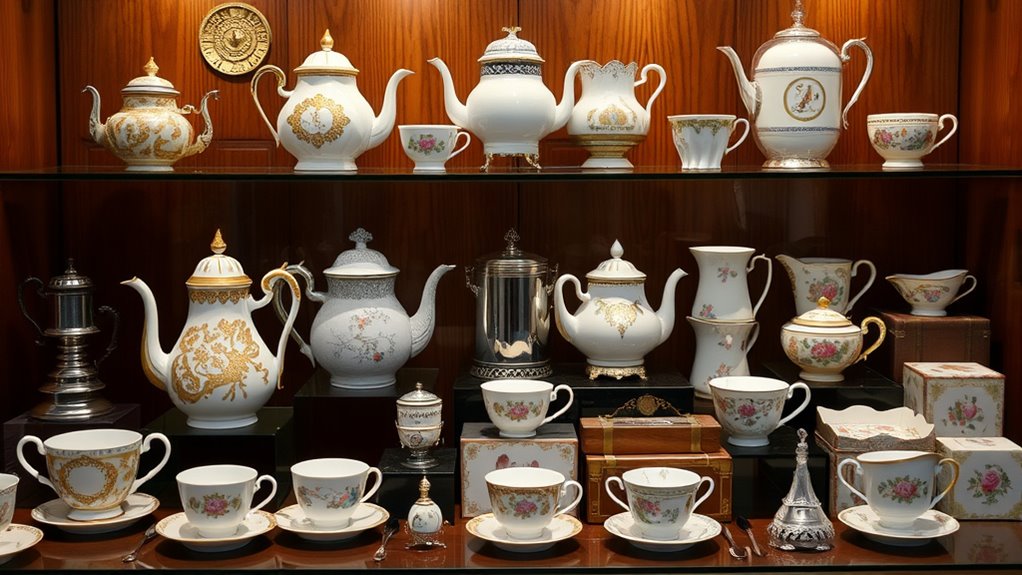
Tea sets have a rich history that dates back centuries, reflecting cultural traditions and evolving craftsmanship. As you explore the world of tea, you’ll notice how tea accessories—such as teapots, cups, and trays—serve not only functional purposes but also symbolize cultural values and artistry. The design of these accessories varies widely across regions, revealing the unique aesthetic and social customs of each culture. For instance, delicate porcelain teapots from China showcase intricate patterns and craftsmanship, while the sturdy, utilitarian cast iron teapots from Japan emphasize durability and heat retention. These distinctions highlight how cultural influences shape the materials, shapes, and decorative styles of tea sets.
Tea accessories reflect cultural values, showcasing diverse craftsmanship and aesthetic styles worldwide.
Throughout history, different civilizations have contributed to the evolution of tea sets, each adding their own flair and significance. In China, the tradition of tea drinking dates back thousands of years, where tea accessories became symbols of hospitality and refinement. The Chinese crafted elegant, often hand-painted porcelain pieces that reflected their artistic sensibilities. Moving westward, the influence of European cultures introduced new styles and materials, such as silver and fine bone china, which became popular among aristocrats and connoisseurs. These adaptations often incorporated ornate decorations and personalized motifs, transforming everyday tea drinking into a luxurious ritual. Additionally, advances in craftsmanship techniques have played a significant role in enhancing the complexity and beauty of modern tea sets.
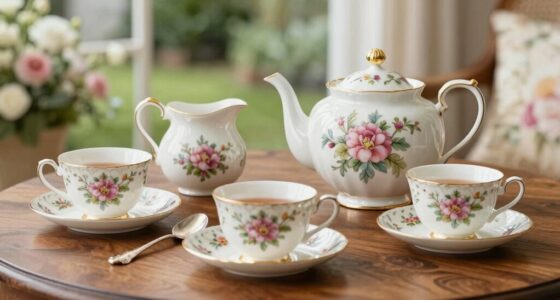
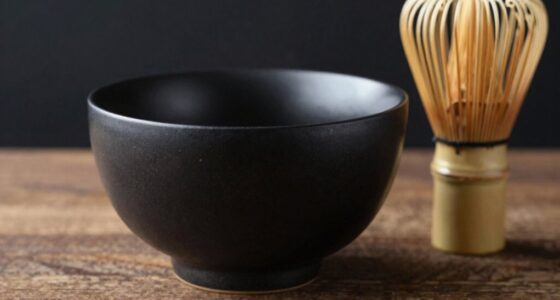
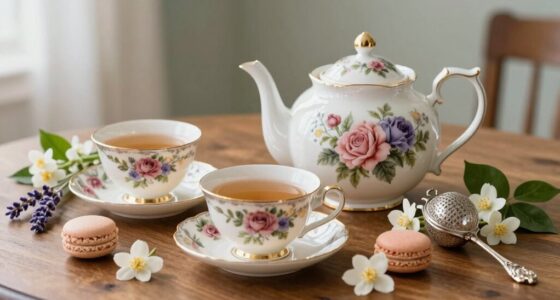
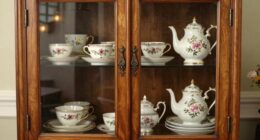
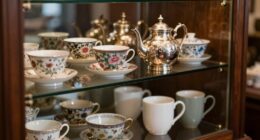
As you explore more deeply, you’ll see how cultural influences continue to evolve and blend. The Japanese tea ceremony, for example, emphasizes simplicity and mindfulness through minimalist tea accessories crafted from natural materials like bamboo and clay. Meanwhile, British afternoon tea culture popularized the use of fine china teapots and cups, often decorated with floral patterns, emphasizing elegance and tradition. These differences in tea accessories embody the values and aesthetics of each society, showing how cultural influences shape not just the look but also the experience of tea drinking.
Today, the evolution of tea sets is also driven by modern tastes and global exchange. You might find contemporary designs that combine traditional craftsmanship with innovative materials or minimalistic styles. Whether you’re selecting a classic Chinese porcelain set or a sleek, modern piece, understanding the cultural influences behind each design can deepen your appreciation. These influences enrich your tea experience and serve as meaningful gift ideas, symbolizing heritage, artistry, and personal taste. By choosing a tea set that reflects a specific culture or craftsmanship style, you celebrate the history and diversity of tea, making each moment of tea drinking a connection to centuries of tradition.

LURRIER Porcelain Chinese Gongfu Tea Set,Portable Teapot Set with 360 Rotation Tea maker and Infuser,Portable All in One Gift Bag for Travel,Home,Gifting,Outdoor and Office (Floral Blue)
- Unique Rotatable Design: Defines a new look for kungfu tea
- Elegant Black Minimalism: Frosted surface with ancient Chinese style
- Safe Wooden Handle: Prevents hot water spills during pouring
As an affiliate, we earn on qualifying purchases.
As an affiliate, we earn on qualifying purchases.
Frequently Asked Questions
What Materials Are Most Common in Modern Tea Sets?
You’ll find that ceramic and glass are most common in modern tea sets. Ceramic offers excellent durability, so your set lasts through many tea times, and it retains heat well. Glass, on the other hand, provides beautiful transparency, letting you enjoy the visual appeal of your tea. Both materials are popular choices because they blend functionality with aesthetics, making your tea experience enjoyable and stylish.
How Do Cultural Differences Influence Tea Set Designs?
Like a tapestry woven with tradition, cultural differences shape tea set designs through symbolism and craftsmanship. You’ll notice that Asian sets often feature delicate porcelain with dragons or cherry blossoms, embodying cultural symbolism. In contrast, European styles might emphasize ornate details and regional craftsmanship, reflecting history and elegance. These influences guide your choice, connecting you to the rich heritage behind each piece, making your tea experience uniquely meaningful and culturally resonant.
What Are Eco-Friendly Options for New Tea Sets?
You can choose eco-friendly tea sets made from biodegradable ceramics or recycled glassware. These options help reduce waste and environmental impact while offering stylish and functional pieces. Look for brands that prioritize sustainable materials and production methods. By selecting biodegradable ceramics, you support natural decomposition, and recycled glassware minimizes resource use. These eco-friendly choices let you enjoy your tea responsibly, knowing you’re making a positive difference for the planet.
How Can I Personalize a Traditional Tea Set?
You can personalize a traditional tea set by adding engraved patterns or monograms to the teapot, cups, or saucer rims. Opt for custom colors that match your style or décor, giving the set a unique touch. Consider hand-painting designs or using ceramic decals for intricate details. These personalized touches make your tea set special, whether for everyday use or as a thoughtful gift.
What Are the Latest Trends in Tea Set Gift Packaging?
You’ll notice that the latest trends in tea set gift packaging focus on enhancing tea set aesthetics with sleek, eco-friendly designs. Packaging innovations include minimalist boxes with magnetic closures, reusable fabric wraps, and personalized touches like custom tags. These trends aim to create a memorable unboxing experience, blending elegance with sustainability, so your gift stands out while respecting the environment. Embrace these ideas to impress and delight your recipients.
Conclusion
Now that you know the history and evolution of tea sets, you can appreciate their timeless charm. Whether you’re gifting a vintage piece or a modern design, remember that the right tea set can be a real showstopper. Don’t just settle for anything—go for something that truly speaks to your style. After all, it’s often the little things that make a big difference, so choose your tea set wisely and enjoy every sip.
Summer Picks
summer essentials
As an affiliate, we earn on qualifying purchases.