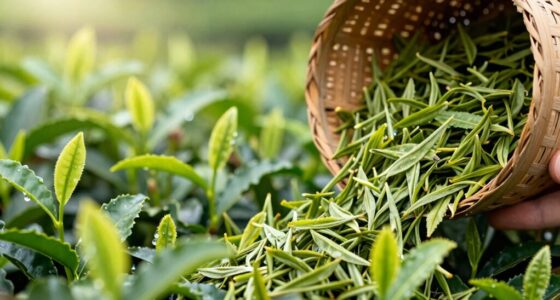

The development of sustainable and ethical tea sourcing has shifted from industry-driven profit focus to a more conscious approach that emphasizes fair labor practices and environmental health. Fair Trade and organic certifications emerged to guarantee safe working conditions, fair wages, and eco-friendly farming methods. Over time, stricter standards and consumer awareness have pushed the industry toward greater transparency and responsibility. If you want to discover how these changes shape today’s tea industry, there’s more to explore ahead.

Get coffee and tea gear delivered free — and shop member deals
- Fast, free delivery on millions of items
- Access to Prime Big Deal Days deals on October 6–7
- Prime Video, Amazon Music and more included
Key Takeaways
- Early tea production prioritized profit with little regard for social or ecological impacts.
- Fair Trade practices emerged to promote fair wages, safe working conditions, and community investment.
- Organic certifications developed to ensure environmentally sustainable farming free from synthetic chemicals.
- Industry standards evolved with increased consumer advocacy, combining Fair Trade and organic principles for broader sustainability.
- Today, certified teas enable consumers to support ethical and eco-friendly practices, influencing industry standards and practices.

Growing awareness about environmental impact and fair labor practices has made sustainable and ethical tea sourcing more important than ever. You now have a chance to influence how tea is produced and guarantee it benefits both the environment and the communities involved. Historically, tea was grown primarily for profit, often with little regard for its social or ecological effects. As consumers became more conscious, the demand for ethically sourced tea grew, prompting producers to adopt Fair Trade practices. These practices ensure farmers receive fair wages, work in safe conditions, and can invest in their communities. Over time, Fair Trade certifications gained recognition, providing a trusted label that guarantees these standards are met. You can look for these labels when purchasing tea, knowing that your choices support ethical farming.
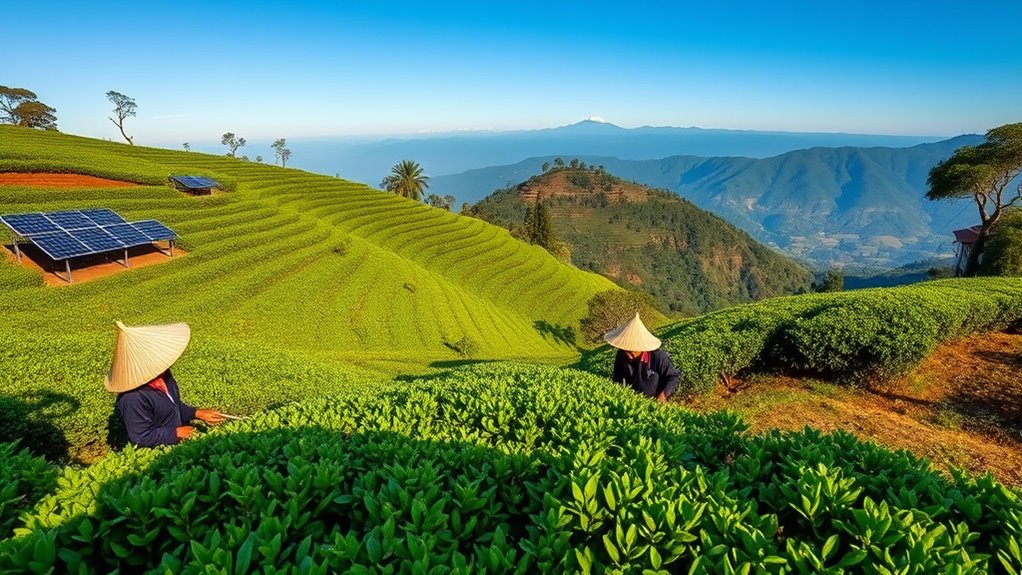
Alongside Fair Trade, organic certifications emerged as a crucial component of sustainable sourcing. Organic tea is cultivated without synthetic pesticides, herbicides, or genetically modified organisms, which protects the environment and promotes healthier ecosystems. Organic farming methods also help maintain soil fertility and conserve water, making the process more sustainable in the long run. When you select organic-certified teas, you’re choosing products that adhere to strict standards designed to minimize ecological harm. These certifications are not just marketing tools; they represent a commitment by farmers and producers to sustainable practices that safeguard the planet and future generations.
Additionally, the rise of eco-friendly farming techniques demonstrates a growing industry commitment to reducing ecological footprints. The development of these standards wasn’t overnight. It evolved through a combination of consumer advocacy, environmental activism, and industry regulation. Early efforts focused on improving working conditions and ensuring fair pay, but as the environmental impact of agriculture became clearer, organic certifications gained prominence. Over the last few decades, both Fair Trade and organic standards have become more rigorous, with many certifications now combining both principles—offering you teas that are ethically produced and environmentally friendly. This evolution reflects a broader shift in the industry towards transparency and responsibility.
Today, you have access to a wide array of certified teas, making it easier than ever to support sustainable and ethical practices. By choosing products with Fair Trade and organic labels, you’re actively participating in a movement that values fair treatment of workers, environmental health, and long-term ecological balance. This development in sourcing standards exemplifies how consumer demand can influence industry practices, fostering a future where tea is not only enjoyable but also ethically and sustainably produced. Your choices matter, and by opting for certified teas, you contribute to a more just and healthy global tea industry.
Fair Trade organic loose leaf tea
As an affiliate, we earn on qualifying purchases.
As an affiliate, we earn on qualifying purchases.
Frequently Asked Questions
How Do Certifications Ensure Genuine Ethical Practices?
Certificates guarantee genuine ethical practices by setting strict certification standards that companies must meet. When you see a certified label, it means ethical verification has been thoroughly conducted, confirming fair wages, sustainable farming, and safe working conditions. These standards help you trust that the tea you’re buying aligns with ethical principles, ensuring transparency and accountability from the source to your cup.
What Are the Biggest Challenges in Sustainable Tea Farming?
Imagine trying to grow a delicate tea leaf in a hostile storm—you face soil degradation that saps nutrients and threatens your harvest. You also wrestle with labor exploitation, where workers become pawns in a relentless game. These challenges threaten sustainability, making it hard to maintain eco-friendly practices. Overcoming them requires resilience, innovation, and a commitment to fair treatment, ensuring the tea’s journey from soil to cup remains ethical and sustainable.
How Do Consumer Choices Impact Tea Sourcing Ethics?
Your choices directly impact tea sourcing ethics. By opting for Fair Trade and Organic Certified teas, you support farmers who follow ethical practices and promote sustainability. When you choose these products, you encourage companies to prioritize fair wages, environmentally friendly methods, and better working conditions. Your consumer power helps drive the market toward more ethical and sustainable tea sourcing, making a real difference for farmers and the planet alike.
Are There Regional Differences in Ethical Tea Production?
Of course, regional disparities and cultural influences shape ethical tea production like a quirky dance. You’ll find some regions prioritizing fair wages and eco-friendly practices, while others might overlook them in favor of tradition or cost-cutting. Cultural influences add flavor, making each tea’s story unique. So, yes, ethical standards vary globally, reflecting local values—proving that even tea can be culturally complex and regionally unpredictable.
What Future Innovations Could Improve Sustainability in Tea Sourcing?
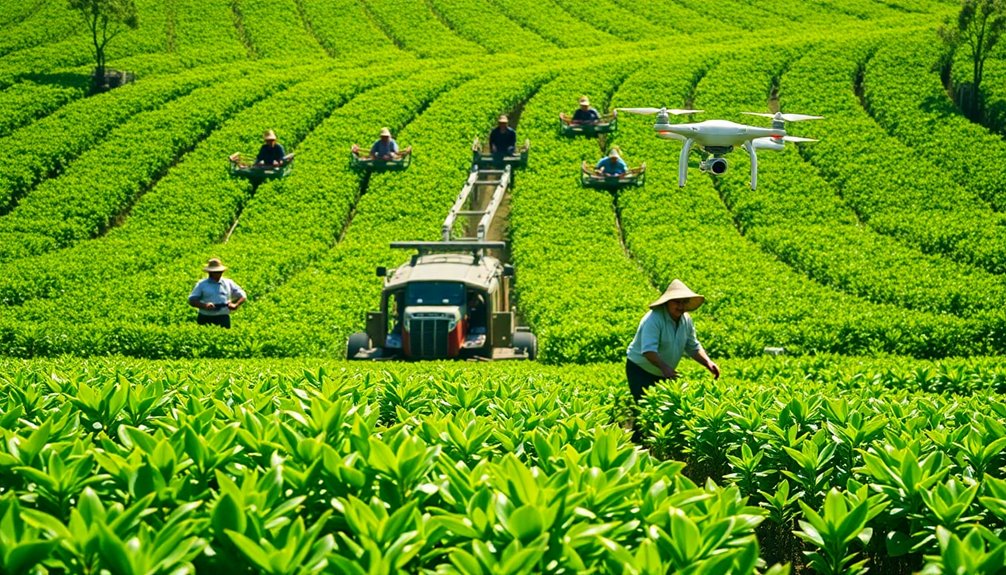
You can expect future innovations like innovative farming techniques and tech advancements to boost sustainability in tea sourcing. These innovations might include precision agriculture to optimize water and fertilizer use, drone monitoring to manage crop health, and AI-driven supply chain tracking for transparency. By adopting these technologies, you’ll help reduce environmental impact, support fair labor practices, and promote eco-friendly practices, making tea production more sustainable for generations to come.
Conclusion
As you explore the journey of sustainable and ethical tea sourcing, you’ll find that every cup tells a story—one shaped by mindful choices and shared commitments. Coincidentally, the very practices supporting farmers and the environment often lead to richer flavors and better quality. By choosing ethically sourced tea, you become part of a global movement that benefits communities and nature alike. So, next time you sip, remember—you’re drinking more than just tea; you’re helping shape a better world.
Fall Picks
fall essentials
As an affiliate, we earn on qualifying purchases.