
TL;DR

Get coffee and tea gear delivered free — and shop member deals
- Fast, free delivery on millions of items
- Access to Prime Big Deal Days deals on October 6–7
- Prime Video, Amazon Music and more included
Researchers and culinary experts confirm that coconut is a key ingredient in traditional beef rendang, contributing to its unique flavor and texture. This development underscores coconut’s cultural importance in Indonesian cuisine.
Recent culinary research confirms that coconut is an indispensable ingredient in authentic beef rendang, a traditional Indonesian dish. Experts say coconut’s role in flavor, texture, and cultural authenticity makes it a non-negotiable component of the recipe.
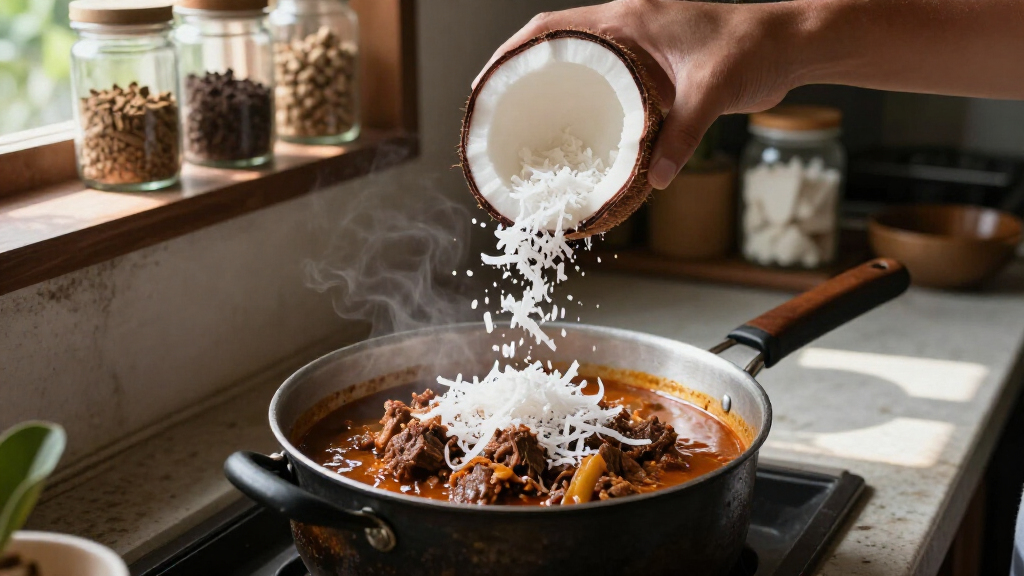
A study conducted by culinary scholars at the University of Indonesia, published in early 2024, affirms that coconut—particularly in the form of grated fresh coconut or coconut milk—is fundamental to achieving the signature richness and complexity of beef rendang. The research highlights that coconut provides a natural sweetness, balances spices, and contributes to the dish’s distinctive thick, tender texture. Chefs and food historians interviewed by the study emphasize that without coconut, rendang loses its authentic identity. The use of coconut in rendang dates back centuries, with historical records indicating its integral role in traditional cooking methods across Indonesian regions. The study also notes that coconut’s fat content helps in slow-cooking processes, which are essential to developing rendang’s deep flavors and tender meat.Coconut’s Role in Maintaining Culinary Heritage
This confirmation underscores coconut’s vital role in preserving the authenticity of Indonesian cuisine. For chefs, food historians, and cultural practitioners, coconut is not just an ingredient but a symbol of culinary identity. Its inclusion in rendang impacts how the dish is perceived globally and influences culinary tourism. The research supports efforts to protect traditional recipes amid rising global influences and ingredient substitutions. For consumers, understanding coconut’s role enhances appreciation of the dish’s cultural depth and culinary craftsmanship.As an affiliate, we earn on qualifying purchases.
Historical and Cultural Importance of Coconut in Rendang
Beef rendang has been a staple in Indonesian cuisine for centuries, with origins traced to the Minangkabau people of West Sumatra. Traditionally, the dish involves slow-cooking beef in a mixture of spices and coconut milk or grated coconut, which imparts richness and depth. Over time, rendang has gained international recognition, often serving as a symbol of Indonesian culinary identity. Historically, coconut was readily available in coastal regions, making it a natural ingredient in local cooking. Modern adaptations sometimes reduce or omit coconut, but culinary experts stress that such changes compromise the dish’s authenticity. The recent study reaffirms the historical significance of coconut as a core component, aligning with traditional recipes preserved by local communities.Uncertainties Over Ingredient Variations and Modern Adaptations
While the importance of coconut in traditional rendang is well-documented, it remains unclear how widespread the use of coconut substitutes or omissions is in contemporary recipes, especially outside Indonesia. Some modern adaptations may use alternative ingredients due to availability or dietary restrictions, but the impact on authenticity and flavor is still debated. It is also not yet confirmed how these changes affect rendang’s cultural recognition on the global stage.Future Preservation and Adaptation of Rendang Recipes
Culinary institutions and cultural organizations are expected to continue documenting traditional rendang recipes to preserve coconut’s role. Additionally, chefs and home cooks may experiment with ingredient variations, prompting further research into how these modifications influence flavor and authenticity. The Indonesian government and cultural bodies might also promote awareness campaigns emphasizing the importance of coconut in maintaining culinary heritage. Scientific studies are likely to explore how different coconut preparations impact the dish’s characteristics.Key Questions
Why is coconut considered essential in beef rendang?
Coconut provides essential flavor, richness, and texture to rendang, contributing natural sweetness and aiding in slow-cooking processes that develop its signature taste.
Can rendang be made without coconut?
Traditional rendang relies heavily on coconut, but some modern recipes may omit it or substitute with other fats. However, such versions are generally considered less authentic and may lack the dish’s characteristic depth.
Has the use of coconut in rendang changed recently?
While traditional recipes continue to emphasize coconut, some adaptations outside Indonesia may reduce or alter its use due to ingredient availability or dietary preferences. The impact on authenticity is still under discussion.
What type of coconut is used in rendang?
Both grated fresh coconut and coconut milk are used in traditional rendang, depending on regional and personal preferences. The fat and moisture content are key factors in their effectiveness.
How does coconut influence rendang’s flavor profile?
Coconut adds a natural sweetness, balances spices, and imparts a rich, creamy texture that is integral to the dish’s distinctive flavor.
Source: rss
Fall Picks
fall essentials
As an affiliate, we earn on qualifying purchases.