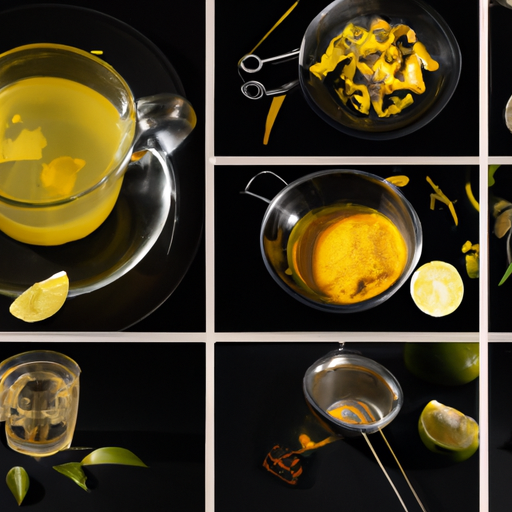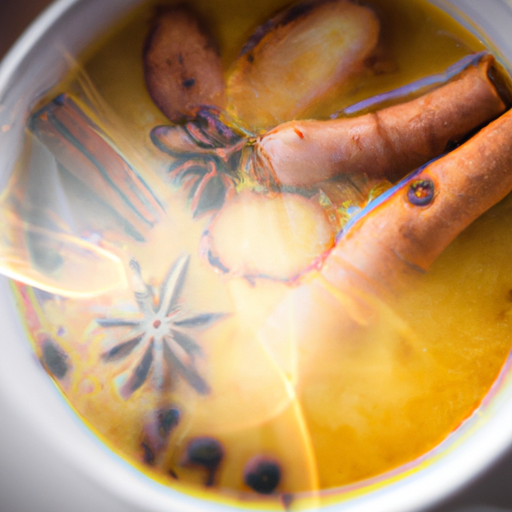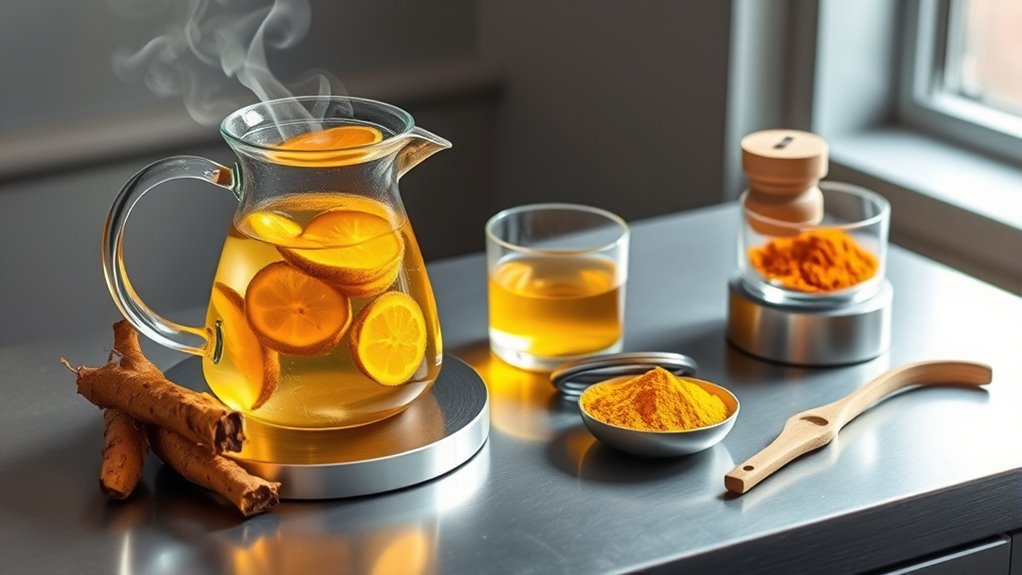

Modern innovations in turmeric tea focus on enhancing flavor, convenience, and health benefits. You can explore new blends with spices like cinnamon and ginger, or enjoy quick options using pre-made concentrates and turmeric pastes. Innovative brewing techniques, such as simmering with black pepper and healthy fats, boost absorption. Plus, customizable plant-based milks and versatile preparation styles make it easier to enjoy turmeric tea daily. Keep exploring to discover even more ways to elevate your wellness routine.
Key Takeaways
- Utilizing turmeric concentrates, pastes, or pre-made tea bags for faster, potent brewing.
- Incorporating advanced brewing techniques like simmering with black pepper and healthy fats to enhance bioavailability.
- Developing flavored blends with spices such as cinnamon, ginger, and cardamom for improved taste and health benefits.
- Employing specialized tools like French presses and tea infusers to optimize extraction and flavor infusion.
- Creating dairy-free, plant-based golden milk variants with natural sweeteners for customizable, enjoyable beverages.

Turmeric tea has long been valued for its health benefits, but recent innovations are transforming this ancient beverage into a modern wellness staple. Today, you can explore a variety of golden milk variations that blend turmeric with spices like cinnamon, ginger, and cardamom, creating rich, flavorful drinks that go beyond traditional tea. These variations not only enhance taste but also boost the health properties, making your turmeric experience more enjoyable and nutritious. Whether you prefer a warm, comforting cup or an iced version, experimenting with golden milk allows you to customize your beverage to your liking, adding natural sweeteners or plant-based milks for a personalized twist.
Discover flavorful turmeric golden milk variations with spices and plant-based milks for a personalized, nutritious wellness boost.
In addition to flavor innovations, turmeric tea brewing techniques are evolving to maximize its benefits. Traditional methods often involve steeping powdered turmeric or fresh roots, but new approaches emphasize precision and extraction efficiency. For example, some brewers now recommend simmering turmeric with black pepper and healthy fats like coconut oil or ghee before steeping. This technique helps liberate curcumin—the active compound—making it more bioavailable for your body. You might also find recipes that incorporate turmeric paste or concentrate, reducing preparation time while maintaining potency. Using a French press or a tea infuser can further improve your brewing process, ensuring an even, thorough infusion of flavors and nutrients.
Modern turmeric tea preparation also explores the use of innovative tools and ingredients. You could try adding a pinch of turmeric to your daily smoothie or latte, blending it with your favorite ingredients for a quick health boost. Some brands now offer pre-made turmeric tea bags or concentrates, making it easier to enjoy this wellness-promoting drink on busy mornings. With the rise of plant-based milks, you can create creamy, dairy-free versions of golden milk that suit your dietary preferences. Furthermore, optimized brewing techniques are increasingly used to extract maximum benefits from turmeric, ensuring you get the most health advantages from your drink.
These advances in brewing techniques and flavor combinations are designed to make turmeric tea more accessible and enjoyable. You no longer have to rely solely on traditional steeping methods; instead, you can experiment with different ingredients, textures, and presentation styles. This flexibility encourages you to integrate turmeric into your daily routine more effortlessly, turning an ancient remedy into a contemporary health habit. Whether you prefer a spicy, sweet, or savory profile, these innovations empower you to craft a turmeric tea experience that’s both delicious and nourishing, aligning with your modern wellness goals.

Traditional Medicinals Organic, Turmeric Tea with Ginger & Meadowsweet – Supports Normal Response to Inflammation – Kosher, Non-GMO, Caffeine-Free, Compostable – 16 Tea Bags
Herbal wellness: Organic Turmeric tea supports a healthy response to inflammation associated with an active lifestyle*
As an affiliate, we earn on qualifying purchases.
As an affiliate, we earn on qualifying purchases.
Frequently Asked Questions
Are There Any Age Restrictions for Consuming Turmeric Tea?
There are generally no strict age restrictions for consuming turmeric tea, but you should be cautious with pediatric consumption. For young children, it’s best to consult a healthcare professional before offering turmeric tea, as high doses might cause stomach upset or allergic reactions. Older children and teenagers usually can enjoy turmeric tea in moderation. Always monitor for any adverse effects and adjust intake based on individual health needs.
How Long Does Homemade Turmeric Tea Stay Fresh?
Your homemade turmeric tea can stay fresh for up to 24 hours if you follow proper storage techniques. To preserve its freshness, store it in an airtight container or a sealed jar in the fridge. This prevents it from losing flavor or nutrients, which can happen quickly with exposure to air and light. For the best taste and health benefits, drink it within this timeframe, and reheat gently if needed.
Can Turmeric Tea Be Used as a Medicinal Remedy?
Yes, turmeric tea can be used as a medicinal remedy. Its herbal synergy offers anti-inflammatory benefits that may help reduce inflammation and pain. You can incorporate turmeric tea into your routine to support your immune system and improve overall wellness. Just remember to drink it regularly and combine it with other anti-inflammatory foods for the best results. Always consult a healthcare professional if you’re unsure about its medicinal use.
What Are the Best Storage Methods for Turmeric Tea Ingredients?
You should store turmeric tea ingredients in airtight storage containers to maintain shelf stability and flavor. Keep them in a cool, dark place away from direct sunlight and moisture, which can degrade their potency. Using glass or BPA-free plastic containers is ideal. Proper storage guarantees your ingredients stay fresh longer, preserving their medicinal properties and flavor, so your turmeric tea remains effective and delicious whenever you brew a cup.
Are There Any Known Allergenic Reactions to Turmeric Tea?
You should be aware that some people experience allergenic responses to turmeric tea, especially if they have turmeric sensitivity. Common reactions include skin rash, itching, or gastrointestinal discomfort. If you notice any adverse symptoms after drinking turmeric tea, it’s best to stop consumption and consult a healthcare professional. While rare, allergic reactions can be serious, so always monitor your body’s response and seek medical advice if needed.

Alchemy Golden Milk Turmeric Elixir Latte Concentrate with Curcumin, Ginger and Raw Sugar, Hints of Cinnamon and Creamy Vanilla, Coffee Substitute, 750 ml, Caffeine Free, Dairy Free, Gluten Free, Vegan Friendly, 750 ml (Unsweetened)
Golden Turmeric Elixir is delicious in all types of milk (dairy or plant-based), delivering a well-balanced drink spiced…
As an affiliate, we earn on qualifying purchases.
As an affiliate, we earn on qualifying purchases.
Conclusion
As you explore modern innovations in turmeric tea, you’ll discover how new techniques enhance flavor and health benefits. Imagine brewing a turmeric tea infused with adaptogens, creating a soothing, wellness-boosting drink at home. These advancements make it easier for you to enjoy turmeric’s benefits daily, whether through quick infusion methods or innovative delivery systems. Embrace these innovations to elevate your tea experience and unleash turmeric’s full potential in your wellness journey.

Fu Store 2pcs Stainless Steel Mesh Tea Ball 2.1 Inch Tea Strainers Teas Infuser Strainer Filters for Teas
Important Note for Built to Last: Please clean and keep dry after use
As an affiliate, we earn on qualifying purchases.
As an affiliate, we earn on qualifying purchases.

DelighTeas Organic Golden Milk Powder with Turmeric, Ginger, Ceylon Cinnamon | Ayurvedic Spices for Golden Turmeric Latte | Unsweetened, Vegan, Non-GMO, Keto | 120 Servings, 5 oz.
AUTHENTIC AYURVEDIC TEA & SPICE BLEND: Golden Milk, or turmeric latte, is known for its antioxidant properties. Make…
As an affiliate, we earn on qualifying purchases.
As an affiliate, we earn on qualifying purchases.