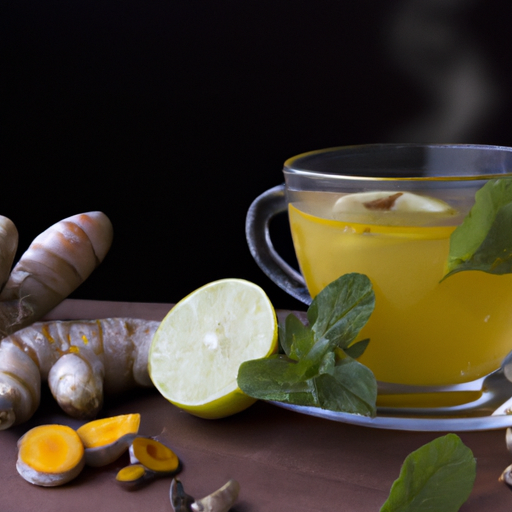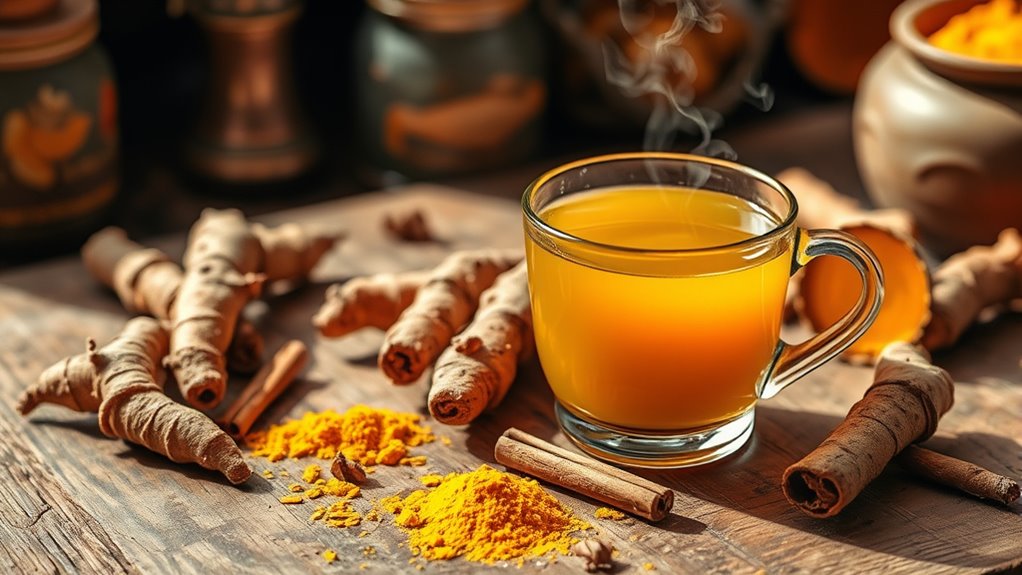
Turmeric tea has been used for thousands of years in traditional Asian healing practices, especially in India. It’s prized for its active compound, curcumin, which provides anti-inflammatory and antioxidant benefits. Historically, people brewed turmeric into teas and decoctions to promote health and treat ailments like joint pain and digestion issues. Its use spread through trade and cultural exchange, making it a popular remedy across Asia and beyond. Discover more about its fascinating origins and benefits as you explore further.
Key Takeaways
- Turmeric tea has ancient roots in Asian cultures, especially India, where it was used in traditional medicine for thousands of years.
- Its medicinal reputation is rooted in the active compound curcumin, known for anti-inflammatory and antioxidant properties.
- Historically, turmeric was incorporated into Ayurveda and Chinese medicine to promote health, digestion, and immunity.
- Traditional brewing methods involved simmering turmeric roots or powders with spices like black pepper, ginger, and cinnamon.
- Modern turmeric tea continues this legacy, blending traditional practices with contemporary wellness routines for natural health benefits.

Turmeric tea has gained popularity as a health-boosting beverage thanks to its vibrant color and potent anti-inflammatory properties. You might be curious about its origins and how it became a staple in traditional medicine. Historically, turmeric has been used for thousands of years in Asian cultures, particularly in India, where it is considered a sacred plant. Its use in Ayurveda, the ancient Indian system of medicine, dates back over 4,000 years, primarily for promoting overall health and treating various ailments. The practice of brewing turmeric into tea or decoctions likely emerged as a way to harness its medicinal qualities more conveniently, allowing people to incorporate its benefits into daily routines.
The roots of turmeric’s health benefits are deeply embedded in its active compound, curcumin, which provides powerful anti-inflammatory and antioxidant effects. These qualities made turmeric a popular remedy for inflammation, joint pain, digestive issues, and even skin conditions. As trade routes expanded, turmeric traveled from India to other parts of Asia, the Middle East, and eventually Europe, spreading its reputation as a medicinal herb. Its use in traditional Chinese medicine also contributed to its recognition for boosting immunity and improving digestion. Over time, these ancient practices laid the groundwork for modern interest in turmeric tea as a natural health supplement.
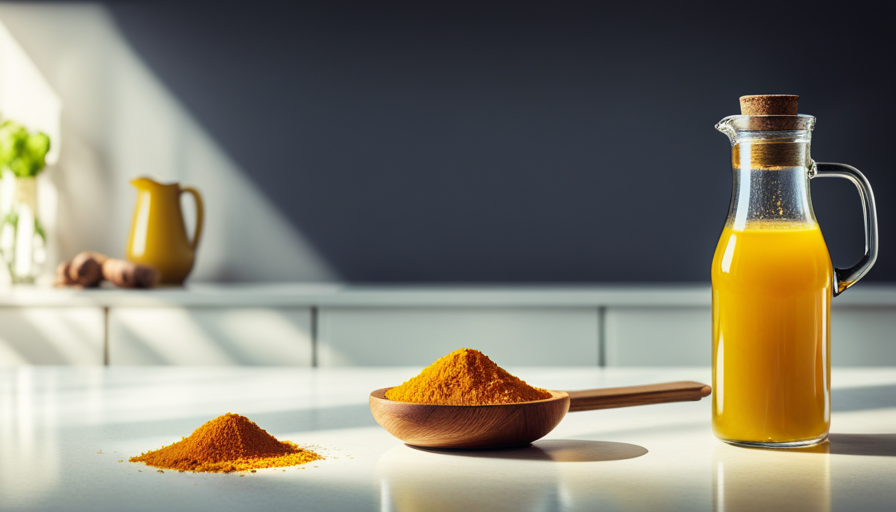
When you prepare turmeric tea, you benefit from a variety of brewing methods that help maximize its health benefits. The most straightforward method involves simmering fresh or dried turmeric root in water with optional additions like black pepper, which enhances curcumin absorption. You can also use turmeric powder, boiling it with water and other spices such as ginger or cinnamon to create a flavorful infusion. Steeping the mixture for 10 to 15 minutes ensures the active compounds are released fully. Some prefer adding a splash of milk or plant-based alternatives to make a creamy turmeric latte, which not only tastes great but also maintains the anti-inflammatory properties. You might find that experimenting with different brewing methods and ingredients allows you to tailor the tea to your taste preferences while still reaping its health benefits.
In essence, turmeric tea’s history reflects centuries of traditional wisdom, and today, you have multiple simple brewing methods to enjoy its medicinal qualities. Whether you stick to a basic recipe or get creative with spices and additives, making turmeric tea at home is an easy, effective way to incorporate this ancient remedy into your wellness routine. Its rich history and proven health benefits make it more than just a colorful beverage—it’s a natural way to support your overall health.
Frequently Asked Questions
How Is Turmeric Tea Traditionally Prepared Across Different Cultures?
You typically prepare turmeric tea using traditional ingredients like fresh turmeric roots or powdered turmeric, combined with water or milk. In Indian culture, you boil turmeric with black pepper and ginger for added health benefits. In Southeast Asia, coconut milk often accompanies turmeric, creating a rich, flavorful drink. You might also add honey or lemon for taste. These cultural preparations highlight varied spices and ingredients, reflecting each region’s unique approach to turmeric tea.
What Are the Health Benefits of Turmeric Tea Supported by Scientific Research?
Imagine you’re in a futuristic wellness spa—turmeric tea offers powerful health benefits supported by science. It’s rich in antioxidant properties that help fight free radicals, and its anti-inflammatory effects can reduce joint pain and boost immunity. Studies show regular consumption may improve brain function and lower the risk of chronic diseases. Incorporate turmeric tea into your routine to harness these natural benefits and support overall well-being.
Are There Any Known Side Effects or Contraindications of Drinking Turmeric Tea?
You should be aware that drinking turmeric tea may cause potential allergy risks, especially if you’re allergic to turmeric or related spices. It can also interact with certain medications, like blood thinners or diabetes drugs, leading to adverse effects. If you’re pregnant, nursing, or on medication, it’s best to consult your healthcare provider before adding turmeric tea to your routine. Stay cautious to enjoy its benefits safely.
How Does Turmeric Tea Compare to Other Herbal Teas in Medicinal Properties?
Imagine a vibrant garden where each herb blooms with unique wellness powers. Turmeric tea stands out with its anti-inflammatory and antioxidant benefits, showcasing strong comparative efficacy. While other herbal teas like chamomile soothe nerves or peppermint aids digestion, turmeric’s medicinal properties often work in herbal synergy, targeting multiple health issues simultaneously. You get a potent, holistic remedy that’s not just calming but also actively supports your immune system and overall health.
Can Turmeric Tea Be Used as a Natural Remedy for Specific Ailments?
Yes, you can use turmeric tea as a natural remedy for ailments like inflammation and joint pain, thanks to its herbal synergy. It’s often considered an effective alternative therapy for conditions such as arthritis and digestive issues. Drinking turmeric tea regularly may help boost your immune system and reduce discomfort, making it a beneficial addition to your health routine. Just remember to consult a healthcare professional for personalized advice.
Conclusion
As you sip your warm turmeric tea, imagine golden sunsets blending with the earthy aroma of spices. Feel the gentle warmth spread through your body, soothing and invigorating with every sip. This vibrant brew, steeped in centuries of tradition, connects you to ancient lands and timeless healing. Let its rich, luminous hue remind you of the sun-kissed fields where turmeric grows, wrapping you in a comforting, flavorful embrace that nourishes both body and soul.