Turmeric tea has a long history rooted in traditional herbal practices across cultures, especially in South Asia, where it’s valued for flavor and medicinal benefits. Modern trends highlight its anti-inflammatory and antioxidant properties, often enhanced by spice blends like ginger, cinnamon, and black pepper. These blends are crafted with centuries-old techniques that emphasize harmony and health. If you’re curious about how these traditions connect to today’s health claims, there’s more to discover beneath the surface.

Get coffee and tea gear delivered free with Prime
- Fast, free delivery on millions of items
- Prime Video, Amazon Music and more included
- Member-only deals all year
Key Takeaways
- Turmeric tea is rooted in traditional herbal practices, especially in South Asia, emphasizing medicinal and cultural significance.
- Modern popularity focuses on its anti-inflammatory and antioxidant benefits, promoted through wellness trends.
- Traditional spice blends like ginger, cinnamon, and black pepper enhance flavor and bioavailability of curcumin.
- Historical preparation methods highlight craftsmanship and a holistic approach to health and balance.
- The cultural heritage of herbal infusions underscores the deep connection between spice use and medicinal traditions.
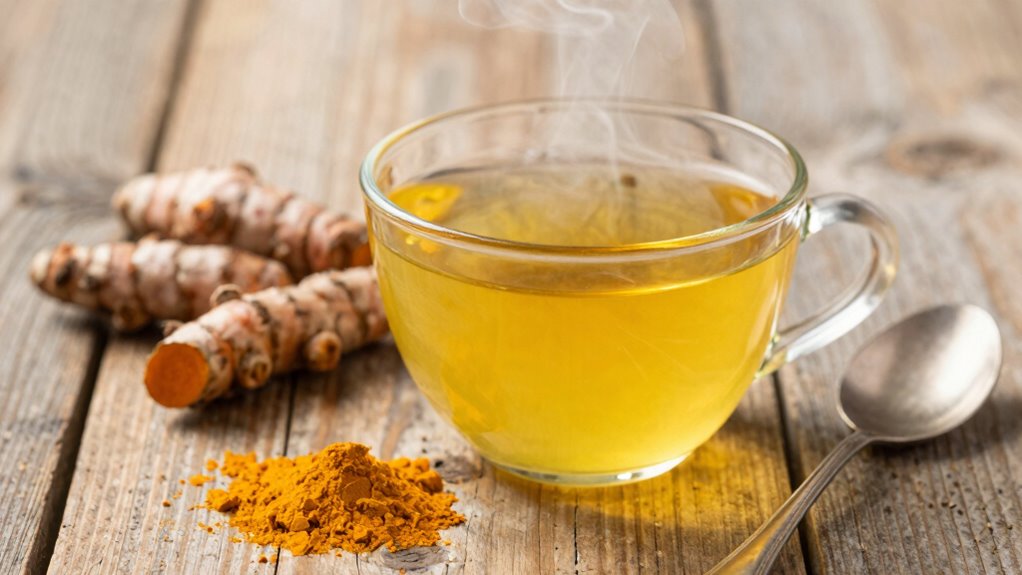
Turmeric tea has surged in popularity as a natural remedy, but behind its vibrant hue and appealing aroma lies a complex history and a mix of health claims. You might have seen it featured in wellness blogs or health stores, where it’s often promoted for its supposed anti-inflammatory and antioxidant properties. But to truly understand what makes turmeric tea special, you need to look beyond the modern trend and explore its roots in herbal infusions and spice blends. Traditionally, turmeric has been a key ingredient in various herbal infusions across cultures, especially in South Asia, where it’s valued not just for flavor but for its medicinal benefits. When brewed into tea, turmeric becomes part of a broader tradition of herbal infusions that combine herbs and spices to create therapeutic drinks. These herbal infusions often include ingredients like ginger, cinnamon, or cardamom, which complement turmeric’s earthy flavor while enhancing potential health benefits. The warmth and richness of spice blends play a fundamental role in these infusions, making them both comforting and functional.
You might notice that turmeric tea is often prepared with more than just turmeric powder. Many recipes incorporate spice blends that bring depth and complexity to the drink. These blends aren’t random; they’re rooted in centuries-old culinary traditions that emphasize balance and harmony among ingredients. For instance, a typical turmeric tea might include a pinch of black pepper, which increases the bioavailability of curcumin—the active compound in turmeric—making the health benefits more accessible to your body. Some spice blends also feature ingredients like cloves or fennel, which add aromatic layers and potential health perks. When you prepare turmeric tea, you’re not just brewing a simple beverage; you’re participating in a centuries-old practice of combining herbs and spices to create functional, medicinal, and flavorful drinks. Additionally, these traditional spice blends often reflect cultural practices that emphasize balance and harmony in herbal and spice combinations. Recognizing how these blends are rooted in cultural herbal practices can enhance your understanding of their significance beyond just flavor. Incorporating traditional culinary techniques into your preparation can also help you appreciate the craftsmanship involved in creating these herbal infusions. Moreover, understanding the historical context of these spices helps deepen your connection to their cultural significance and traditional applications.
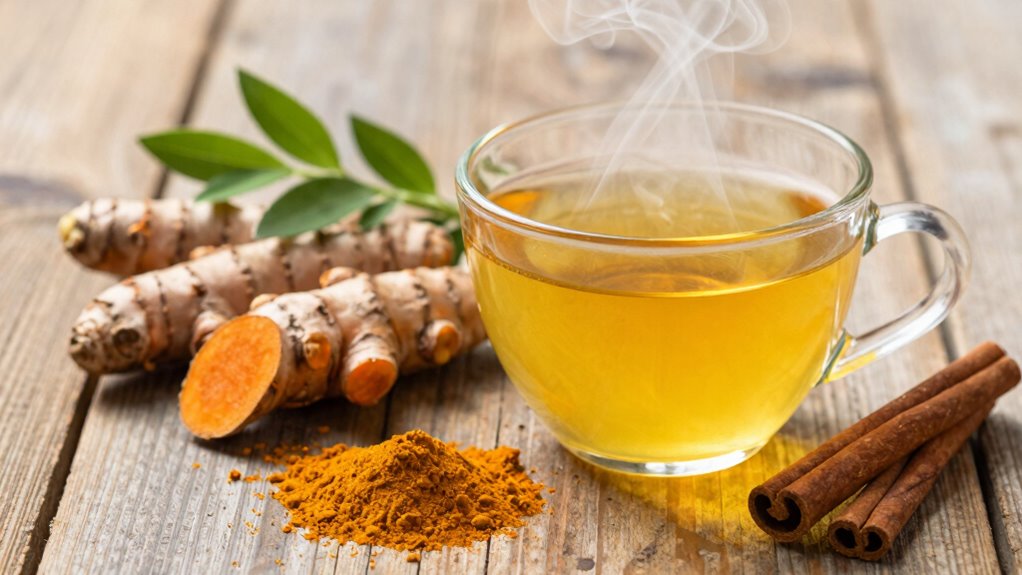
organic turmeric tea with ginger and cinnamon
As an affiliate, we earn on qualifying purchases.
As an affiliate, we earn on qualifying purchases.
Frequently Asked Questions
Can Turmeric Tea Help With Chronic Illnesses?
Yes, turmeric tea can help with chronic illnesses by acting as an herbal remedy and part of alternative therapies. Its active compound, curcumin, has anti-inflammatory and antioxidant properties that may alleviate symptoms and improve well-being. While it shouldn’t replace medical treatments, incorporating turmeric tea into your routine can support your health. Always consult a healthcare professional before making significant changes to your treatment plan.
Is Turmeric Tea Safe During Pregnancy?
Turmeric tea is generally safe during pregnancy in moderation, but you should be cautious. Herbal interactions can occur, especially if you’re taking medications or supplements. High doses of turmeric might stimulate uterine contractions or cause other complications, so it’s best to consult your healthcare provider for pregnancy safety advice. Always consider how turmeric interacts with your body and medications, and avoid excessive consumption to keep you and your baby safe.
How Long Does It Take to Notice Benefits?
You might start noticing benefits from turmeric tea within a week or two, especially if you drink it regularly. Flavor variations and brewing techniques can influence how quickly you feel its effects; for example, adding black pepper or coconut milk can enhance absorption. Consistent consumption, combined with a balanced diet, helps maximize its health benefits. Keep experimenting with different recipes to find what works best for you.
Are There Any Side Effects of Turmeric Tea?
Turmeric tea can be a double-edged sword if you’re not careful. While it offers health benefits, you might encounter side effects like upset stomach or allergic reactions. Be mindful of herbal interactions and dosage concerns, as too much turmeric can cause issues like bleeding or stomach upset. Always consult your healthcare provider before adding it to your routine to avoid turning a remedy into a problem.
Can Turmeric Tea Replace Medications?
Turmeric tea shouldn’t replace medications, especially if you’re on prescription treatments. While it offers herbal benefits and can serve as a healthy addition, it’s important to take into account your dietary restrictions and consult your healthcare provider before making any changes. Relying solely on turmeric tea might overlook underlying health issues or interfere with medications, so use it as a complementary herbal alternative rather than a substitute for professional medical advice.
Conclusion
Now that you know the true story behind turmeric tea, remember it’s more than just a trendy drink — it’s a reminder that health benefits often come from ancient wisdom. Think of turmeric as a quiet hero, quietly fighting inflammation like a gentle but persistent tide. Just like that tide shapes the shoreline over time, small daily choices can shape your well-being. Embrace turmeric’s story, and let it remind you that good health is a journey, not a quick fix.
Halloween Picks
halloween
As an affiliate, we earn on qualifying purchases.