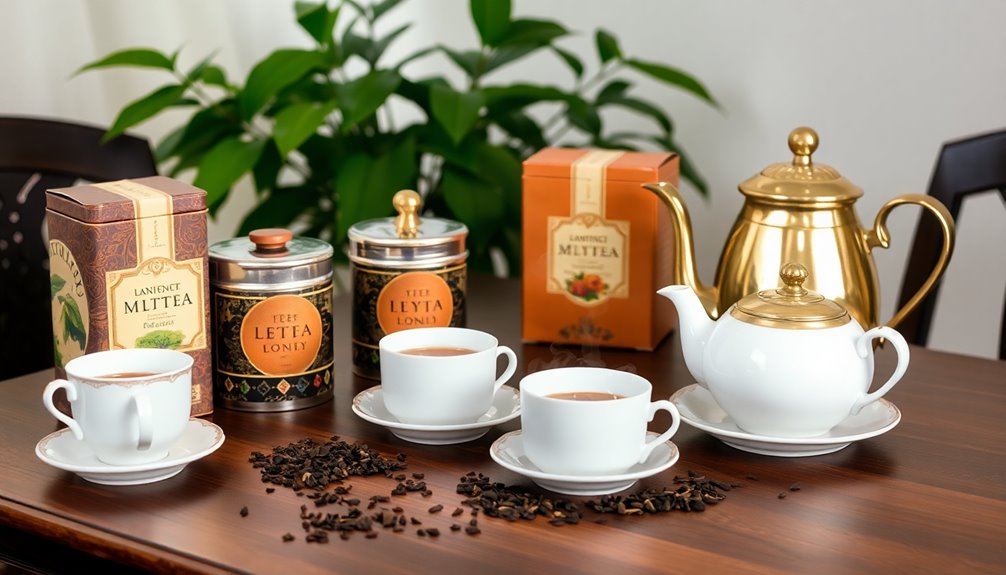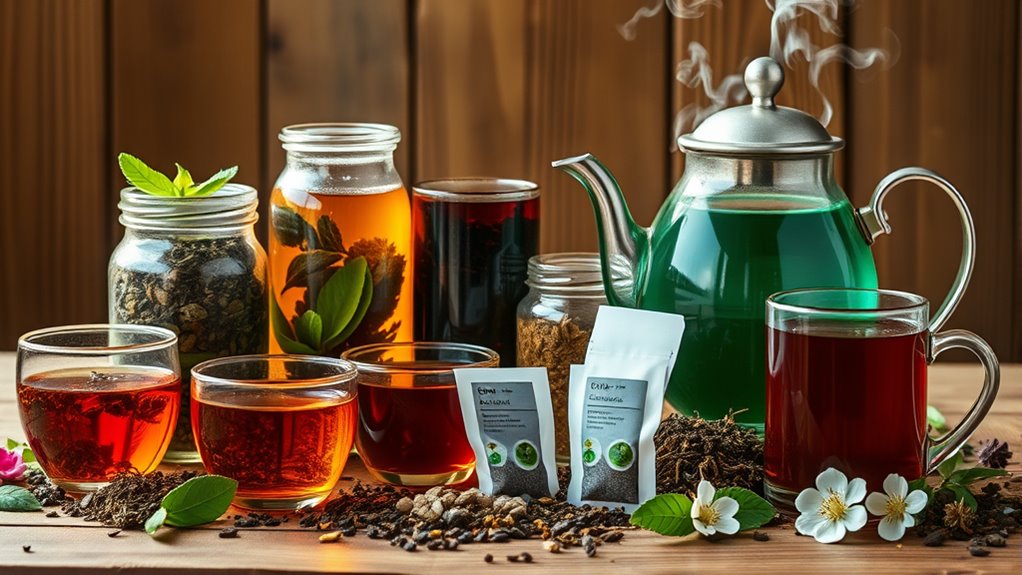
There are many types of tea, each with unique flavors and cultural roots. Green tea is minimally processed to keep its fresh taste, while black tea is fully oxidized for a bold, robust flavor. White, oolong, pu-erh, and yellow teas each offer different processing techniques that reflect their origins. These teas are deeply tied to cultural traditions from China, Japan, India, and beyond. Keep exploring to discover the rich stories behind each tea type and what makes them special.
Key Takeaways
- Tea types are primarily classified based on processing methods, including green, black, white, oolong, pu-erh, and yellow teas.
- Green tea is minimally oxidized, preserving fresh flavors, while black tea is fully oxidized for a bold taste.
- White tea involves delicate handling and minimal processing, often with natural sun-drying.
- Oolong tea undergoes partial oxidation, offering a range of flavors between green and black teas.
- Pu-erh tea is fermented and aged, developing complex, earthy profiles unique to its traditional Chinese origins.

Have you ever wondered how many different types of tea there are and what makes each one unique? The answer lies in the intricate tea production processes and the cultural significance of tea that varies across regions. The journey from fresh leaf to your cup involves several steps, including plucking, withering, rolling, oxidizing, and drying. Each step influences the final flavor, aroma, and appearance of the tea. For example, green tea undergoes minimal oxidation, preserving its grassy, fresh qualities, while black tea is fully oxidized, giving it a bold, robust profile. The subtle differences in processing methods are why you find such a diverse array of teas, from delicate whites to hearty pu-erh.
The cultural significance of tea deeply shapes the way it’s produced, consumed, and appreciated around the world. In China, tea isn’t just a beverage; it’s a symbol of harmony, respect, and tradition. Tea ceremonies in Japan highlight the importance of mindfulness and aesthetics, where the preparation process is as meaningful as the drink itself. In Britain, afternoon tea became a social ritual, emphasizing relaxation and conversation. In India, chai reflects hospitality and community, blending black tea with spices and milk. These customs influence not only how tea is enjoyed but also how it’s cultivated and processed, often leading to specific techniques that honor local history and beliefs.
Understanding the cultural significance of tea helps you appreciate its diversity beyond just taste. It’s a reflection of history, geography, and social values. Different regions have developed unique methods of production that align with their cultural identities. For instance, the fermentation method used in making pu-erh tea in China is deeply tied to centuries-old traditions, often involving aging and storing the tea for years. Meanwhile, the delicate handling of white tea in China or the sun-drying process for certain African teas demonstrates how production techniques are intertwined with local customs and environmental conditions.
When you explore the various types of tea, you’re not just sampling different flavors — you’re experiencing a window into the cultures that have shaped those beverages over generations. Each sip carries the story of its origins, the rituals behind its making, and the values of the people who cherish it. So next time you brew a cup, think about the journey it took—the meticulous processes and the cultural history woven into every leaf. That’s what makes every type of tea not just a drink, but a connection to a rich, global heritage.
Frequently Asked Questions
Which Tea Type Has the Highest Caffeine Content?
Black tea has the highest caffeine levels among tea types, making it the strongest regarding tea strength. When you choose black tea, you’re getting a more potent caffeine boost, which can help increase alertness and energy. The caffeine content varies depending on brewing time and leaf quality, but generally, black tea delivers the most caffeine, perfect for those seeking a stronger tea experience or a quick energy lift.
Are There Health Benefits Unique to Specific Tea Types?
Yes, you can experience health benefits unique to specific tea types. For example, green tea boasts high antioxidant properties and flavonoid content, which may help boost your immune system and improve heart health. Black tea also offers antioxidants but with different compounds that may support your blood pressure. White tea provides a delicate source of antioxidants, promoting skin health. Choosing different teas allows you to target specific health benefits naturally.
How Should Different Tea Types Be Stored for Longevity?
Did you know that improper tea storage can diminish flavor quality by up to 80% in just a few months? To preserve freshness, store different tea types in airtight containers away from light, heat, and moisture. Keep green and white teas in cool, dark places, while black and oolong teas can tolerate slightly warmer areas. Proper tea storage ensures you enjoy vibrant flavors and maximum health benefits over time.
Can Certain Teas Help With Specific Health Conditions?
Certain teas can help with specific health conditions. For example, herbal remedies like chamomile soothe digestion, while green tea boosts your immune system with antioxidants. You might find ginger tea helpful for nausea, and peppermint tea can ease headaches. By choosing the right tea, you support your health naturally and enjoy the benefits of immune-boosting properties and calming effects tailored to your needs.
What Are the Traditional Regions Associated With Each Tea Type?
Imagine sipping a cup of Darjeeling, grown in India’s Himalayan foothills, where tea cultivation regions shape its delicate, muscatel flavor profile. Each tea type’s regional flavor profile reflects its traditional cultivation areas—like Chinese green teas from Zhejiang or matcha from Japan’s Uji region. These regions influence the taste, aroma, and quality, making each sip a journey through the unique landscapes that define their character.
Conclusion
Now that you’ve explored the various tea types, you’re ready to set out on your own tea adventures. Whether you prefer a calming green, a bold black, or an aromatic oolong, each offers a unique experience. Think of it as your own personal quest—like a modern-day Robin Hood seeking the perfect brew. So, brew a cup, savor the moment, and remember: in the world of tea, you’re always the true hero. Cheers to your tea journey!