The history and evolution of tea types start with ancient cultivation practices that led to the development of green, black, oolong, and white teas, each with unique flavors. Over time, processing methods like fermentation transformed teas, offering more variety and complexity. Modern innovations now include cold brewing and infusers, expanding options for tea lovers. If you’re curious about how these changes shaped tea’s rich cultural heritage, there’s plenty more to explore.
Key Takeaways
- Tea originated in China over thousands of years ago, with early use mainly as a medicinal beverage.
- Different processing techniques, like fermentation, led to the development of distinct tea types such as green, black, oolong, and white.
- The discovery of fermentation processes expanded tea varieties and flavor profiles, influencing the evolution of black and oolong teas.
- Cultural exchanges along trade routes like the Silk Road spread tea practices and diversified regional tea types worldwide.
- Modern innovations, including cold brewing and new processing methods, continue to evolve and expand the spectrum of tea types today.

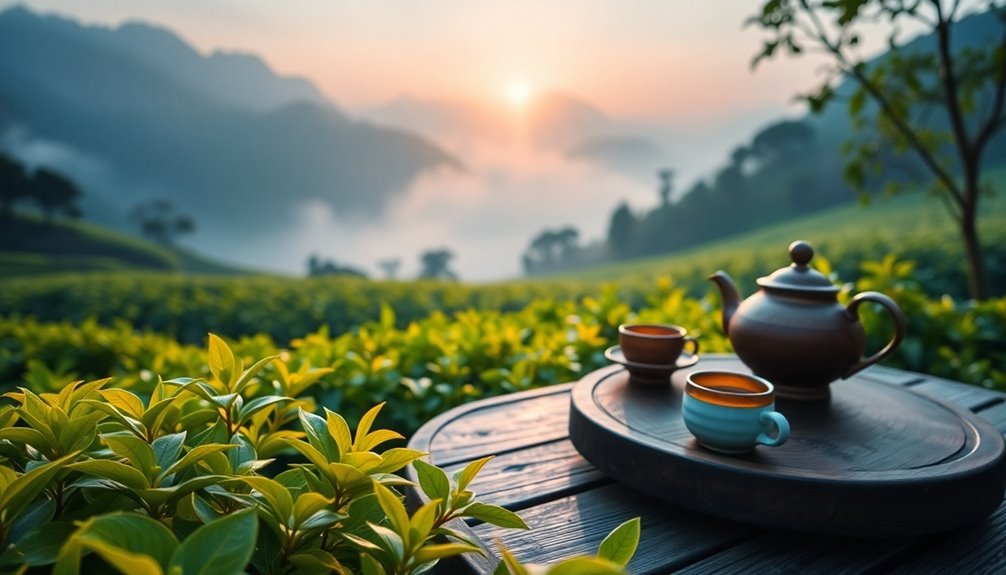
Tea has a rich history that stretches back thousands of years, evolving from a simple beverage into a diverse array of types enjoyed worldwide. Its journey begins with tea cultivation, which involves carefully selecting the right tea plants and nurturing them in specific climates. Whether grown on lush mountainsides or in shaded plantations, tea cultivation has always been a meticulous process. The quality of your tea depends heavily on how and where it’s grown, with factors like soil, altitude, and climate playing vital roles. Once harvested, the leaves undergo various processing methods that lead to different tea types, from green to black to oolong. This transformation is a key part of the tea’s evolution, shaping its flavor profile and aroma.
Your brewing techniques also considerably influence the experience you get from each cup. Traditional methods have been passed down through generations, emphasizing precise temperatures, steeping times, and water quality. For instance, green tea often requires lower temperatures to prevent bitterness, while black tea can handle hotter water for a richer extraction. When you brew tea, you’re engaging in an art form that enhances the tea’s natural qualities. Different cultures have developed their unique rituals—some prefer quick steepings, while others indulge in lengthy infusions. These brewing techniques help reveal the full spectrum of flavors, from subtle floral notes to bold, malty undertones.
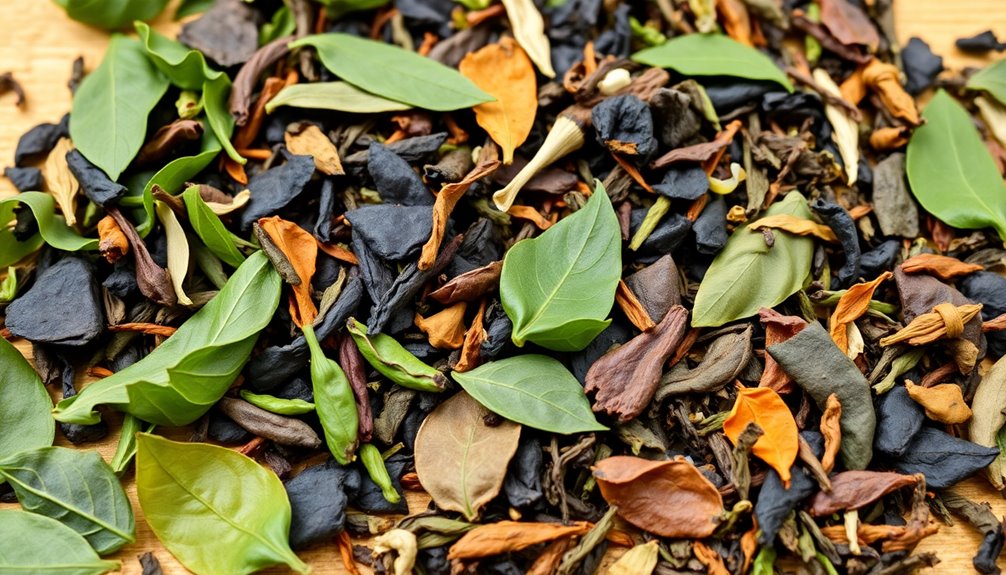
As tea evolved over centuries, innovations in processing and brewing have expanded its varieties and ways to enjoy it. The introduction of fermentation processes created black and oolong teas, bringing complexity and depth to the flavor profiles. Meanwhile, modern techniques like cold brewing or using loose leaves in infusers have made tea more accessible and customizable. You can now experiment with different brewing techniques to find what best suits your taste, whether that’s a delicate white tea or a robust chai. The history of tea is intertwined with its cultivation and brewing practices, each stage influencing the final product you pour into your cup. From ancient plantations to contemporary tea bars, every step in the journey of tea reflects centuries of ingenuity and tradition, making each sip a connection to a rich cultural heritage.
Frequently Asked Questions
How Did Tea Cultivation Spread Globally?
You see, tea cultivation spread globally through the establishment of tea plantations in key regions, driven by European explorers and traders. They introduced tea to colonies and new markets, fueling the growth of global trade. As demand increased, more plantations emerged across Asia, Africa, and the Americas. This expansion made tea widely accessible, transforming it into a popular beverage worldwide and shaping the global trade networks we see today.
What Are the Health Benefits of Different Tea Types?
You’ll be amazed at how tea transforms your health! Drinking green or black tea floods your body with powerful tea antioxidants, fighting off free radicals like superhero warriors. Herbal teas act as natural remedies, soothing stress and boosting immunity. Whether it’s calming chamomile or energizing mint, each tea type offers unique health benefits, making every sip a delicious step toward better well-being and vigor.
How Are Tea Blends and Infusions Created?
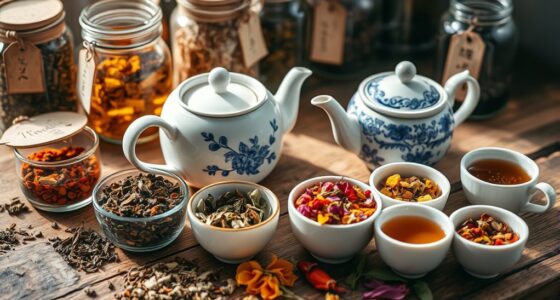
You create tea blends by combining different loose teas, herbs, and flavorings through tea blending. To make infusions, you use infusion techniques like steeping the blend in hot water, allowing flavors and aromas to develop fully. You can experiment with various ingredients and steeping times to craft personalized flavors. Proper blending and infusion techniques guarantee a harmonious taste, making your tea experience unique and enjoyable.
What Are the Cultural Rituals Associated With Tea?
Tea rituals are like a delicate dance, where each step holds cultural significance. You might participate in a traditional tea ceremony, such as the Japanese tea ceremony, which embodies respect and harmony. These rituals, whether in China or Morocco, symbolize hospitality, mindfulness, and reverence for tradition. They turn a simple cup into a sacred act, connecting you deeply to history and community through the cultural significance woven into every sip.
How Does Climate Affect Tea Flavor Profiles?
Climate markedly impacts your tea’s flavor profile by influencing soil minerals and altitude effects. Warmer temperatures and specific soil minerals enhance certain flavors, making your tea more robust or sweet. Higher altitudes tend to produce teas with brighter, more nuanced tastes because cooler air slows leaf growth, intensifying flavors. So, when you choose your tea, consider how the climate where it’s grown shapes its unique taste experience.
Conclusion
As you sip each tea, remember you’re holding centuries of history and culture in your hands. Like a delicate leaf unfolding, tea’s evolution symbolizes growth, tradition, and connection across ages. Your cup becomes a mirror of life’s journey—transforming, blending, and revealing new flavors. Embrace each sip as a reminder that, just like tea, your story is a rich tapestry woven with change, resilience, and the timeless pursuit of harmony.