
In the global tea trade, China, India, Kenya, and Sri Lanka are the major players, controlling most of the supply and influencing prices and consumer trends worldwide. They shape markets not just by production but also through their export strategies, impacting the industry’s future. Their cultivation methods and product innovations meet rising demand for premium and specialty teas. If you want to understand how these countries continue to shape the industry’s trajectory, keep exploring these dynamics further.
Key Takeaways
- China, India, Kenya, and Sri Lanka dominate global tea production and exports, shaping market prices and trends.
- Major markets include North America and Europe, with growing consumption in Asia and Africa driven by middle-class urbanization.
- Industry players diversify offerings with organic, specialty, and ethically sourced teas to meet evolving consumer preferences.
- Cultivation methods vary regionally, affecting tea quality, quantity, and the ability to adapt to market demands.
- Sustainability and innovation in cultivation practices are crucial for maintaining industry stability and future growth.

The global tea trade is driven by a handful of major players who shape markets and influence prices worldwide. These key producers and exporters, such as China, India, Kenya, and Sri Lanka, dominate the industry by controlling large portions of the world’s tea supply. Their influence extends beyond production to impact global tea consumption trends, which are constantly evolving due to changing consumer preferences and market demands. As you follow these shifts, you’ll notice that understanding tea cultivation methods becomes essential, as they directly affect both the quality and quantity of tea available on the global market.
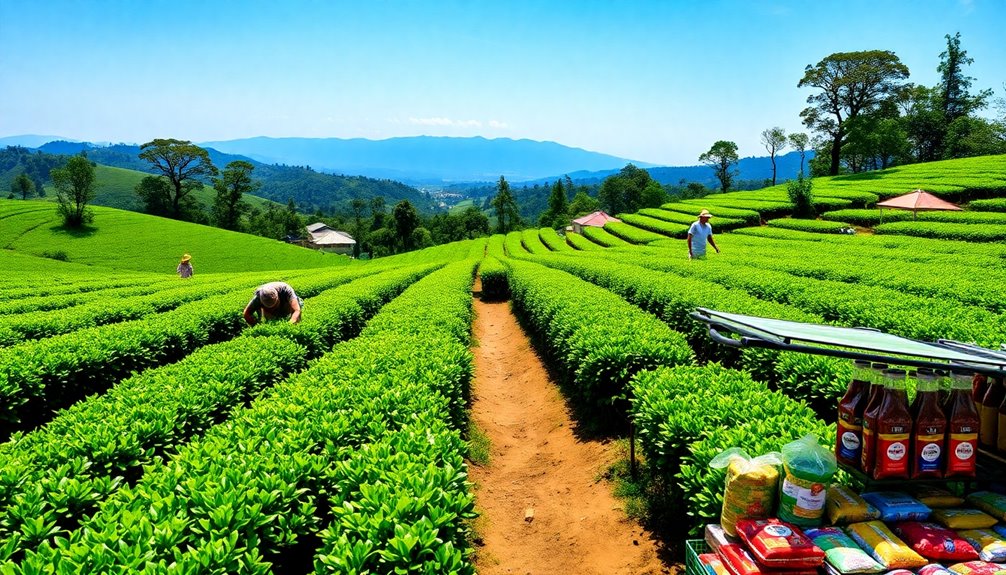
Tea cultivation methods vary considerably across regions, from traditional hand-plucking techniques to modern mechanized harvesting. In countries like Sri Lanka and India, where tea has deep roots, traditional methods still prevail, emphasizing quality and flavor. Conversely, larger producers like Kenya have adopted more mechanized approaches to increase efficiency and meet rising demand. These methods influence the types of tea produced—whether it’s delicate white, fragrant green, robust black, or specialty infusions—and shape the way markets respond to consumer preferences. As global tea consumption trends shift, you might see a surge in demand for organic, ethically sourced, or specialty teas, prompting producers to adapt their cultivation techniques accordingly.
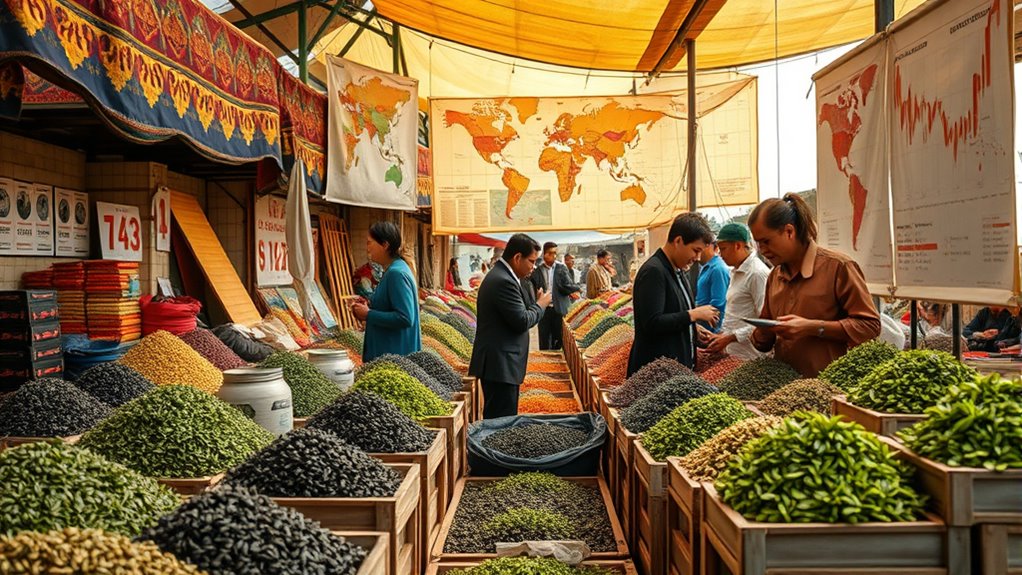
You also need to stay aware of how global consumption patterns influence the industry. Over the past decade, tea has experienced a resurgence among younger consumers seeking health benefits, unique flavors, and premium experiences. This trend has prompted major players to diversify their offerings and invest in innovative products, such as matcha, herbal blends, and functional teas with added health benefits. Markets in North America and Europe are leading this change, demanding higher quality and more variety, which pushes producers to refine their cultivation methods and processing techniques. At the same time, emerging markets in Asia and Africa are seeing increased demand driven by rising middle classes and urbanization, further impacting global supply chains and pricing.
In essence, understanding how major players influence the market involves more than just tracking exports and imports. It requires paying attention to how they adapt their tea cultivation methods to meet changing consumer tastes and trends. By doing so, you’ll gain insight into the complexities behind the world’s most consumed beverage, recognizing how these factors interplay to shape the global tea economy. As you follow these developments, you’ll see that the industry’s future depends on the continuous evolution of cultivation practices aligned with global consumption trends, ensuring the sustainability and diversity of the tea market for years to come.
Top picks for "major player market"
Open Amazon search results for this keyword.
As an affiliate, we earn on qualifying purchases.
Frequently Asked Questions
How Do Climate Changes Affect Global Tea Production?
Climate change impacts global tea production by causing unpredictable weather patterns, which threaten crop yields. You can build climate resilience by adopting drought-resistant varieties and improving irrigation. Crop diversification helps reduce risks from extreme weather, ensuring steady supply. By implementing these strategies, you can better adapt to changing conditions, safeguard your tea crops, and maintain consistent production despite the challenges posed by climate change.
What Are Emerging Markets in the Tea Industry?
You’ll find that emerging markets in the tea industry focus on expanding tea cultivation in new regions like Africa and Southeast Asia. These markets drive growth through market diversification, offering unique flavors and varieties to attract consumers. As you explore these areas, you’ll notice how local farmers and companies are investing in tea cultivation, creating fresh opportunities and reducing reliance on traditional markets. This trend helps boost global tea trade and economic resilience.
How Do Trade Tariffs Impact Tea Prices Worldwide?
Trade tariffs are like roadblocks on a busy highway, slowing down the flow of tea prices worldwide. When import tariffs increase, they raise costs for importers, which often leads to higher prices for consumers. Trade policy changes can disrupt supply chains, making tea more expensive or less accessible. Conversely, lowering tariffs can boost trade, helping keep tea prices stable or even reduce them, benefiting everyone in the market.
What Are the Latest Innovations in Sustainable Tea Farming?
You’ll find that the latest innovations in sustainable tea farming focus on organic certification and water conservation. Farmers increasingly adopt organic practices to reduce chemical use, ensuring healthier soil and better tea quality. Water-saving techniques, like drip irrigation and rainwater harvesting, help conserve this essential resource. These innovations not only promote environmental sustainability but also appeal to eco-conscious consumers, making your tea choices more responsible and beneficial for the planet.
How Does Consumer Demand Influence Tea Market Trends?
Did you know that global tea consumption has increased by 3% annually? Your preferences notably influence market trends; as you seek new flavors or healthier options, producers respond by offering innovative blends and organic teas. This demand shapes which teas are promoted and available, ultimately directing the industry’s focus toward sustainability and unique flavor profiles. Your choices drive the market, ensuring that your favorite teas evolve with your tastes.
Conclusion
As you navigate the bustling world of tea trade, remember that beneath each leaf lies a web of global connections, like threads weaving a vibrant tapestry. The major players shape markets, fueling a cycle as timeless as the tea plant itself. Understanding this intricate dance helps you see beyond the cup, appreciating the rich stories and economic forces blending together—reminding you that, like tea’s aroma, these markets linger long after the sip.