Tea rituals and practices substantially shape art and literature by serving as symbols of tradition, social harmony, and cultural identity. They inspire stories, paintings, and poems that highlight values like respect, patience, and mindfulness. These rituals help preserve cultural heritage and influence artistic genres that emphasize connection and community. As you explore further, you’ll discover how these practices continue to inspire contemporary expressions and deepen our understanding of diverse cultural worlds.
Key Takeaways
- Tea rituals serve as powerful motifs that evoke tradition, social harmony, and cultural identity in art and literature.
- Artistic portrayals of tea ceremonies capture aesthetic details, symbolizing societal values and historical contexts.
- Literature and visual arts use tea as a metaphor for unity, patience, and spiritual reflection, enriching storytelling themes.
- Tea practices influence genre development by inspiring works emphasizing moral values, community bonds, and cultural continuity.
- The ongoing cultural significance of tea rituals fosters a dynamic dialogue between historical traditions and contemporary artistic expression.

Tea rituals and practices have long served as a profound source of inspiration in art and literature, shaping cultural narratives and aesthetic expressions. When you explore how tea influences creative works, you notice that tea symbolism often embodies deeper meanings—tranquility, hospitality, wisdom, or even social harmony. These symbolic associations become woven into stories, paintings, and poems, allowing you to see tea not just as a beverage but as a vessel for cultural storytelling. Through centuries, artists and writers have used tea as a motif to evoke a sense of tradition or to comment on societal values. For example, in many Asian cultures, tea ceremonies symbolize respect and mindfulness, themes that resonate in poetic verses and visual art. By incorporating tea symbolism into their work, creators communicate complex ideas about identity, spirituality, and community that resonate across generations.
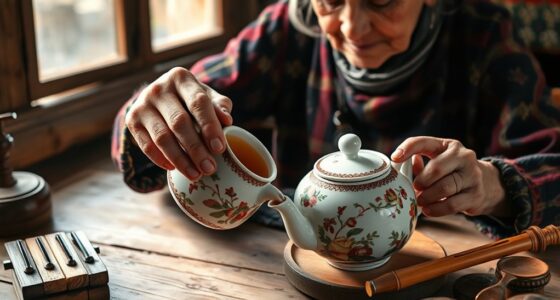
Additionally, the cultural significance of tea rituals often reflects broader societal values and historical contexts, enriching artistic narratives. As you explore into art and literature inspired by tea, you’ll find that cultural storytelling plays a vital role. Tea acts as a bridge connecting past and present, allowing storytellers to preserve and transmit cultural heritage. Writers often depict tea rituals to highlight social customs or to explore themes of hospitality and unity. Paintings frequently capture silent moments of tea preparation, emphasizing the aesthetic beauty of the utensils, the steam rising, or the delicate gestures involved. These visual and literary portrayals serve as cultural archives, offering viewers and readers an intimate glimpse into the social fabric of different societies. The ritualistic aspect of tea becomes a narrative device, illustrating how traditions shape personal and collective identities.
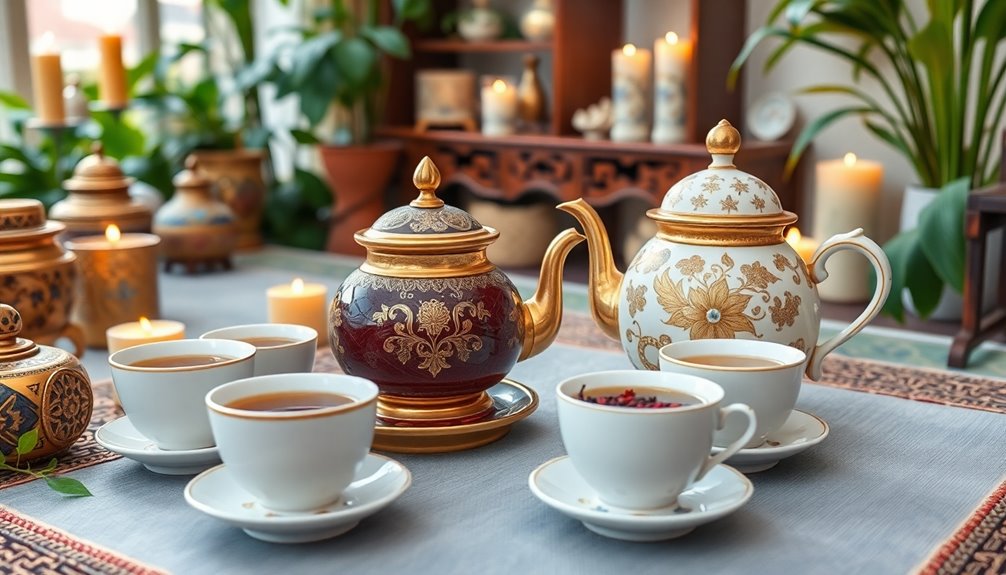
Furthermore, tea’s influence extends beyond mere symbolism to inspire entire genres of art and literature. Writers craft stories around tea ceremonies, highlighting their significance in shaping moral values or fostering social bonds. Artists depict scenes of communal tea drinking, emphasizing harmony and shared experience. This fusion of tradition and creativity enriches cultural storytelling, making tea a symbol of more than just refreshment. It becomes a metaphor for connection, patience, and reflection. As you explore these artistic expressions, you realize that tea practices serve as a cultural language—an unspoken tradition that sustains collective memory and identity. In this way, tea’s role in art and literature is not static but a dynamic force that continues to inspire, inform, and deepen our understanding of diverse cultural worlds.
Frequently Asked Questions
How Did Tea Rituals Influence Western Art Movements?
You see, tea rituals influenced western art movements by introducing rich symbolism in tea, which artists embraced during the aesthetic movement. They depicted tea settings to evoke elegance, serenity, and cultural symbolism, inspiring detailed, decorative works. This emphasis on beauty and symbolism reflected a desire to elevate everyday rituals into art, encouraging artists to explore new themes and styles that celebrated refined aesthetics and cultural significance in their paintings and decorative arts.
Are There Specific Literary Works Centered Around Tea Ceremonies?
You’ll find that many literary works focus on tea ceremonies, like the Japanese *Cha no Yu*, which is celebrated in ceremonial poetry. These writings portray tea as a symbol of tranquility and mindfulness, much like a quiet pond reflecting inner harmony. For example, authors often use tea symbolism to explore themes of Zen philosophy, turning simple rituals into profound metaphors that elevate everyday moments into poetic art.
What Role Did Tea Practices Play in East Asian Calligraphy?
Tea practices played a significant role in East Asian calligraphy by serving as calligraphy inspiration and emphasizing tea symbolism. As you observe tea ceremonies, you’ll notice how the flowing movements and tranquil atmosphere influence calligraphers, inspiring elegant brushstrokes that embody serenity and mindfulness. Tea symbolism often appears in artwork, reflecting cultural values, while the ritual itself encourages a meditative state that enhances your focus and artistic expression in calligraphy.
How Have Modern Artists Incorporated Tea Into Contemporary Art?
Think of tea as a bridge connecting tradition and innovation. Modern artists incorporate tea symbolism into their work by using its colors, textures, and rituals to evoke cultural depth. They often engage in artistic collaborations, blending visual arts, performance, and installation pieces to explore tea’s cultural significance. This infusion of tradition into contemporary art keeps the spirit of tea alive, transforming it into a dynamic symbol of cultural dialogue.
Did Tea Rituals Affect the Development of Visual Arts in Any Culture?
Yes, tea rituals considerably influence visual arts in many cultures, shaping symbolic aesthetics and ritual symbolism. As you observe traditional paintings and ceramics, you’ll notice how the act of tea preparation and consumption is depicted, emphasizing harmony, tranquility, and mindfulness. These visual elements reflect deeper cultural values, allowing you to see how ritual symbolism elevates everyday practices into art forms that celebrate spiritual and aesthetic ideals.
Conclusion
You can’t underestimate how tea rituals have transformed art and literature—it’s as if they hold the power to shape entire worlds, inspire masterpieces, and ignite profound philosophical musings. Every brushstroke and written word echoes the elegance, serenity, and profundity of these practices. Without them, art and literature would be hollow shells, lacking depth and soul. Truly, tea rituals aren’t just customs—they’re the heartbeat that fuels creativity, making the impossible possible in every stroke and sentence.