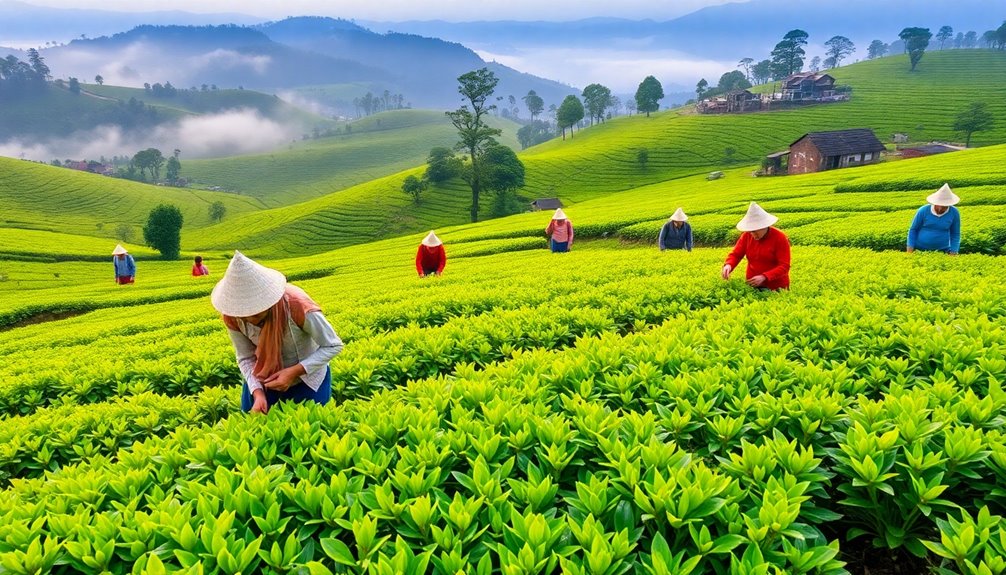
If you’re exploring tea production and harvesting, you’ll find China, India, Kenya, and Sri Lanka leading the way. China focuses on traditional hand-plucking and shading, while India relies on large-scale black tea plantations. Kenya uses mechanized harvesting to meet high demand, and Sri Lanka blends modern and traditional methods. These countries set global market trends through their cultivation and export strategies. Keep exploring to discover more about how their techniques shape the tea industry worldwide.
Key Takeaways
- China, India, Kenya, and Sri Lanka are the leading global producers shaping the tea market.
- China specializes in green and white teas with traditional hand-plucking and shading techniques.
- India focuses on large-scale black tea plantations, including Darjeeling and Assam varieties.
- Kenya employs mechanized harvesting to meet high-volume international demand.
- Market trends are driven by consumer preferences for specialty, organic, and sustainably produced teas.

Have you ever wondered which countries dominate the global tea industry? The answer lies in understanding the key players that shape the market through their tea cultivation techniques and export strategies. Countries like China, India, Kenya, and Sri Lanka lead the way, each with unique methods that influence both quality and quantity. When it comes to tea cultivation techniques, these nations have perfected various methods suited to their climates and terrains. For example, China employs traditional hand-plucking and shading techniques to produce delicate green and white teas, while India’s large-scale plantation system facilitates efficient harvesting of black teas. Kenya, known for its fast-growing Camellia sinensis plants, utilizes mechanized harvesting to meet high demand, especially for the international markets. Sri Lanka, with its high-altitude estates, combines traditional and modern methods to produce a diverse range of teas, including Ceylon varieties. These diverse cultivation techniques directly impact the global tea export trends, which are constantly evolving as consumer preferences shift towards specialty and organic teas. Additionally, modern harvesting methods are increasingly adopted to boost productivity and meet international standards. You’ll notice that the export trends reflect a balance between traditional craftsmanship and modern efficiency. China remains the largest exporter, especially of green and black teas, thanks to its vast cultivation areas and innovative processing techniques. India follows closely, expanding its export markets through both bulk sales and premium teas like Darjeeling and Assam varieties. Kenya has rapidly increased its market share by expanding its tea plantations and focusing on high-volume exports to Europe and Asia. Sri Lanka’s reputation for quality, especially in Ceylon teas, continues to boost its exports, even as it adapts to changing global demands for ethically produced and organic options. These trends are driven by factors like trade agreements, transportation infrastructure, and the rise of specialty tea markets, which reward countries that invest in sustainable and high-quality production methods.
As you explore the global tea industry, you’ll see that the success of these major players depends on their ability to adapt and innovate. Countries that combine traditional techniques with modern practices often excel in both meeting international standards and capturing new markets. Whether it’s through mechanized harvesting, organic farming, or innovative processing methods, their strategies influence global tea export trends. Ultimately, the landscape of tea production and harvesting is shaped by these key nations, each contributing uniquely to the global supply chain. Their ongoing efforts in refining cultivation techniques and expanding export markets ensure that tea remains one of the world’s most beloved beverages, enjoyed by people across the globe.
Frequently Asked Questions
What Are the Environmental Impacts of Tea Harvesting Methods?
You might not realize it, but tea harvesting methods can impact the environment considerably. Conventional methods often rely on high pesticide usage, which harms soil and water quality. Switching to sustainable farming practices reduces chemical use and preserves biodiversity. By choosing tea produced with eco-friendly methods, you help lessen environmental damage, protect wildlife, and promote healthier ecosystems. Your choices directly support more sustainable, less harmful harvesting practices worldwide.
How Do Climate Change Trends Affect Global Tea Production?
Imagine your tea garden battling a shifting weather pattern—climate change directly impacts global tea production. You’ll need to adopt climate adaptation strategies, adjusting harvest times and selecting resilient varieties. As weather patterns shift, droughts and floods become more frequent, threatening yields. Staying ahead means embracing innovative practices, diversifying crops, and managing resources wisely. Climate change is a wave you can’t ignore, but with proactive steps, your tea cultivation can weather the storm.
What Are Emerging Markets for Specialty and Organic Teas?
You’ll find emerging markets for specialty and organic teas in regions like Southeast Asia, Latin America, and Africa. Consumers here are increasingly seeking artisan blends and sustainable practices, driving demand for high-quality, ethically sourced teas. As you explore these markets, focus on promoting the unique flavors of artisan blends and emphasizing sustainability, which resonate with environmentally conscious buyers. This shift creates exciting opportunities for growth in the global tea industry.
How Does Labor Cost Influence Tea Pricing Worldwide?
Labor costs act like the heartbeat of tea pricing worldwide. When wages rise, it’s like adding weight to a teapot — the final price steeps higher. You’ll find that higher labor costs push up tea prices, especially in regions where wages are climbing fast. Conversely, lower labor costs can make tea more affordable, but may also impact quality. So, labor costs directly shape what you pay for a cup of tea around the globe.
What Innovations Are Improving Tea Harvesting Efficiency?
You’ll find that mechanization advancements greatly boost tea harvesting efficiency by replacing manual labor with machines, speeding up the process and reducing costs. Drone technology also plays a role by monitoring plantations, evaluating crop health, and guiding harvesters for precise picking. These innovations allow you to harvest tea more quickly and accurately, ensuring quality while lowering labor demands and costs, ultimately making tea production more sustainable and competitive worldwide.
Conclusion
As you explore the world of tea production, you’ll find that countries like China and India dominate, accounting for over 60% of global tea production. This highlights their significant influence on the market and harvesting practices. Understanding these major players helps you appreciate the global reach and economic impact of tea. So next time you sip your favorite brew, remember the intricate networks and hardworking farmers behind every cup.