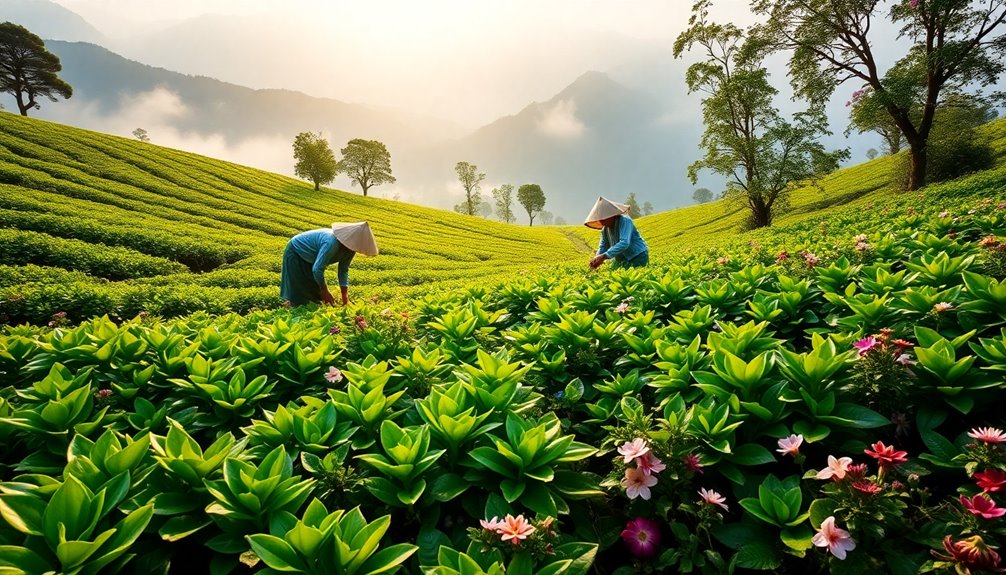

The future of tea production and harvesting looks promising but will require adaptation to climate change, technological innovations, and sustainability efforts. You’ll see increased use of precision agriculture, drones, and automated equipment to boost efficiency and quality. Shifts in consumer preferences for organic and specialty teas will also influence cultivation practices. Embracing these changes helps guarantee resilient, high-quality tea supplies. To learn how these trends will shape the industry, keep exploring these exciting developments.
Key Takeaways
- Climate adaptation strategies will be essential to maintain productivity amid rising temperatures and unpredictable weather patterns.
- Advanced technologies like precision agriculture and drones will optimize cultivation and harvesting efficiency.
- Consumer preferences for organic and sustainable teas will drive adoption of eco-friendly farming practices.
- Ongoing research will develop resilient tea varieties resistant to pests, diseases, and climate stresses.
- Industry resilience will depend on integrating innovation and sustainability to ensure long-term business viability.

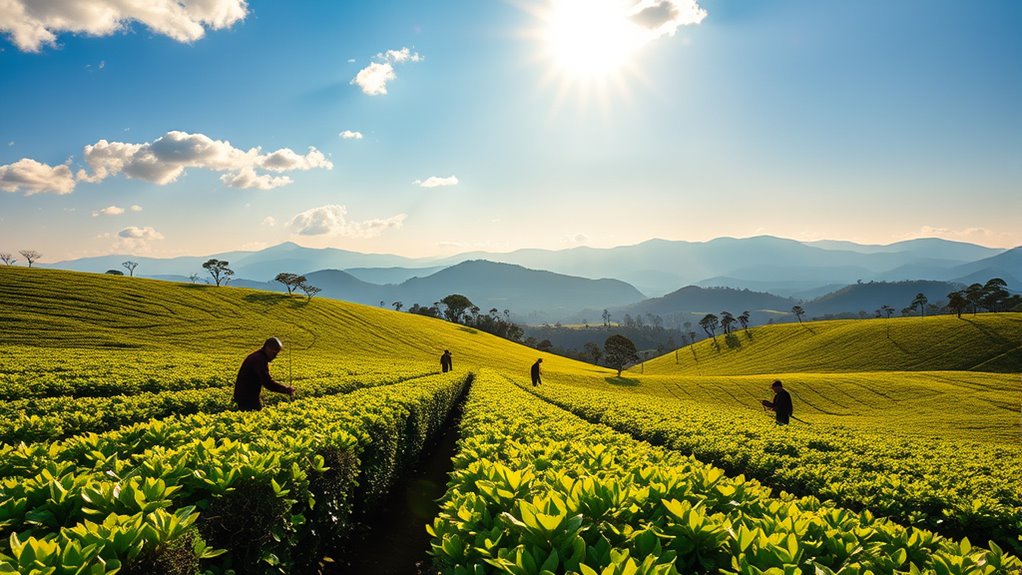
The future of tea production and harvesting depends heavily on how effectively the industry adapts to changing climate conditions, technological advancements, and shifting consumer preferences. Climate adaptation will be essential as rising temperatures, irregular rainfall, and increased frequency of extreme weather events threaten traditional tea-growing regions. You’ll need to embrace strategies like selecting more resilient tea varieties, adjusting planting schedules, and implementing water conservation techniques to safeguard crops. These measures help guarantee that tea farms can withstand unpredictable weather patterns while maintaining productivity.
Adapting to climate change with resilient crops and water-saving strategies ensures sustainable tea production amid unpredictable weather.
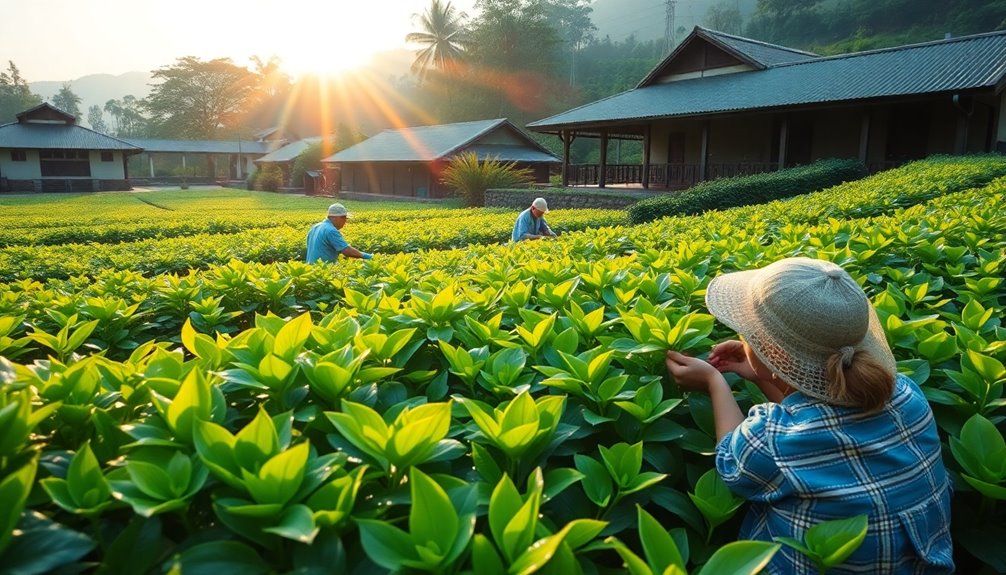
Technological innovations play a key role in transforming how you grow, harvest, and process tea. With advancements like precision agriculture, you can monitor soil health, moisture levels, and plant health in real-time, making informed decisions that optimize yield and quality. Drones and satellite imagery allow you to survey large plantations quickly, identify areas needing attention, and reduce resource waste. Automated machinery is also streamlining harvests, making them faster and more efficient while reducing labor costs. Such innovations mean you can adapt to labor shortages and improve overall productivity without sacrificing quality.
Furthermore, integrating digital platforms into your operations can enhance supply chain transparency and traceability, which are increasingly important to consumers. By tracking each batch from plucking to packaging, you can ensure quality standards are met and respond swiftly to any issues. This transparency builds consumer trust and aligns with growing demand for ethically and sustainably produced tea. As consumer preferences shift towards organic, fair-trade, and specialty teas, you’ll need to adopt new cultivation practices that emphasize sustainability and authenticity. Technological tools can facilitate organic farming methods, reduce chemical use, and promote environmentally friendly practices, helping you meet these market demands.
In addition, research and development are opening new avenues for adapting to future challenges. Breeding programs focus on developing tea varieties that are more resistant to pests, diseases, and environmental stressors. You’ll benefit from these innovations by planting crops better suited for the evolving climate and market needs. Moreover, the rise of alternative processing techniques and flavor innovations means you can diversify your product range, appealing to a broader consumer base. Additionally, fostering innovative research into drought-resistant and pest-tolerant tea plants will be crucial for long-term sustainability.
Ultimately, your success in the future tea industry hinges on your willingness to embrace change. By prioritizing climate adaptation and technological innovations, you can build resilient, sustainable, and competitive tea operations. Staying ahead of climate challenges and leveraging new technologies will enable you to produce high-quality tea that meets consumer expectations, guaranteeing your business’s longevity in an uncertain future.
Frequently Asked Questions
How Will Climate Change Impact Tea Plant Diseases?
Climate change will increase tea crop vulnerabilities, making tea plants more susceptible to diseases. Warmer temperatures and altered rainfall patterns create ideal conditions for pathogens to thrive, complicating disease management. You’ll need to adopt more proactive strategies, like resistant varieties and improved monitoring, to protect your tea crops. Staying vigilant and adjusting your practices will be essential to minimize disease risk and sustain healthy harvests amid changing climate conditions.
What New Harvesting Technologies Are Being Developed?
You’ll see new harvesting technologies like automated harvesting machines that increase efficiency and reduce labor costs. Drone monitoring is also becoming common, allowing you to oversee your tea fields remotely, identify ripeness, and detect issues early. These innovations help you harvest tea more precisely and quickly, improving overall quality and productivity. Embracing these technologies guarantees you stay competitive and adapt to evolving industry demands.
How Will Consumer Preferences Influence Future Tea Varieties?
Your preferences will shape tea flavor evolution, leading producers to develop new varieties that match your taste for unique, healthful options. As sustainability becomes more important, you’ll see a shift toward sustainable cultivation methods, ensuring high-quality teas with minimized environmental impact. This blend of flavor innovation and eco-conscious practices will give you more diverse, ethically produced teas, aligning with your values and enhancing your overall tea experience.
Are There Plans to Improve Tea Crop Resilience?
Yes, there are plans to improve tea crop resilience. You’ll see efforts in crop diversification, which helps reduce risks from pests and climate change. Farmers and researchers focus on pest management strategies to protect tea plants from diseases and pests. These initiatives aim to strengthen the plants’ ability to withstand environmental stresses, ensuring sustainable production and consistent quality. This proactive approach benefits both producers and consumers by maintaining reliable tea supplies.
What Economic Factors Could Affect Global Tea Trade?
You might find that market prices and trade policies greatly influence the global tea trade. When market prices fluctuate, it can shake up supply and demand, making exports and imports unpredictable. Additionally, changing trade policies or tariffs can create hurdles or open new opportunities, affecting how much tea gets traded worldwide. In this game of cat and mouse, staying adaptable is key to steering through the economic landscape and keeping the tea flowing smoothly.
Conclusion
Looking ahead, you will see innovations transforming tea cultivation, challenges prompting resilience, and sustainability shaping practices. As technology advances, you’ll embrace smarter harvesting methods; as climate shifts, you’ll adapt with new varieties; and as consumer tastes evolve, you’ll prioritize quality and eco-friendliness. The future of tea production and harvesting is a journey of continuous improvement, a story of growth and change. Together, you’ll navigate this dynamic landscape, ensuring a thriving, sustainable tea industry for generations to come.