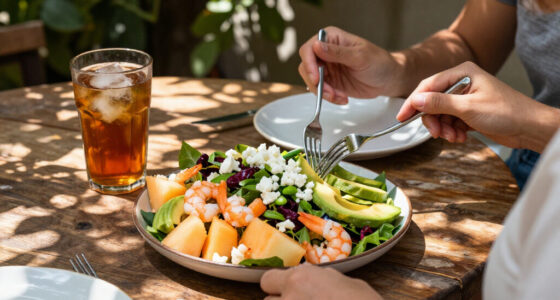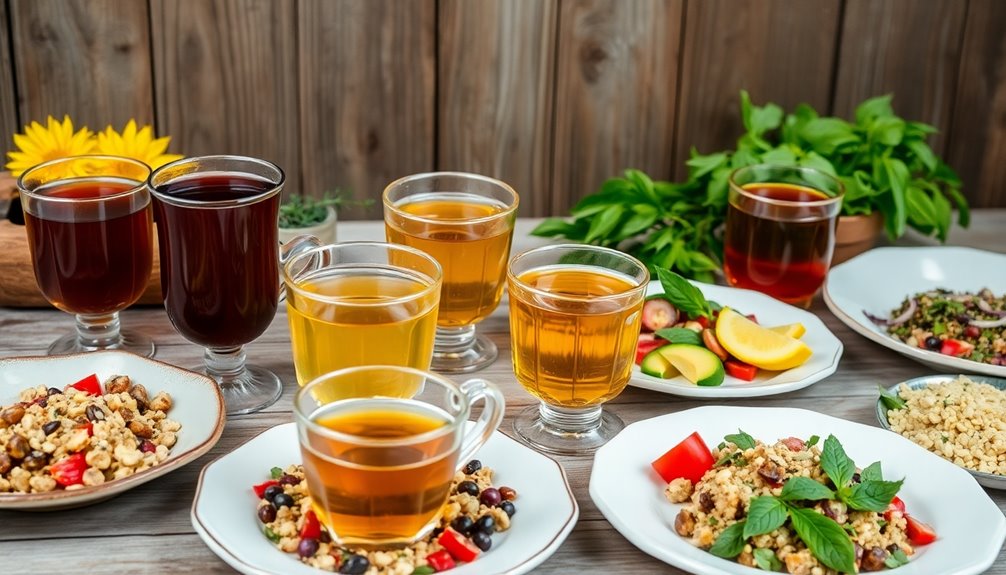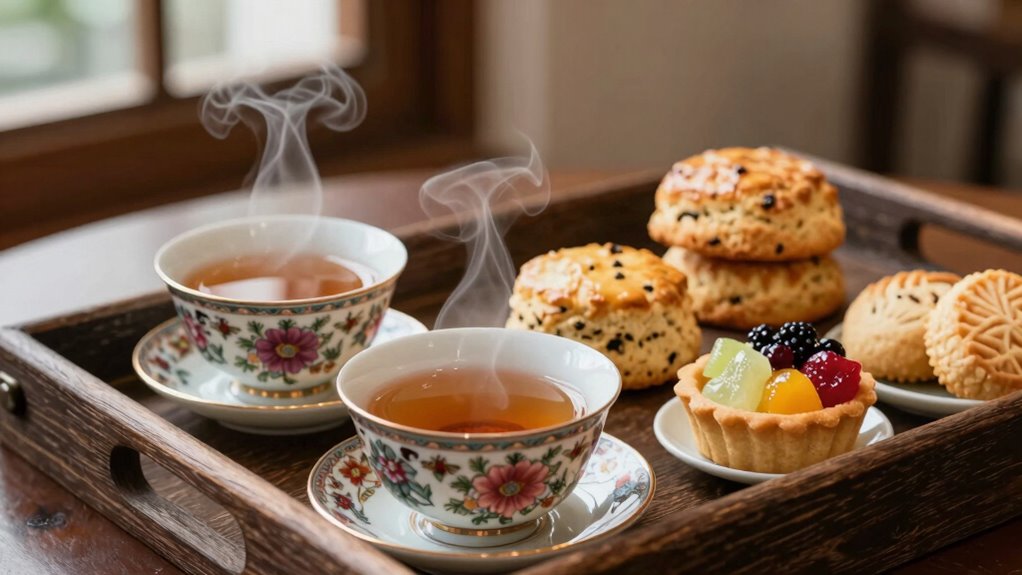

The real story behind tea pairing with food is rooted in centuries of tradition, cultural practices, and a desire for harmony. Each pairing reflects a deep respect for history, aesthetics, and flavor balance, often guided by rituals like the Japanese tea ceremony or Chinese customs. Traditional pairings enhance both the tea and food, transforming meals into meaningful cultural experiences. If you want to understand how these traditions shape modern pairings, there’s much more to explore.

Get coffee and tea gear delivered free with Prime
- Fast, free delivery on millions of items
- Prime Video, Amazon Music and more included
- Member-only deals all year
Key Takeaways
- Tea pairing is rooted in cultural traditions, emphasizing harmony, balance, and respect for ingredients and historical practices.
- Different cultures, like Japan and China, have unique rituals and preferences influencing traditional tea-food pairings.
- Traditional pairings are guided by culinary wisdom, matching tea types—green, black, or roasted—to complement specific foods.
- Tea ceremonies elevate meals into meaningful experiences, focusing on mindfulness, etiquette, and aesthetic harmony.
- Understanding the cultural significance behind pairings enriches appreciation and creates a deeper, more authentic dining experience.
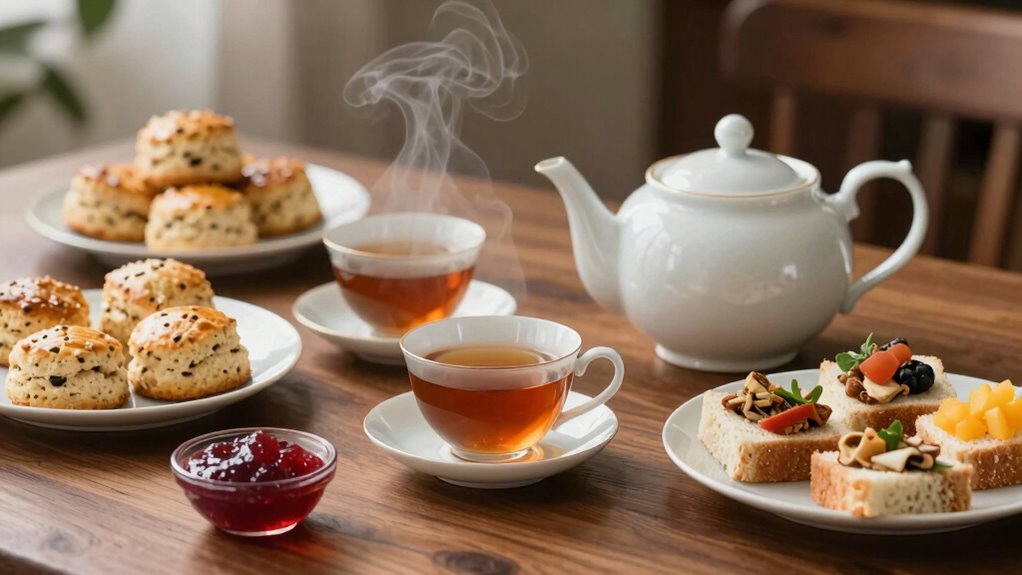
Have you ever wondered how the right tea can elevate your meal? It’s more than just a beverage; it’s an experience rooted in tradition and history. The art of pairing tea with food goes beyond taste—it’s about harmony, balance, and appreciating the cultural significance behind each sip. In many cultures, the tea ceremony plays a essential role, emphasizing mindfulness, etiquette, and respect for the ingredients. When you understand the cultural significance behind these rituals, you begin to see tea pairing as an extension of that deep-rooted tradition, transforming a simple meal into a meaningful occasion.
The tea ceremony, especially in countries like Japan and China, is much more than a simple brewing process. It embodies philosophy, aesthetics, and social connection. During these ceremonies, every detail—from the teapot to the pouring technique—is carefully considered. This attention to detail influences how tea complements food. For example, in a traditional Japanese tea ceremony, the focus on subtlety and harmony guides you to pair delicate, umami-rich dishes with matcha that enhances rather than overwhelms. Similarly, Chinese tea culture often pairs bold, roasted teas like Pu-erh with hearty, savory foods, creating a balance that enhances both the tea and the meal. Recognizing the cultural significance behind these traditions deepens your understanding of how tea pairing can elevate your dining experience.
Understanding the cultural significance behind tea enhances your appreciation for pairing it with food. It’s not just about matching flavors; it’s about respecting the traditions that have shaped these practices over centuries. When you choose a specific tea to accompany a meal, you’re tapping into a history of culinary wisdom. For instance, green teas often match well with light, fresh dishes because they amplify the natural flavors, while robust black teas can stand up to richer, spiced foods. The goal is to find a pairing that elevates both the tea and the food, creating a seamless dining experience where each complements the other.
As an affiliate, we earn on qualifying purchases.
Frequently Asked Questions
How Does Tea Influence Digestion When Paired With Meals?
Tea helps improve digestion when paired with meals by leveraging herbal benefits and flavor balancing. You’ll notice that herbal teas, like ginger or peppermint, soothe your stomach and reduce bloating. The natural flavors in tea complement your food, making digestion smoother and more comfortable. By choosing the right tea, you support your digestive health while enhancing your meal’s overall taste, creating a more enjoyable dining experience.
Are There Specific Teas for Spicy Versus Sweet Dishes?
Did you know that 65% of tea drinkers prefer herbal varieties for food pairing? When choosing teas for spicy dishes, opt for cooling herbal varieties like chamomile or mint to contrast heat and soothe the palate. For sweet dishes, black or oolong teas work well, enhancing flavor contrast. These specific teas help balance the dish’s sweetness or spice, making your meal more harmonious and enjoyable.
Can Tea Pairing Enhance the Flavors of Certain Cuisines?
Absolutely, tea pairing can enhance the flavors of certain cuisines. Herbal infusions add unique notes that complement dishes, elevating your dining experience. By understanding cultural traditions, you can select teas that highlight regional flavors, creating a harmonious balance. Whether it’s a smoky lapsang souchong with hearty Chinese fare or mint tea with Middle Eastern dishes, thoughtful pairing deepens your appreciation and brings out the best in both the food and the tea.
What Are Common Mistakes to Avoid in Tea and Food Pairing?
Avoid common mistakes like neglecting proper tea storage and brewing techniques, which can ruin delicate flavors. Don’t rush the brewing process or use water that’s too hot, as it masks subtle notes. Also, steer clear of pairing strong teas with light dishes or vice versa, as it overwhelms the palate. Pay attention to these details, and you’ll enjoy perfectly balanced pairings that truly enhance your culinary experience.
How Does the Temperature of Tea Affect Pairing Quality?
Tea temperature considerably impacts pairing quality by influencing flavor harmony. When your tea is too hot, it can overpower delicate dishes, masking subtle flavors. Conversely, if it’s too cool, the aroma and taste may diminish, reducing the overall experience. To optimize flavor harmony, let your tea cool slightly after brewing, ensuring the temperature complements your food without overwhelming or dulling the palate. Adjusting tea temperature enhances the synergy between tea and food.
Conclusion
Now that you’ve learned the secrets of tea pairing, you’re practically a culinary wizard. When you combine the right tea with your favorite dishes, every bite transforms into a symphony of flavors—like a fireworks display in your mouth, bursting with harmony and delight. So go ahead, experiment boldly and elevate your meals to legendary status. With each perfect pairing, you’ll turn ordinary moments into unforgettable experiences, proving that tea truly holds the power to elevate your entire dining universe.
Halloween Picks
halloween
As an affiliate, we earn on qualifying purchases.