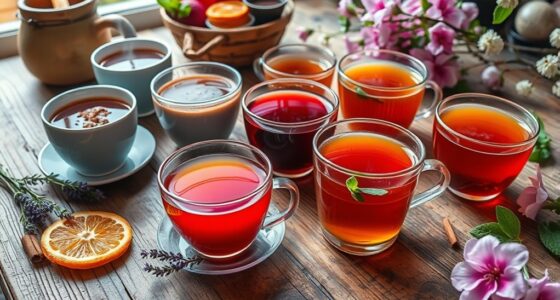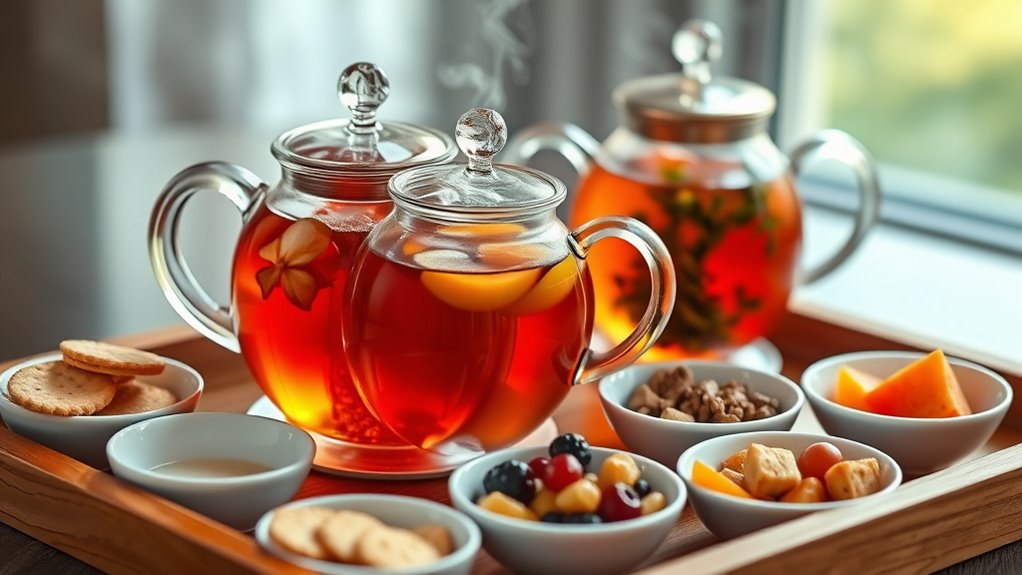
Pairing tea infusions with meals and snacks is all about balancing flavors for harmony and contrast. Light teas like greens and whites go well with delicate dishes, while robust blacks suit hearty fare. Spiced or citrus infusions can enhance desserts or spicy bites. Use contrast with fruity or cooling infusions to refresh the palate after rich foods, and choose stronger teas for heavier meals. Keep exploring these principles, and you’ll discover how to create perfect flavor pairings every time.
Key Takeaways
- Match delicate teas like whites and greens with light dishes such as seafood and salads for subtle flavor harmony.
- Pair robust black teas with hearty meals like roasted meats and stews to complement their boldness.
- Use spiced or citrus-infused teas to contrast or enhance spicy, fried, or fruit-based snacks and desserts.
- Balance sweet, sour, salty, and bitter elements in both tea and food to achieve overall harmony.
- Adjust infusion strength to match dish intensity, ensuring neither overwhelms the other.
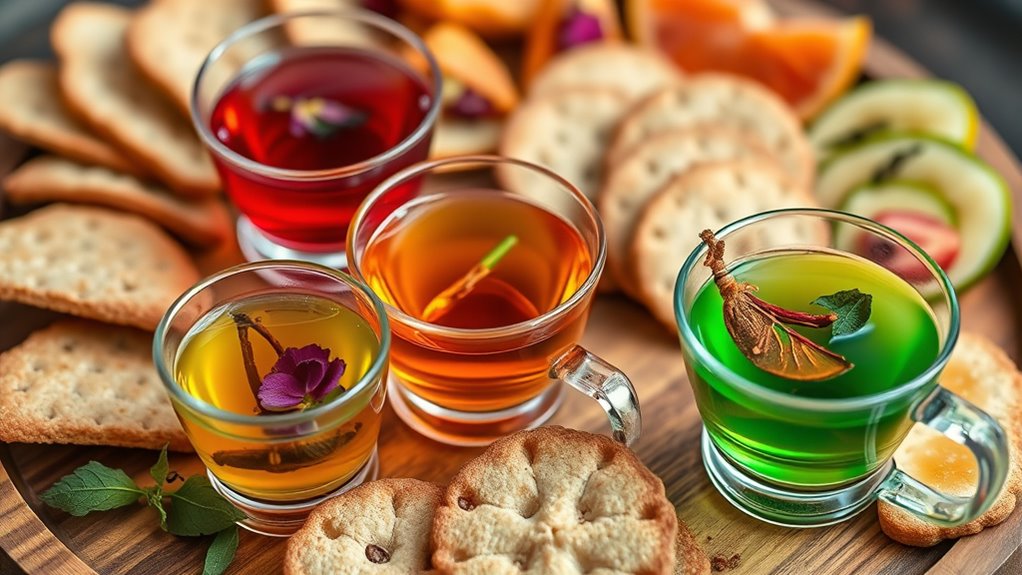
Tea infusions offer a versatile way to enhance your drinking experience by blending flavors that complement or contrast with the tea’s natural notes. Understanding the tea infusion history can deepen your appreciation for its rich traditions, dating back centuries across various cultures. From ancient China to Victorian England, people have experimented with adding herbs, spices, fruits, and flowers to elevate their tea-drinking rituals. This history informs modern flavor pairing techniques, which involve balancing the tea’s inherent qualities with complementary or contrasting ingredients to create harmonious taste profiles. Whether you prefer delicate whites, robust blacks, or fragrant greens, knowing how different infusions interact helps you craft enjoyable combinations for meals and snacks.
Tea infusions enhance flavors through centuries-old traditions of blending herbs, spices, and flowers for harmonious taste experiences.
When pairing tea infusions with food, you want to consider the flavor profiles of both the tea and the dish. Light green teas with grassy or floral notes work well with subtle, fresh flavors like cucumber, salads, or seafood. Conversely, full-bodied black teas with malty or smoky undertones can stand up to hearty fare such as roasted meats, stews, or rich cheeses. Spiced chai infusions, with their warm, aromatic spices, pair beautifully with baked goods like cookies, scones, or spiced desserts. For snack pairing, consider the contrast: a bright, citrus-infused tea can cut through the richness of fried foods, while a sweet berry infusion complements creamy cheeses or fruit tarts.
Flavor pairing techniques often involve balancing sweet, sour, salty, and bitter elements to create a satisfying experience. For example, if you’re serving a savory dish with a hint of spice, choosing a tea infusion with cooling or fruity notes can provide a revitalizing contrast. If your snack is rich and indulgent, a slightly astringent or tannic tea can cleanse the palate, preventing overload. Experimenting with infusions like lavender, citrus, or ginger allows you to find combinations that enhance both your tea and your food. You might also consider the temperature and intensity of the infusion—lighter, delicate teas pair better with mild dishes, while bold, robust infusions can handle more intense flavors. Additionally, exploring different flavor infusion techniques can help you develop a more nuanced palate and elevate your pairing skills.
Ultimately, your goal is to create a harmonious dining or snacking experience where the tea and food elevate each other. By understanding the history of tea infusions and applying flavor pairing techniques, you learn to craft combinations that are both satisfying and memorable. Whether you’re hosting a tea party or simply enjoying a quiet moment, thoughtful pairings can turn an ordinary meal into a culinary delight. Keep exploring different infusions and flavors—your palate will thank you for the journey.
Frequently Asked Questions
How Do I Adjust Tea Infusion Strength for Different Dishes?
To adjust tea infusion strength for different dishes, you should modify the tea dilution by altering the steeping time or tea quantity. For lighter dishes, use a milder infusion with less tea or shorter steeping. For richer or spiced foods, increase the infusion strength by adding more tea leaves or steeping longer. These infusion adjustments help balance flavors without overpowering your meal, ensuring a perfect pairing every time.
Are There Any Common Tea and Snack Pairing Mistakes to Avoid?
Think of your tea and snack pairing as a dance—each step should complement the other. Avoid overly sweet pairings that overshadow the tea’s subtle notes and incompatible flavor profiles that clash instead of harmonize. For example, bitter teas with overly sugary treats can create dissonance. Keep balance in mind, matching flavor intensities carefully, so your pairing enhances both elements, creating a memorable, harmonious experience rather than a jarring mismatch.
Can Herbal Teas Be Paired With Savory Meals Effectively?
Yes, herbal teas can be paired effectively with savory meals. Their versatility allows them to complement a variety of flavors, enhancing your dining experience. To achieve the right savory flavor balance, choose herbal teas with herbs and spices that match or contrast your dish’s ingredients. For example, mint or chamomile work well with light, creamy dishes, while spicy or earthy herbal teas can elevate heartier, savory meals.
How Does Brewing Time Affect Flavor Compatibility With Foods?
Brewing time is your secret brushstroke in the masterpiece of flavor harmony. When you extend brewing time, the tea releases deeper, more complex notes, blending seamlessly with your food. Conversely, shorter brewing times keep flavors bright and delicate, like a gentle whisper. Adjusting brewing time allows you to craft a symphony of taste, ensuring each sip complements your meal perfectly, creating a harmonious dining experience that feels like a warm embrace.
What Are Seasonal or Regional Pairing Suggestions for Teas?
You should explore seasonal and regional tea pairings by embracing local ingredients and cultural traditions. In spring, try floral teas with fresh, local produce like berries or asparagus. During harvest seasons, opt for earthy, robust teas that complement hearty regional dishes. In colder months, spiced teas pair well with warm, comfort foods rooted in local customs. This approach enhances your experience and deepens your connection to regional flavors and traditions.
Conclusion
Think of pairing tea infusions like crafting a perfect playlist—you want each note to complement the next. I once tried a spicy chai with a sweet pastry, and it was like finding harmony between two friends who’ve never met but instantly click. When you match flavors thoughtfully, every sip enhances your meal, turning simple snacks into memorable moments. So, trust your palate and experiment—soon, you’ll be creating symphonies of taste that delight every time.