Tea infusers and strainers have come a long way from simple cloth bags and woven strainers to sophisticated tools crafted from stainless steel, silicone, and porcelain. Early tools focused on convenience and control, while innovations during the Ming Dynasty improved precision with fine mesh screens. Victorian Europe introduced elegant designs that blended aesthetics and function. Today’s options enhance flavor extraction and ease of use, reflecting a rich history of cultural refinement—keep exploring to discover how these tools continue to evolve with modern tastes.
Key Takeaways
- Tea infusers evolved from simple cloth bags to specialized metal and porcelain designs during the Ming Dynasty for better control and clarity.
- Victorian-era Europe saw the rise of elegant, intricate infusers made of stainless steel and silver, blending aesthetics with functionality.
- Modern materials like silicone and fine mesh stainless steel have improved ease of cleaning, durability, and brewing versatility.
- Innovations throughout history reflect tea’s cultural significance, from ritualistic Ming tools to contemporary high-tech infusers.
- Each development enhances brewing precision, flavor extraction, and the overall tea-drinking experience, connecting modern users with centuries of tradition.

Tea infusers and strainers have become essential tools for tea enthusiasts, making it easy to enjoy a perfect cup without loose leaves floating in your mug. These tools are deeply rooted in tea culture, which spans centuries and reflects a rich history of brewing techniques. As you explore the evolution of tea infusers and strainers, you’ll notice how their design and use have adapted to different cultures and preferences, enhancing your tea-drinking experience.
Tea infusers and strainers are essential, evolving tools that enrich your tea experience across cultures and history.
In ancient times, tea was often brewed by simply placing leaves directly into hot water, which sometimes led to over-steeping or messy residues. As tea gained popularity, the need for more refined brewing techniques emerged. Early methods involved using cloth bags or small woven strainers, which allowed for better control over steeping while minimizing loose leaves in the final brew. These simple tools represented the initial steps toward more specialized infusers, emphasizing convenience and clarity in the cup.
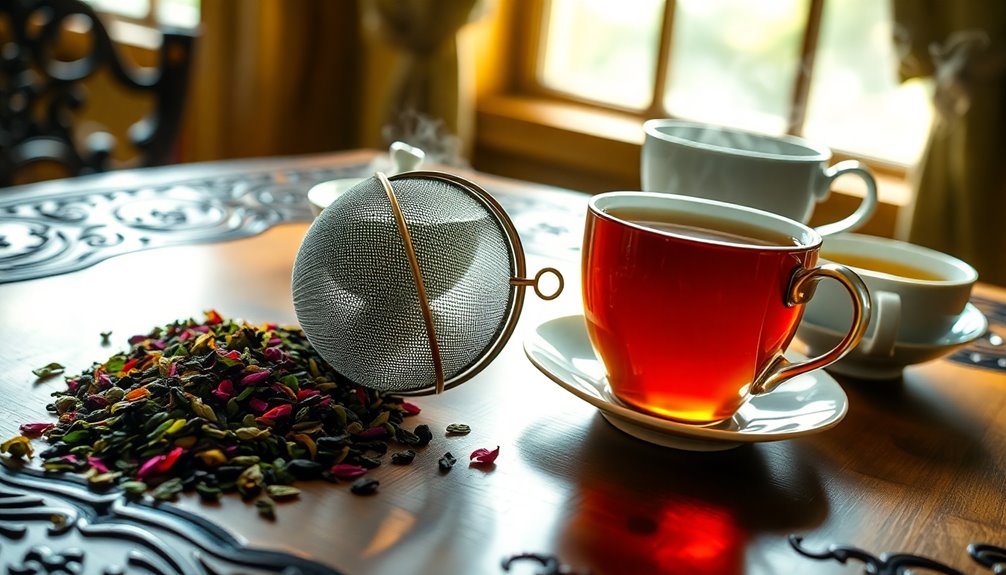
During the Ming Dynasty in China, tea drinking became more sophisticated, and the development of specialized utensils grew alongside. The introduction of metal strainers and small porcelain infusers allowed for more precise control of steeping time and leaf expansion. These innovations reflected the importance of tea culture, where the ritual of brewing and presentation became an art form. As brewing techniques advanced, so did the design of infusers, incorporating features like fine mesh screens to prevent tiny leaf particles from escaping, ensuring a cleaner, more enjoyable experience.
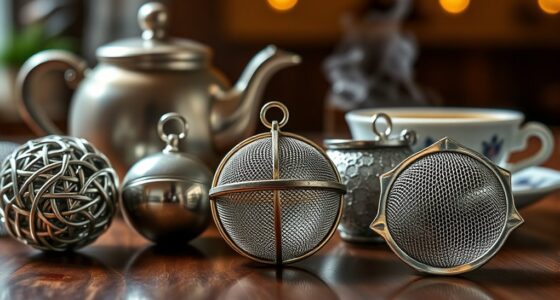
In Europe, particularly during the Victorian era, tea drinking became a social ritual, and the demand for elegant, functional infusers increased. Manufacturers began creating stainless steel and silver infusers with intricate designs, blending form with function. These infusers not only improved brewing techniques by allowing better infusion but also added a touch of sophistication to tea service. The focus was on both aesthetics and functionality, reflecting a cultural appreciation of tea as a refined social activity.
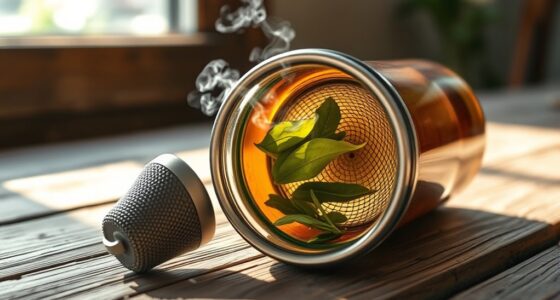
Today, the evolution continues with innovative materials like silicone and fine mesh stainless steel, designed for durability and ease of cleaning. Modern infusers are tailored to various brewing techniques, from loose leaf to herbal infusions, giving you greater flexibility in your tea ritual. Whether you prefer a traditional basket infuser or a modern silicone scoop, the advancements in design help you perfect your brewing techniques, ensuring ideal flavor extraction without mess.
As you use these tools, you’ll appreciate how their development mirrors the broader history of tea culture—an ongoing journey of refinement and adaptation. From ancient cloth strainers to high-tech infusers, each innovation enhances your ability to brew a perfect cup, connecting you with centuries of tradition while embracing modern convenience.
Frequently Asked Questions
What Materials Are Most Commonly Used for Modern Tea Infusers?
You’ll find that stainless steel is the most common material for modern tea infusers because of its durability and sleek look. Silicone is also popular, offering flexibility and aesthetic appeal, especially in fun colors. Some prefer fine mesh stainless steel for better filtration, while others opt for bamboo or ceramic for a more natural appearance. These materials balance durability and aesthetic appeal, making your tea brewing experience enjoyable and stylish.
How Do Different Cultures Incorporate Tea Strainers Into Their Ceremonies?
You might find that in many cultures, tea strainers play a essential role in tea ceremony rituals, symbolizing purity and respect. For example, Japanese tea ceremonies incorporate delicate strainers as a sign of mindfulness, while Chinese traditions emphasize their role in cultural symbolism, representing harmony. These practices highlight how different cultures deeply embed tea strainers into their rituals, elevating simple brewing to an art form that honors history and tradition.
Are There Eco-Friendly Alternatives to Traditional Metal or Plastic Infusers?
Yes, there are eco-friendly alternatives to traditional metal or plastic infusers. You can choose biodegradable options made from plant-based materials like bamboo, silicone, or cornstarch, which break down naturally and reduce environmental impact. These options are reusable, safe, and sustainable, making them excellent choices for eco-conscious tea lovers. By switching to plant-based infusers, you help protect the planet while enjoying your tea.
How Has Technology Improved the Design of Tea Strainers Over Time?
You probably think tea strainers are just tiny sieves, but thanks to tech, they’ve become smarter and more ergonomic. Today, you get smart filtration that prevents leaves from escaping, making your brew perfect. Ergonomic designs fit comfortably in your hand, so you can focus on your zen, not wrestling with your infuser. Technology’s improved tea strainers, turning a simple task into a delightful, fuss-free ritual—no more spills or frustration.
What Are Some Unique or Unconventional Tea Infuser Designs Worldwide?
You’ll find creative shapes like animal-themed infusers, geometric designs, and nature-inspired motifs worldwide, making tea brewing more fun. Some are multifunctional infusers that double as tea strainers and mugs, offering convenience and style. Unique designs, like steampunk-inspired or artistic sculptures, reflect local culture and craftsmanship. Exploring these unconventional options enhances your tea experience, blending aesthetics with practicality, and adds a touch of novelty to your daily ritual.
Conclusion
As you explore the history of tea infusers and strainers, you’ll see how they’ve evolved from simple tools to intricate designs, enhancing your brewing experience. Remarkably, a recent survey found that 65% of tea drinkers prefer using infusers over traditional strainers, highlighting their growing popularity. This evolution reflects not just technological advancements but also our desire for convenience and better flavor. So, next time you brew, appreciate the rich history behind your favorite brewing accessories.