The tea industry is evolving rapidly due to shifting consumer preferences, environmental challenges, and technological advances. Today, shoppers want healthier, ethical, and premium options, pushing growers to innovate with sustainable farming and new varieties. Regions are adopting eco-friendly practices, and innovations like remote sensing help optimize crop health. As climate impacts grow, resilience becomes key. To uncover how these changes shape the future of tea, keep exploring what’s happening behind the scenes.

Get coffee and tea gear delivered free with Prime
- Fast, free delivery on millions of items
- Prime Video, Amazon Music and more included
- Member-only deals all year
Key Takeaways
- The tea industry is evolving rapidly due to changing consumer preferences for health, sustainability, and premium products.
- Climate challenges and pests drive innovation in cultivation techniques and crop resilience strategies.
- Technological advancements like data analytics and remote sensing optimize crop management and environmental impact.
- Market trends favor organic, ethically sourced, and artisanal teas, influencing global trade and regional practices.
- Industry resilience depends on continuous adaptation to environmental, social, and economic shifts through innovation.
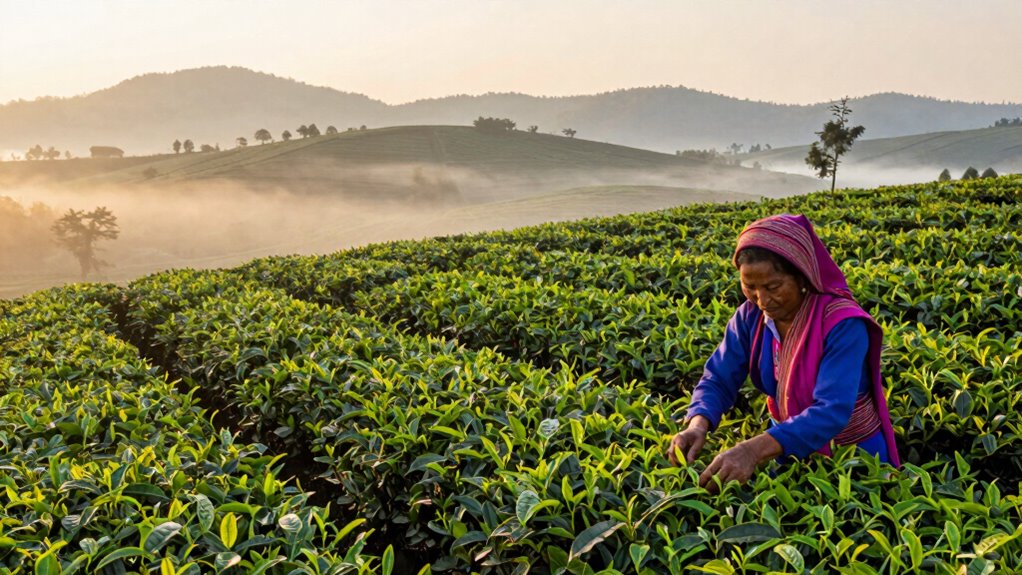
Have you ever wondered how the tea industry continues to evolve amidst global changes? It’s a dynamic landscape shaped by shifts in consumer preferences, environmental challenges, and economic pressures. At the heart of this evolution lies tea cultivation, the foundation that determines the quality and availability of your favorite brew. As climate patterns fluctuate and pests become more persistent, tea growers must adapt their practices to sustain production. This means experimenting with new varieties, embracing sustainable farming techniques, and investing in technology to improve yields. These efforts directly influence market trends, which are constantly shifting based on what consumers seek—whether it’s organic, ethically sourced, or specialty teas.
Tea industry evolution driven by changing preferences, environmental challenges, and innovative cultivation practices.
Market trends play a pivotal role in steering the industry’s future. Today, more people are interested in health benefits linked to tea, prompting producers to innovate with functional teas infused with herbs, vitamins, and adaptogens. This demand influences the types of teas cultivated, encouraging farmers to plant varieties that cater to these new preferences. Meanwhile, the rise of premium and artisanal teas attracts a different segment of consumers who view tea as a luxury experience rather than just a daily beverage. These preferences push the industry to focus on quality, provenance, and storytelling, making transparency and traceability indispensable components of modern tea marketing.
You also see these market trends reflected in global trade patterns. Countries like China, India, and Sri Lanka are traditional powerhouses, but emerging markets are gaining ground as consumers worldwide become more adventurous and willing to explore new flavors. This diversification influences how tea is cultivated and distributed, with some regions experimenting with organic certifications or fair trade practices to appeal to ethically conscious buyers. Additionally, technological advancements—like remote sensing for crop health and data analytics—help farmers optimize their cultivation methods, leading to more sustainable and efficient production systems. These innovations are driven by technological advancements, which are revolutionizing the way tea is grown and managed. Furthermore, the adoption of these technologies can significantly reduce environmental impact, aligning with the industry’s shift towards more sustainable practices. In fact, integrating traditional knowledge with modern technology is essential for building resilient and biodiverse cultivation systems that support environmental health. The industry is also increasingly focusing on climate-resilient crops to adapt to changing weather conditions.
As you follow the news about the tea industry, you’ll notice a recurring theme: adaptability. The industry’s resilience depends on its ability to respond swiftly to environmental, social, and economic changes. Whether it’s adjusting to climate change through innovative cultivation methods or aligning product offerings with shifting consumer values, the industry remains in constant motion. For you, as a tea enthusiast, understanding these evolving market trends and cultivation practices gives you insight into what’s shaping your favorite beverage today and into the future. It’s a story of innovation, sustainability, and passion—one brewed fresh daily across the world.
As an affiliate, we earn on qualifying purchases.
Frequently Asked Questions
How Does Climate Change Impact Tea Production Globally?
Climate change affects tea production worldwide by altering weather patterns, causing unpredictable rainfall, and increasing temperatures. You need to focus on building climate resilience through practices like crop diversification, which helps reduce risks and adapt to changing conditions. As temperatures rise, pests and diseases become more prevalent, impacting yields. By adopting sustainable methods, you can sustain tea quality and production, ensuring your crops withstand climate shifts effectively.
What Are the Ethical Concerns in Tea Sourcing?
They say, “You are what you eat,” and that applies to tea sourcing too. You should look for fair trade and organic certification to guarantee ethical practices, supporting farmers’ fair wages and environmentally friendly methods. Ethical concerns include exploitative labor, pesticide use, and environmental harm. By choosing ethically sourced tea, you help promote sustainable farming, protect workers’ rights, and enjoy your tea with a clear conscience.
How Does Tea Industry Influence Local Economies?
You see that the tea industry influences local economies through tea branding and market sustainability initiatives. When companies promote sustainable practices, they support local farmers and create jobs, boosting community income. Strong branding attracts consumers who value ethically sourced tea, encouraging market growth. As a result, local economies thrive, benefiting from increased demand and sustainable farming practices. This cycle promotes economic stability and encourages environmentally friendly methods in the tea sector.
Are There Health Risks Associated With Certain Tea Practices?
Like a shadow lurking unseen, health risks can come with certain tea practices. You might face tea leaf contamination or pesticide exposure if the tea isn’t properly sourced or processed. These risks can cause health issues over time, especially if you’re drinking large amounts. Always choose organic or reputable brands to minimize exposure. Being cautious helps you enjoy your tea without worrying about hidden dangers.
What Innovations Are Shaping the Future of Tea Cultivation?
Innovations like tea leaf genetics and sustainable farming are shaping the future of tea cultivation. You’ll see breeders developing resilient tea plant varieties that resist pests and adapt to climate change, reducing chemical use. Sustainable farming practices, such as organic methods and water conservation, help protect ecosystems. These innovations guarantee you enjoy high-quality tea while supporting environmental health and long-term industry stability.
Conclusion
As you sip your tea, remember the stories woven into each leaf—stories of tradition, resilience, and change. Like the phoenix rising from ashes, the industry transforms with every challenge, reminding us that behind every cup lies a history worth knowing. Just as the river flows onward, so too does the tea industry evolve, shaping futures with roots deep in the past. Stay curious, for every sip holds a story waiting to be uncovered.
Columbus Day / Indigenous Peoples' Day Picks
long weekend sales
As an affiliate, we earn on qualifying purchases.