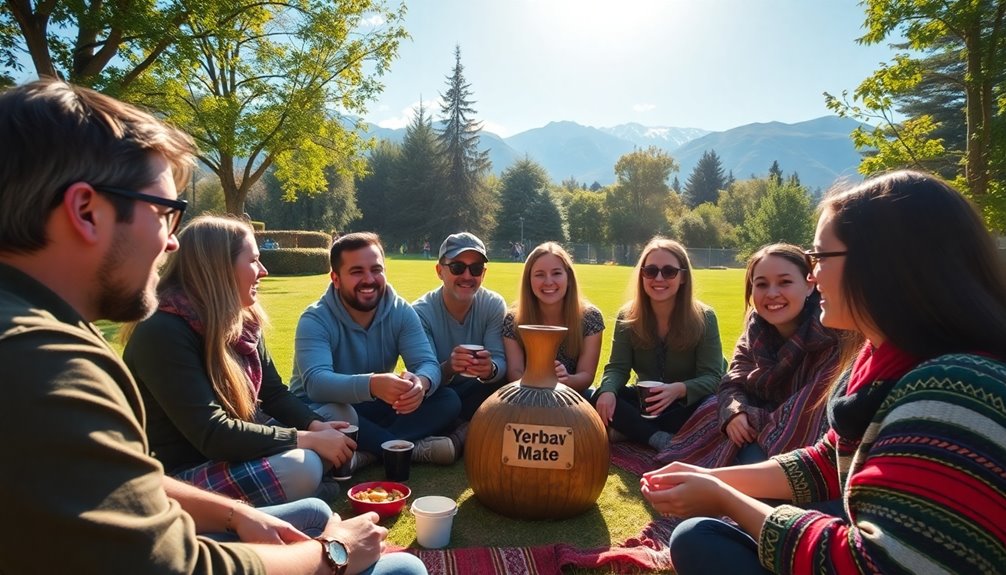
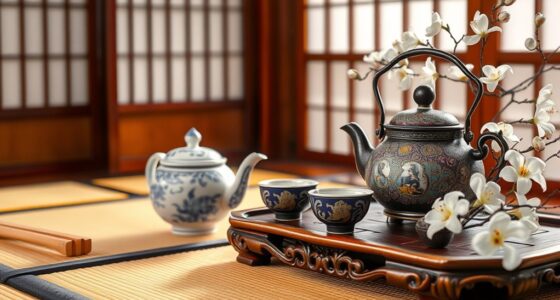
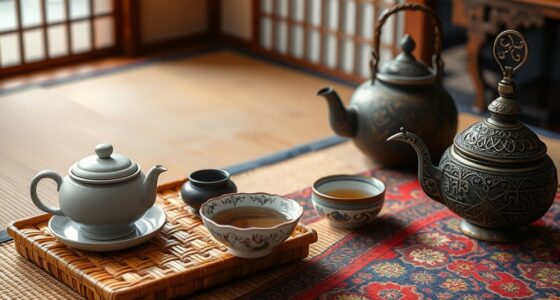
If you explore the world of tea, you’ll find iconic places like China’s ancient West Lake for Gongfu tea and Japan’s Uji region celebrated for matcha. Notable figures include Li Shizhen, who contributed to traditional Chinese medicine, and Sen no Rikyū, influential in Japanese tea culture. These destinations and individuals symbolize centuries of tradition that shaped global tea customs. If you keep exploring, you’ll uncover even more fascinating stories behind tea’s rich history across cultures.
Key Takeaways
- Kyoto’s Uji region in Japan is renowned for its high-quality green tea and historic tea ceremonies.
- The town of Hangzhou in China is famous for its Longjing (Dragon Well) tea and scenic tea plantations.
- British author and critic Kakuzo Okakura popularized Japanese tea aesthetics through his book “The Book of Tea.”
- The city of Canton (Guangzhou) in China historically served as a major trading hub for tea during the Canton System era.
- The Boston Tea Party in the United States symbolized political protest and helped shape American independence.

Tea has played a central role in many cultures around the world, shaping traditions, social interactions, and even national identities. When you think about tea, it’s not just a beverage; it’s a symbol woven into the fabric of history and culture. In places like Japan and China, tea ceremonies are more than simple routines—they’re intricate rituals that reflect centuries of tradition and respect. These ceremonies often emphasize mindfulness, harmony, and etiquette, allowing you to connect with the cultural values that have been passed down through generations. In Japan, the tea ceremony, known as “chanoyu,” is a highly stylized art form that transforms the act of brewing and drinking tea into a spiritual practice. Similarly, in China, the Gongfu tea ceremony elevates the process of preparing tea into a refined experience, emphasizing precision and appreciation for craftsmanship.
Throughout history, tea has also traveled along historic tea routes, shaping trade and cultural exchange. These routes, like the famous Tea Horse Road in China or the maritime trade routes connecting China, India, and Europe, facilitated the movement of tea and ideas across continents. As you trace these routes, you see how tea was more than just a commodity; it became a bridge that connected diverse cultures and economies. Merchants, explorers, and empires invested in these routes, fueling a global demand for tea that persists today. The historic tea routes helped establish tea as a luxury item and a symbol of diplomacy. For example, in Britain, tea became a national obsession, influencing social customs and even political relationships through events like the Boston Tea Party. Additionally, the role of tea’s cultural significance**** continues to evolve as new traditions and innovations emerge around the world.
Frequently Asked Questions
How Did Tea Originate in Ancient Civilizations?
You might find it fascinating that tea originated in ancient China, where legend credits Emperor Shen Nong with discovering tea’s benefits around 2737 BCE. Early tea cultivation involved wild tea leaves, and it quickly became part of ancient rituals, symbolizing health and harmony. Over time, tea spread across civilizations through trade routes, evolving into a cultural staple. Today, its roots in ancient rituals still influence modern tea-drinking traditions worldwide.
What Are the Traditional Tea Preparation Methods Worldwide?
Take a trip around the world with traditional tea techniques! In Japan, you’ll participate in precise tea ceremonies emphasizing elegance and etiquette, while in China, you’ll master swift brewing techniques like steeping leaves in hot water. India’s chai involves boiling spices with tea leaves, and Britain’s afternoon tea features steeped black tea with milk. Each culture’s process charms with unique rituals, turning simple brewing into a beautifully brewed, cultural celebration.
Which Festivals Celebrate Tea in Different Cultures?
You’ll find that many cultures celebrate tea through vibrant festivals and tea ceremonies. For example, Japan hosts the annual Cherry Blossom Festival, featuring traditional tea ceremonies that highlight its cultural significance. In China, the Dragon Boat Festival includes tea tasting and cultural activities. India celebrates Teej and other festivals with special tea rituals. These cultural festivals and tea ceremonies deepen your appreciation for tea, connecting you with rich traditions worldwide.
How Has Tea Influenced Global Trade Historically?
You see, tea has profoundly influenced global trade by shaping major tea trade routes like the Silk Road and maritime paths, connecting Asia, Europe, and beyond. This trade facilitated cultural exchange, spreading not just tea but also customs, art, and traditions across continents. As you explore history, you’ll notice how tea’s popularity boosted economies, fostered diplomacy, and created a lasting global cultural impact through these interconnected trade networks.
What Are the Health Benefits Associated With Tea Consumption?
You get a lot of bang for your buck with tea, as it’s packed with antioxidants that boost your health. Drinking tea can improve your mental health by reducing stress and enhancing focus. Plus, its natural compounds may lower your risk of chronic illnesses like heart disease. So, don’t judge a book by its cover—you might find that your daily cup of tea is your secret weapon for better well-being.
Conclusion
So, next time you sip your tea, remember you’re tasting centuries of history, legendary figures, and iconic places that have shaped cultures worldwide. You’re not just drinking a beverage—you’re connecting with a global legacy so powerful, it could move mountains! From royal courts to ancient temples, tea’s story is the most epic saga ever brewed. So, raise your cup and toast to the incredible world of tea—more legendary than you ever imagined!