
In tea events and festivals, embracing proper etiquette and understanding the symbolism behind gestures, colors, and rituals enhances your experience and shows respect for cultural traditions. Be mindful of your posture, handle utensils gently, and observe gestures like bowing or stirring, which symbolize humility and appreciation. Recognizing the significance of colors and symbols deepens your cultural connection. If you pay close attention, you’ll discover even more meaningful elements that enrich your appreciation of these treasured customs.
Open a free Amazon Business account
Business pricing, bulk buying and tax-exempt orders.
As an affiliate, we earn on qualifying purchases.
Key Takeaways
- Proper posture, gentle utensil handling, and respectful gestures like bowing reflect etiquette and cultural appreciation during tea events.
- Ritual actions, such as pouring with both hands, symbolize sincerity, respect, and humility within the ceremony.
- Colors, motifs, and tea ware choices convey cultural values like harmony, prosperity, or longevity.
- Symbols and patterns on tea accessories serve as visual cues that deepen understanding and reinforce cultural narratives.
- Attentive participation and mindful gestures foster genuine connections, demonstrating respect and enhancing cultural appreciation.
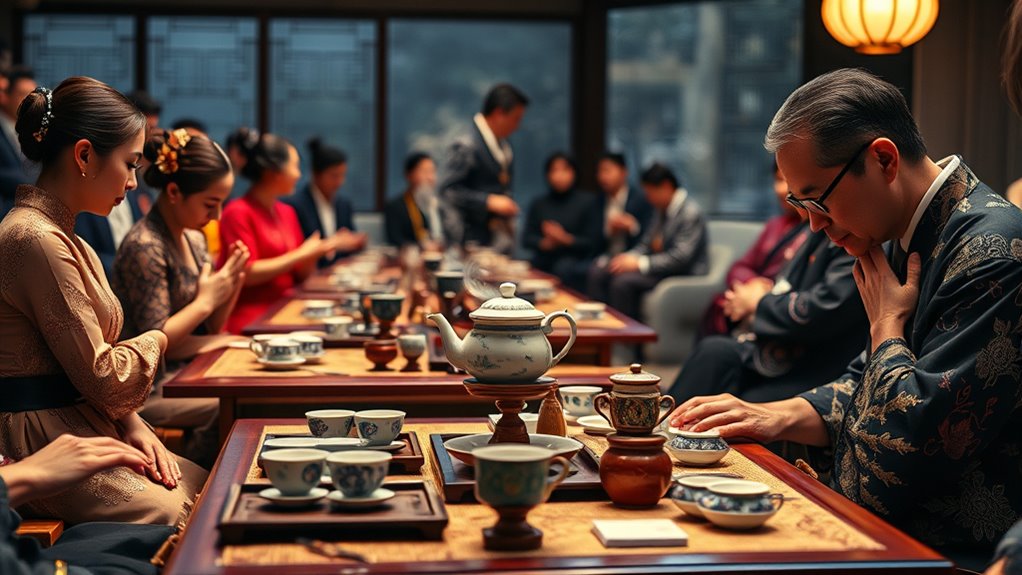
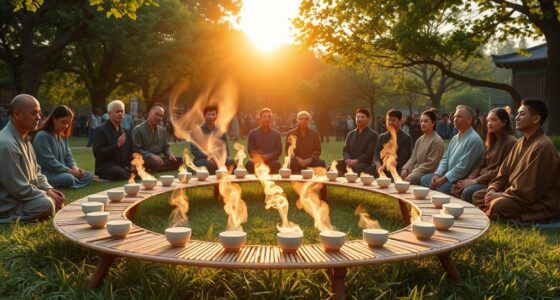
Tea events and festivals are rich in cultural etiquette and symbolism that reflect the traditions and values of their communities. As you participate in these gatherings, you’ll notice that every gesture, movement, and object holds meaning rooted in history and cultural identity. One of the key aspects you’ll observe is the tea ceremony customs, which are more than just steps—they embody respect, harmony, and mindfulness. These customs guide you to approach the tea with reverence, emphasizing proper posture, gentle handling of utensils, and a calm, focused demeanor. For example, the way you stir the tea or how you bow to your host isn’t arbitrary; it signifies appreciation and humility. Following these customs shows your understanding and respect for the tradition, creating a shared experience that transcends mere drinking.
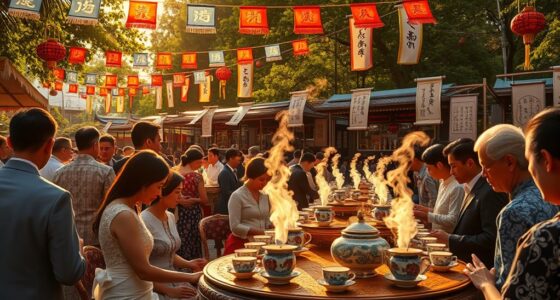
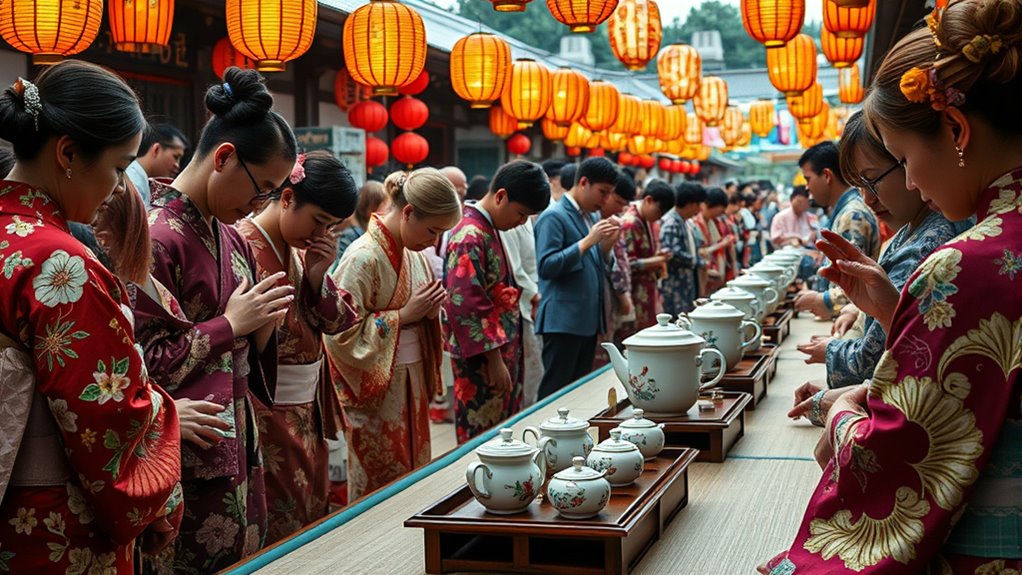
Festival symbolism is woven into many elements of tea events, serving as visual and experiential representations of deeper cultural meanings. You might see specific colors, motifs, or objects that symbolize concepts like purity, prosperity, or spiritual harmony. In some cultures, the choice of tea ware itself—such as delicate porcelain cups or rustic clay pots—conveys particular values or historical significance. When participating in a tea festival, you’ll likely encounter rituals that highlight these symbols, reinforcing community bonds and cultural identity. For instance, the act of pouring tea with both hands can symbolize sincerity and respect, while certain patterns on tea accessories might represent longevity or good fortune. These symbols are not just decorations; they serve as visual cues that deepen your understanding of the community’s worldview and values.
Understanding the role of tea ceremony customs and festival symbolism enriches your appreciation of these events. It encourages you to be present and respectful, recognizing that every action is part of a larger cultural narrative. By paying attention to these details, you become a participant in a living tradition, not just an observer. Respecting the customs, acknowledging the symbolism, and engaging sincerely help foster genuine connections with others and honor the cultural heritage behind the celebration. Whether you’re savoring a quiet moment of contemplation during a tea ceremony or marveling at the intricate symbolism displayed during a festival, you’ll find that these elements deepen your experience and foster a sense of shared cultural pride. Ultimately, these customs and symbols serve as a bridge—linking you to centuries of tradition and the community’s collective identity.

Chinese Gongfu Wooden Tea Ceremony Utensil Tools Set, 6PCS Kungfu Tea Set Asian Gongfu Teaware Kit for Traditional Brewing
- Elegant and Smooth Finish: Smooth surface with retro black color
- Compact Size: 7.8×2.7 inches, space-saving design
- Complete Tea Tools: Includes spoon, clip, needle, bucket, drain
As an affiliate, we earn on qualifying purchases.
As an affiliate, we earn on qualifying purchases.
Frequently Asked Questions
How Do Different Cultures Interpret Tea Pouring Gestures?
Different cultures interpret tea pouring gestures with unique significance. In Japan, a gentle, precise pour shows respect and harmony, while in China, swift, confident gestures reflect mastery and tradition. In the UK, pouring tea with an open hand signifies warmth and friendliness. Your understanding of these cultural interpretations helps you appreciate each gesture’s symbolism, showing respect and awareness during tea gatherings. Recognizing gesture significance enhances meaningful connections across cultures.
What Are Common Missteps to Avoid During Tea Ceremonies?
Did you know that over 60% of tea ceremony participants have noted etiquette mistakes? To avoid missteps, always maintain proper posture—sit upright and gentle your movements. Wear appropriate attire, respecting the formality of the event. Don’t interrupt or rush the process, and handle teaware with care. Showing patience and mindfulness demonstrates respect, ensuring you honor the tradition and enjoy the experience fully.
Are There Specific Colors Associated With Auspiciousness in Tea Festivals?
In tea festivals, you’ll notice that red and gold are common colors associated with auspiciousness due to their strong symbolism of luck and prosperity. When choosing festival attire, incorporate these colors to honor tradition and show respect. Color symbolism plays a crucial role in creating a festive atmosphere, so wearing bright, vibrant hues not only enhances the celebration but also aligns with cultural meanings of good fortune and happiness.
How Do Age and Status Influence Etiquette at Tea Events?
At tea events, your age and status shape how you engage in hierarchy dynamics and respectful communication. You show deference to elders and higher-status individuals through respectful gestures, tone, and body language. Younger or lower-status participants listen attentively, avoid interrupting, and follow established customs. Recognizing these social cues helps maintain harmony and demonstrates your respect for tradition, ensuring a smooth and respectful tea experience for everyone involved.
What Symbols Are Universally Recognized in Tea-Related Rituals?
Ever wondered what symbols you’ll see in tea rituals? You’ll notice tea leaf significance, like the shape and placement representing harmony or respect. Ceremonial clothing symbolism highlights humility and tradition, with specific colors or patterns marking roles or status. These symbols universally convey respect and unity, making your experience more meaningful. Recognizing them deepens your appreciation for the cultural depths behind each sip and gesture.
Conclusion
As you immerse yourself in tea festivals worldwide, remember that every sip and gesture carries centuries of meaning. Think of it like a delicate dance—each step and pause conveying respect, tradition, and connection. I once watched a tea master bow deeply before serving, symbolizing humility and harmony. Embracing these customs transforms a simple gathering into a meaningful exchange, reminding you that tea isn’t just a drink but a bridge linking cultures and hearts across the world.
Fall Picks
fall essentials
As an affiliate, we earn on qualifying purchases.