Famous places like China’s Wuyishan, renowned for its tea mountains, and Japan’s Urasenke tea house, key to traditional tea ceremonies, are central to tea festivals. Influential figures such as Sen no Rikyū, the master behind the Japanese tea ceremony, and Li Shizhen, a Chinese medicinal tea pioneer, shape tea culture worldwide. These sites and people highlight centuries of craftsmanship and tradition. Continuing further, you’ll uncover even more fascinating stories behind these iconic locations and personalities.
Key Takeaways
- Urasenke School in Japan, founded by Sen no Rikyū, is renowned for popularizing the traditional tea ceremony.
- The China Tea Festival in Hangzhou celebrates centuries-old Chinese tea traditions and influential tea masters.
- Darjeeling, India, hosts prominent tea festivals highlighting its famous tea estates and heritage.
- The Royal Botanic Gardens at Kew in the UK features tea exhibitions honoring Britain’s historic tea trade.
- Historical figures like Sen no Rikyū and Lu Yu are celebrated for shaping Japanese and Chinese tea culture.
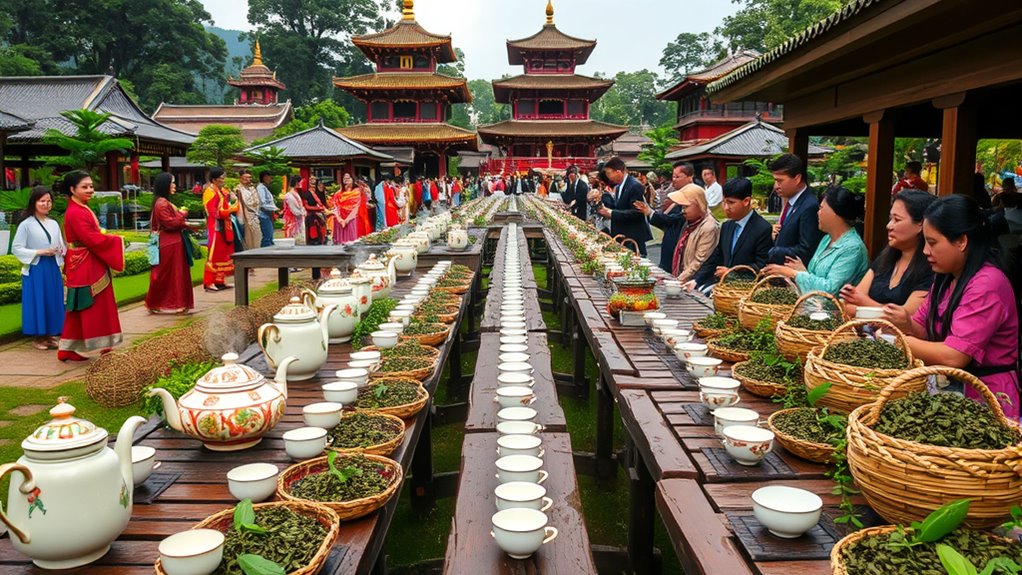
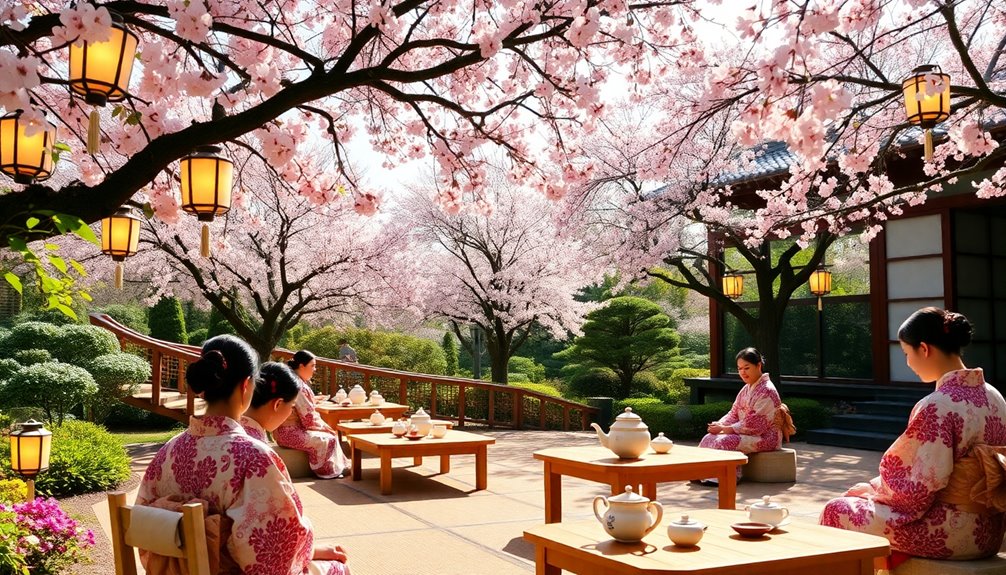
Tea events and festivals have become vibrant celebrations that bring together enthusiasts, artisans, and historians from around the world. These gatherings offer a glimpse into the rich cultural tapestry of tea, showcasing its significance across different regions. One of the most fascinating aspects of these festivals is exploring the history of tea ceremonies, which date back centuries and reveal the deep-rooted traditions that have shaped tea culture globally. For example, you learn that the Japanese tea ceremony, or chanoyu, emphasizes harmony, respect, purity, and tranquility, reflecting centuries of spiritual and aesthetic values. Similarly, Chinese tea ceremonies focus on craftsmanship, ritual, and social bonding, with origins tracing back over a thousand years. These ceremonies are not just about drinking tea but about appreciating the artistry and philosophy behind each pour.
Many of these festivals owe their existence to notable tea festival founders who recognized the importance of celebrating this ancient beverage. These pioneers often come from regions where tea has a long-standing tradition, such as China, Japan, India, and the UK. For instance, the founder of the Urasenke School in Japan played a significant role in promoting the tea ceremony as an art form, inspiring festivals that highlight its elegance and spiritual depth. In China, tea connoisseurs and cultural advocates have established events like the China Tea Festival, aiming to preserve traditional practices while encouraging innovation. Across the globe, tea festival founders often collaborate with artisans, historians, and local communities to create immersive experiences that honor history and foster cultural exchange.
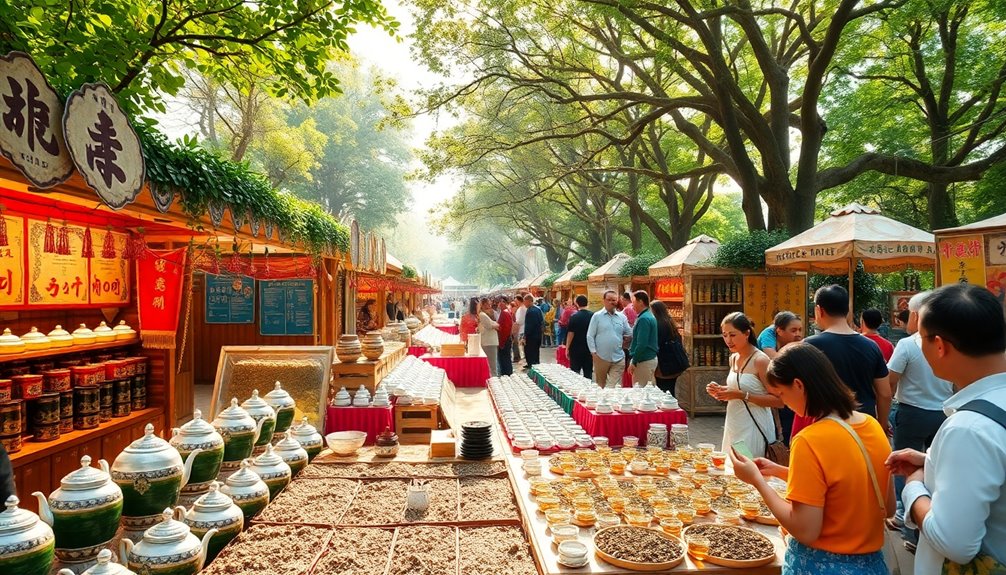
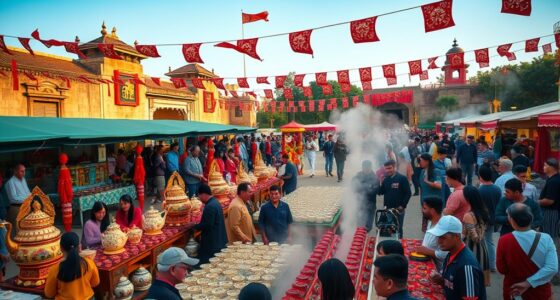
As you attend these festivals, you’ll notice the effort put into recreating historical settings and rituals. Many founders are passionate about teaching visitors the significance behind each step of a ceremony, connecting past and present. These festivals often feature workshops, tastings, and demonstrations led by master artisans, helping you understand the craftsmanship involved in producing high-quality teas. The influence of historical figures and founders is evident in the way these events emphasize tradition while embracing modernity, making each festival a unique celebration of tea’s enduring legacy. Whether you’re exploring the origins of tea ceremonies or engaging with the visionaries who founded these festivals, you’ll gain a deeper appreciation of tea’s cultural importance. Ultimately, these events serve as a bridge connecting you to centuries of history, artistry, and community centered around the timeless ritual of tea.

Artcome 12Pcs Japanese Matcha Tea Set – Bowl, Bamboo Whisk, Holder, Brush and Screen – Handmade Ceremony Kit for Traditional Tea Ceremony
COMPELETE SET: Matcha bowl, matcha whisk, whisk holder, traditional scoop, tea spoon, tea cloth, bamboo holder, scoop holder,…
As an affiliate, we earn on qualifying purchases.
As an affiliate, we earn on qualifying purchases.
Frequently Asked Questions
How Do Local Cultures Influence Tea Festival Celebrations Worldwide?
You’ll find that local cultures shape tea festival celebrations through unique cultural traditions and regional customs. These influences impact everything from the way tea is prepared and served to the rituals and performances you experience during the event. By embracing local practices, you get a richer, more authentic experience, making each festival a reflection of the community’s identity and history. This blend of traditions celebrates the diversity of tea worldwide.
What Are the Origins of the Most Famous Tea Festivals?
The origins of the most famous tea festivals are like roots deep in history, tracing back centuries to ancient traditions. You’ll find that many started around tea ceremonies, celebrating the cultural significance of tea itself. For example, Japan’s tea festivals originated from Zen Buddhist rituals, while China’s have roots in imperial festivities. These festival origins reflect a centuries-old appreciation for tea’s role in social and spiritual life.
Which Famous Historical Figures Popularized Tea Globally?
You should know that tea pioneers like Robert Fortune and influential leaders such as Emperor Shen Nong played key roles in popularizing tea globally. Fortune’s efforts in introducing Chinese tea to the West and Shen Nong’s legendary discovery of tea’s medicinal properties helped spread its appeal. Their contributions made tea a cultural staple worldwide, inspiring countless others to embrace and share the beverage across continents.
How Do Modern Celebrities Participate in Tea-Related Events?
You might think celebrities are too busy for tea, but they actually love jumping into tea-related events. They participate through celebrity endorsements and social media promotions, making tea trendy again. With a simple post or a sponsored event, they influence millions to sip and share. Ironically, their fame boosts tea’s popularity, turning a simple beverage into a glamorous, must-have experience you can’t miss.
Are There Specific Customs or Rituals Unique to Each Festival?
You’ll notice that each tea festival has its own customs and rituals, reflecting its cultural background. During a tea ceremony, for example, you might focus on the ritual significance of precise movements and the respectful atmosphere. These unique traditions emphasize mindfulness and harmony, making each festival special. By participating, you deepen your appreciation for the cultural stories and spiritual aspects behind every sip, creating a meaningful connection with tea’s rich history.

Chinese Loose Leaf Tea Sampler for Beginners & Tea Lovers, 8 Varieties of Handpicked Black, White, Oolong & Pu erh, Whole Leaf Tea Tasting Set with Clear Flavor Profiles
Thoughtfully Curated Tea Sampler for Beginners and Tea Lovers: This tea sampler is designed for both first time…
As an affiliate, we earn on qualifying purchases.
As an affiliate, we earn on qualifying purchases.
Conclusion
As you explore these famous tea places and meet the people behind the festivals, you’ll discover a world as rich and inviting as a steaming cup of tea. Each event is a window into history and culture, connecting you to traditions that have brewed for centuries. Just like a perfect blend, these places and personalities come together to create a warm, memorable experience—reminding you that tea is more than a drink; it’s a journey through time and stories.
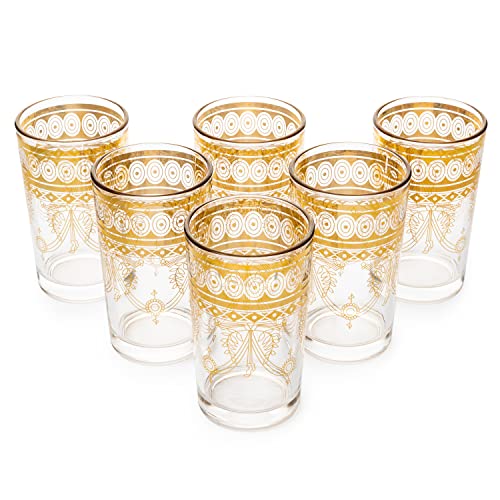
Moroccan Glasses Artisan Hand-Made Multipurpose 170 ml 6 oz Tea, Coffee and Wine Moroccan, Hot & Cold Tumbler – Marrakech & Casablanca Tea Cups Set of 6 Hand Blown Colorful (Crystal Gold)
Soar above exotic Morocco in the morning sunrise in these Moroccan tea glasses. These Moroccan Tea Glasses add…
As an affiliate, we earn on qualifying purchases.
As an affiliate, we earn on qualifying purchases.

Hoement Bamboo Tea Ceremony Utensil Set Traditional Chinese Gongfu Tea Set Scoop Strainer Spoon Tongs Lovers Accessory
Tea utensils:with the necessary tools for a traditional tea ceremony, this tea set is perfect for those who…
As an affiliate, we earn on qualifying purchases.
As an affiliate, we earn on qualifying purchases.