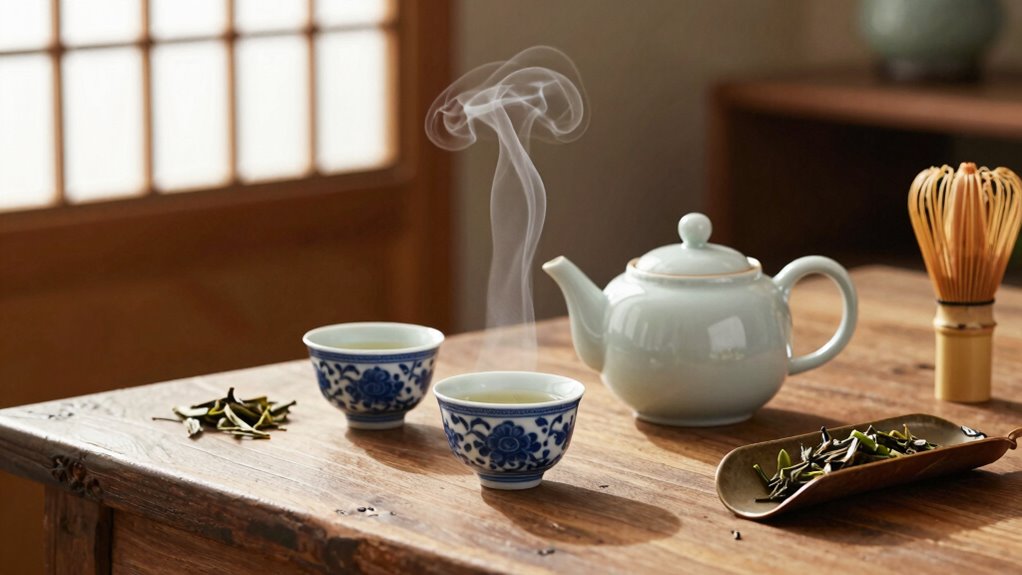

Tea culture is a rich, centuries-old tradition that goes beyond just drinking tea. It’s about mindfulness, respect, and creating connections through rituals like Japanese matcha or Chinese Gongfu. These practices preserve cultural values, showcase artistry in brewing, and tell stories of history and regional identity. Every step in preparing tea holds meaning, reminding you to slow down and appreciate the moment. If you keep exploring, you’ll uncover even deeper stories behind these timeless customs.
Key Takeaways
- Tea culture embodies mindfulness, respect, and connection, reflecting deep-rooted cultural values and philosophical principles.
- Brewing techniques are artistic, involving precise movements and tools, emphasizing tradition and skill.
- Historical and regional evolution of tea rituals highlights diverse practices like Chinese Gongfu and Japanese ceremonies.
- Innovation coexists with tradition, enriching global tea practices through regional variations and modern adaptations.
- Participating in tea rituals fosters cultural dialogue, preserves history, and encourages appreciation of the present moment.
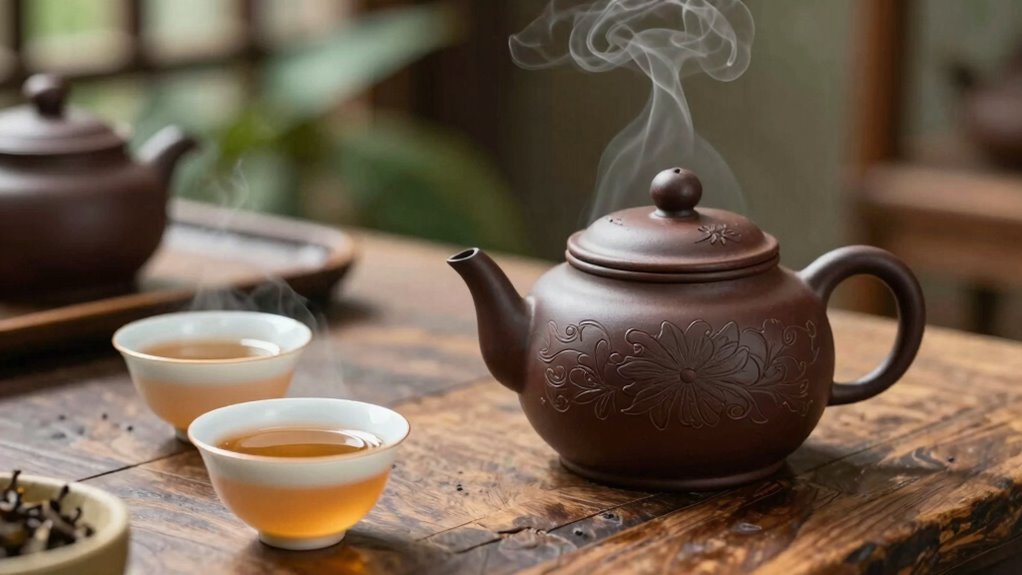
Have you ever wondered how tea has become more than just a beverage, shaping cultures and traditions around the world? It’s fascinating to see how different societies have embraced tea, turning simple drinks into meaningful rituals. Central to this transformation are the tea ceremonies, which elevate the act of drinking tea into a profound cultural experience. These ceremonies aren’t just about tasting; they’re about mindfulness, respect, and connection. From the delicate Japanese matcha ceremony to the Chinese Gongfu tea ritual, each tradition emphasizes a specific way of preparing and serving tea that reflects cultural values and philosophies.
Your experience with tea is often shaped by how it’s brewed. Brewing techniques are more than just practical steps—they’re an art form that influences the flavor, aroma, and overall enjoyment of your tea. For example, in Japanese tea ceremonies, the preparation involves precise movements and specific tools, like a bamboo whisk and tea bowl, to create a harmonious process. This ritualistic approach isn’t just about making tea; it’s about cultivating a sense of calm and mindfulness. In contrast, Western brewing methods tend to focus on quick steeping, but even here, the choice of water temperature and steeping time can dramatically change the taste. Recognizing the importance of cultural preservation in these rituals helps us appreciate how traditions have been maintained and adapted over time.
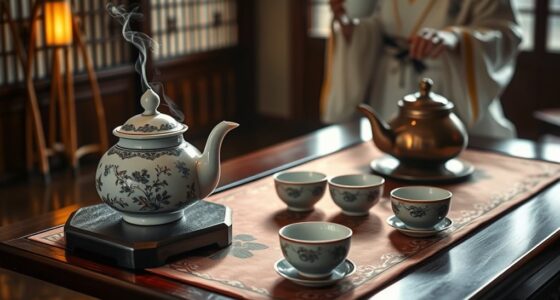
Understanding the history behind these brewing techniques reveals how they’ve been passed down through generations, often with subtle adjustments that reflect regional tastes and innovations. For instance, the Chinese Gongfu tea method emphasizes multiple short infusions, allowing you to experience different layers of flavor with each steep. This technique requires skill and attention, transforming the act of brewing into a meditative practice. The goal is to extract the fullest aroma and taste while respecting the qualities of each tea leaf. Such methods highlight the deep connection between technique and tradition, showing how each step can influence the final experience. Exploring the history of tea can deepen your appreciation for the cultural significance embedded in each sip. Additionally, the evolution of brewing techniques illustrates how innovation and tradition often coexist, enriching the cultural tapestry of tea. Embracing the diversity of tea practices helps us see how regional variations contribute to a richer global tea culture, linking history and innovation.
When you participate in a tea ceremony, you’re not just drinking tea; you’re engaging in a cultural dialogue that’s been cultivated for centuries. These rituals often symbolize hospitality, respect, and harmony. They serve as a reminder to slow down and appreciate the moment, turning a simple act into a meaningful gesture. In many parts of the world, mastering these brewing techniques and understanding their significance helps preserve the cultural identity and history of tea. So, the next time you brew tea, consider the rich traditions behind your method—each step is part of a story that has traveled across centuries and continents, connecting you to a global tapestry of tea culture.

Matcha Whisk – 2-pack Bamboo Matcha Whisk Set
- Two-Pack for Continuous Use: Includes two bamboo matcha whisks
- Handcrafted Traditional Design: Meticulously crafted from single bamboo piece
- 100 Prongs for Perfect Mixing: Features approximately 100 finely split tines
As an affiliate, we earn on qualifying purchases.
As an affiliate, we earn on qualifying purchases.
Frequently Asked Questions
How Did Tea Originally Arrive in Different Countries?
You can see that tea originally arrived in different countries through the tea trade, which began centuries ago. Traders from China first introduced tea to nearby Asia and later to Europe via maritime routes. As a key part of beverage history, tea’s popularity grew through commerce, spreading across continents. This trade influenced cultures, making tea a cherished tradition worldwide, and shaping the way people enjoy their favorite beverage today.
What Are Some Unique Regional Tea Preparation Methods?
You might find it fascinating that in Chinese Gongfu tea ceremonies, you use bamboo tea utensils and practice tea leaf rolling, which enhances flavor. Imagine carefully rolling tea leaves to release aroma before steeping. This unique regional method emphasizes precision and artistry, creating a sensory experience. Such practices highlight how local traditions shape tea preparation, making each sip a reflection of cultural heritage and craftsmanship.
How Has Tea Culture Evolved Over Centuries?
Over centuries, tea culture has evolved from simple tea brewing to a rich cultural symbolism worldwide. You witness traditional ceremonies, like the Japanese tea ceremony, which emphasize mindfulness and respect. Modern influences blend old customs with new trends, making tea more than just a beverage. This evolution reflects changing social values, fostering connections and cultural identity. You see how tea’s significance deepens, transforming everyday tea drinking into a meaningful cultural practice.
Are There Specific Etiquette Rules for Tea Ceremonies?
Think of tea etiquette as a dance where every step matters. You should follow ceremonial protocols like handling teacups gently, using both hands, and showing respect to your host. Silence during the pouring and sipping signifies appreciation. These rules embody mindfulness and harmony, much like a well-orchestrated symphony. By adhering to these customs, you honor tradition, creating a peaceful, respectful atmosphere that elevates the entire tea experience.
What Are the Health Benefits Associated With Traditional Teas?
You can enjoy numerous health benefits from traditional teas, especially herbal infusions and those rich in tea antioxidants. Herbal infusions, like chamomile or peppermint, help soothe digestion and reduce stress. Tea antioxidants, found in green and black teas, boost your immune system and fight free radicals. Drinking these teas regularly supports overall health, enhances mental clarity, and may even lower the risk of chronic diseases, making them a valuable part of your routine.
Conclusion
You’ve seen how tea culture reflects centuries of tradition and artistry. Did you know that over 2 billion cups of tea are consumed worldwide daily? This shows just how deeply tea connects us across cultures and generations. Whether you savor a quiet moment or partake in a lively ceremony, you’re part of a global legacy that celebrates hospitality, mindfulness, and shared history. Embrace these traditions and enjoy the rich stories steeped in every cup.