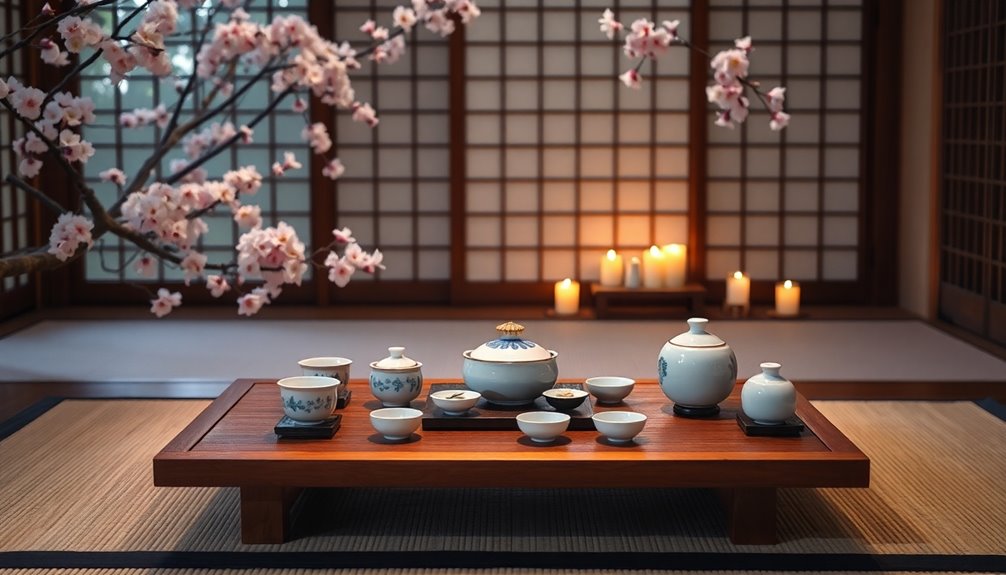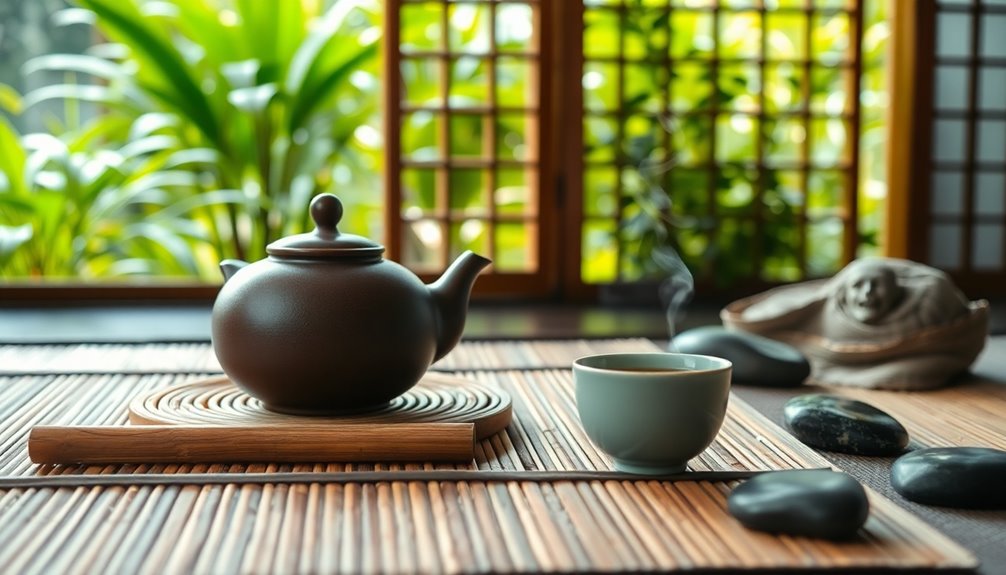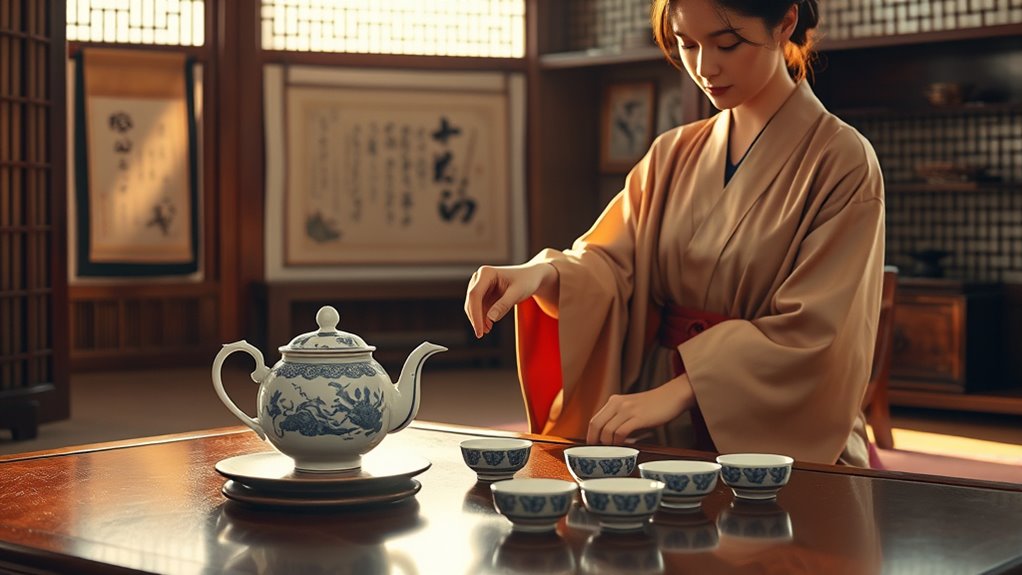
Tea ceremonies are rich traditions rooted in cultural values that emphasize respect, harmony, and mindfulness. They transform simple tea-making into meaningful rituals that embody philosophies like patience and humility. The use of carefully chosen tools and specific procedures invites focus and a sense of connection. These ceremonies reflect traditions passed down through generations, turning everyday acts into moments of inner peace and shared reverence. Discover more about their history and profound significance as you continue on this journey.
Key Takeaways
- Tea ceremonies originate from ancient cultural practices that emphasize mindfulness, respect, and harmony across various societies.
- They involve specific rituals, tools, and etiquette that elevate tea drinking into a spiritual and philosophical act.
- The ceremonies reflect core values such as patience, humility, and reverence for tradition.
- Historically, these rituals serve to foster social connection, inner peace, and cultural identity.
- Over time, tea ceremonies have become symbols of cultural reflection and a means to preserve heritage and mindfulness.
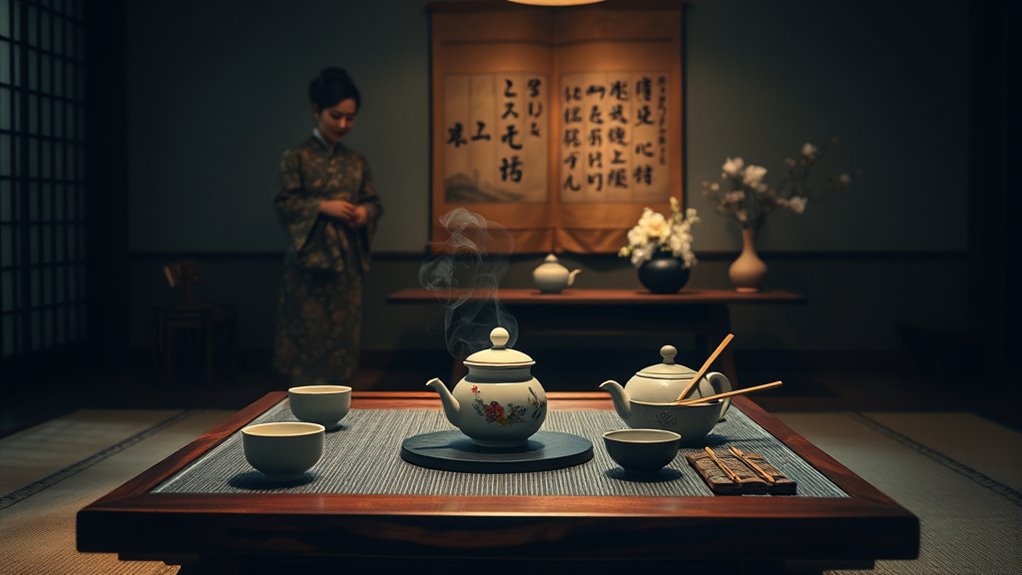
Tea ceremonies have a rich history that reflects cultural values and philosophies across different societies. When you participate in a tea ceremony, you’re not just drinking tea; you’re engaging in a mindful practice deeply rooted in tradition. Central to this experience are the tea etiquette and ceremonial tools that guide each movement and interaction. These traditions emphasize respect, harmony, and mindfulness, transforming a simple act into a meaningful ritual. As you prepare for the ceremony, you’ll notice that specific procedures govern how you handle the utensils, how you pour the tea, and how you express gratitude. This careful attention to detail isn’t accidental; it embodies a philosophy that values patience, humility, and connection. The ceremonial tools are more than just functional objects—they carry symbolic significance. For example, in a Japanese tea ceremony, tools like the chawan (tea bowl), chasen (bamboo whisk), and chashaku (tea scoop) are carefully chosen and treated with reverence. Each utensil is designed not only for practicality but also to enhance the aesthetic and spiritual experience. Handling these tools with respect reflects a deep appreciation for the tradition and the effort behind each step. The way you clean, present, and use these implements demonstrates your understanding of the ceremony’s importance. This ritualized approach to tea preparation fosters mindfulness, encouraging you to focus on each action, from whisking the tea to serving it to your guest, creating a sense of calm and presence that’s often missing in everyday life. Additionally, incorporating mindfulness practices into the ceremony can deepen your connection to the process and cultivate a sense of inner peace. Tea etiquette guides your behavior throughout the ceremony, ensuring that every gesture is deliberate and respectful. For instance, you might observe specific customs about how to hold the tea bowl, how to bow to your host or guest, or how to express gratitude after tasting the tea. These rules serve to cultivate humility and foster a shared sense of respect between participants. In many cultures, following proper tea etiquette also signifies a recognition of the ceremony’s spiritual significance, elevating the act from mere routine to a meaningful exchange. Whether you’re in a formal setting or practicing at home, these customs connect you to centuries of tradition, reinforcing the values of humility, serenity, and reverence. Embracing these practices enriches your experience, transforming a simple cup of tea into a moment of cultural reflection, personal mindfulness, and shared humanity.
Top picks for "history mean ceremony"
Open Amazon search results for this keyword.
As an affiliate, we earn on qualifying purchases.
Frequently Asked Questions
How Did Tea Ceremonies Originate Across Different Cultures?
You see, tea ceremonies originated through various cultural influences, reflecting each society’s values. In China, ancient tea origins linked to meditation and health inspired formal rituals emphasizing harmony and respect. Japan adapted these ideas into a refined tea ceremony emphasizing aesthetics and mindfulness. Meanwhile, in the Middle East, tea’s social role shaped gatherings centered on hospitality. These diverse origins show how different cultures embraced tea to foster connection and tradition.
What Are Some Common Variations of Tea Ceremonies Worldwide?
You’ll notice that tea ceremonies vary worldwide, each emphasizing unique ceremonial rituals and tea preparation techniques. For example, the Japanese tea ceremony involves precise movements and a tranquil atmosphere, while Chinese Gongfu tea emphasizes multiple steepings and intricate brewing methods. In Morocco, you perform a lively ritual of pouring mint tea with a flourish. These variations reflect cultural values, creating immersive experiences that honor tradition and foster connection.
How Has Modern Society Influenced Traditional Tea Ceremonies?
Like a delicate bonsai shaped by modern winds, traditional tea ceremonies adapt through cultural shifts. You see this in how technological influence streamlines rituals, making them more accessible yet less formal. Cultural adaptation allows these ancient practices to flourish in contemporary life, blending tradition with innovation. While some cherish the preservation, others embrace change, proving that even timeless customs can evolve without losing their soul.
Are There Specific Etiquette Rules Unique to Each Tea Ceremony?
Yes, each tea ceremony has unique etiquette rules and ceremony protocols. You should observe specific tea etiquette, like how you handle the tea utensils and your posture, which vary depending on the ceremony’s tradition. Paying close attention to these protocols demonstrates respect and helps you fully appreciate the cultural significance. Following these rules guarantees a smooth, respectful experience and honors the tradition behind each distinct tea ceremony.
What Symbolism Is Embedded in Traditional Tea Ceremony Practices?
Did you know that over 80% of participants find tea symbolism deeply meaningful? You’ll notice that traditional tea ceremonies embed spiritual significance through specific practices, like the arrangement of utensils or the choice of tea leaves. These rituals symbolize harmony, respect, purity, and tranquility. By engaging in these practices, you connect with a centuries-old tradition that emphasizes mindfulness, inner peace, and reverence for nature’s offerings.
Conclusion
As you explore the history and meaning of tea ceremonies, you realize they’re more than just brewing tea—they’re a journey through time and tradition. Each movement, each sip holds secrets of ancient cultures and philosophies. But as you step back, you wonder—what stories remain hidden in the quiet moments of each ceremony? The true essence awaits your discovery, inviting you to experience a ritual that’s richer than it seems, waiting silently for you to uncover its mysteries.