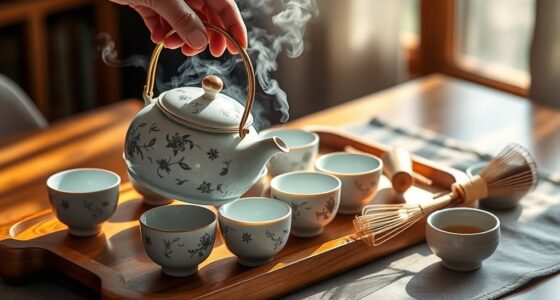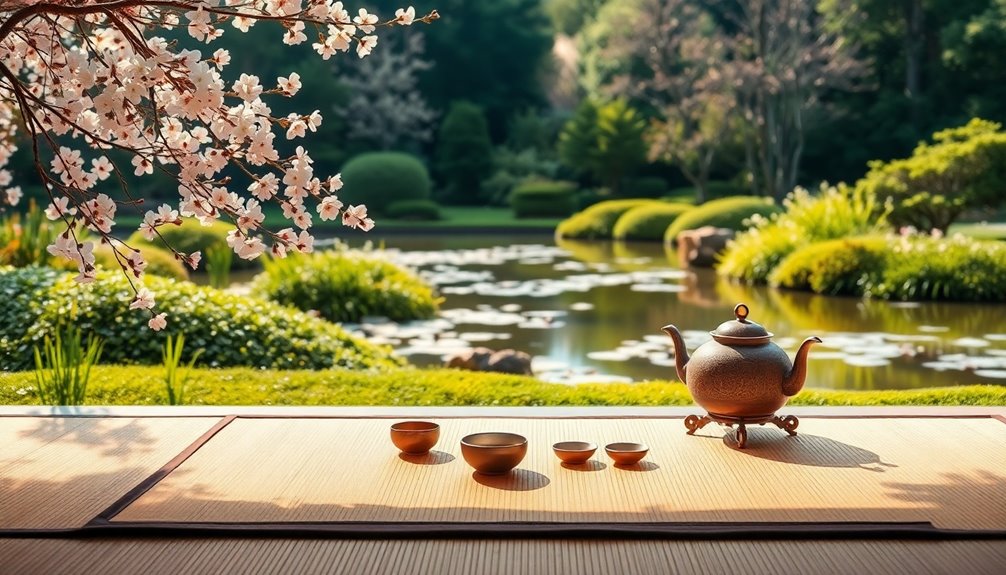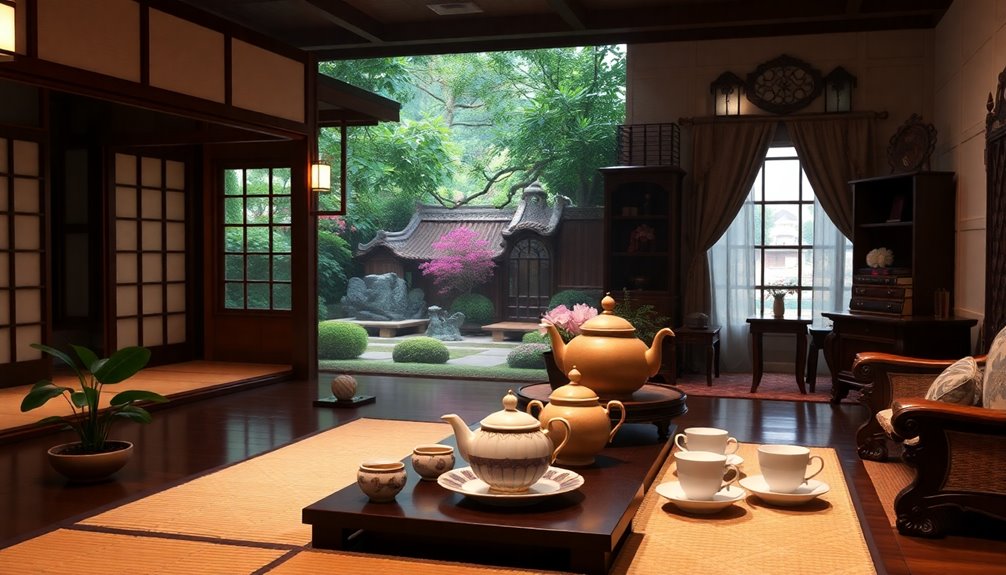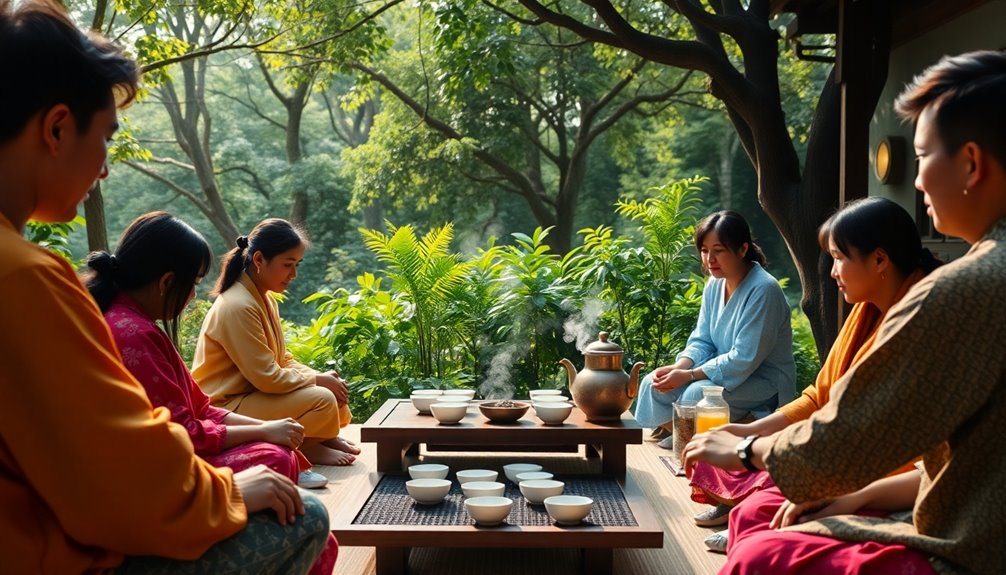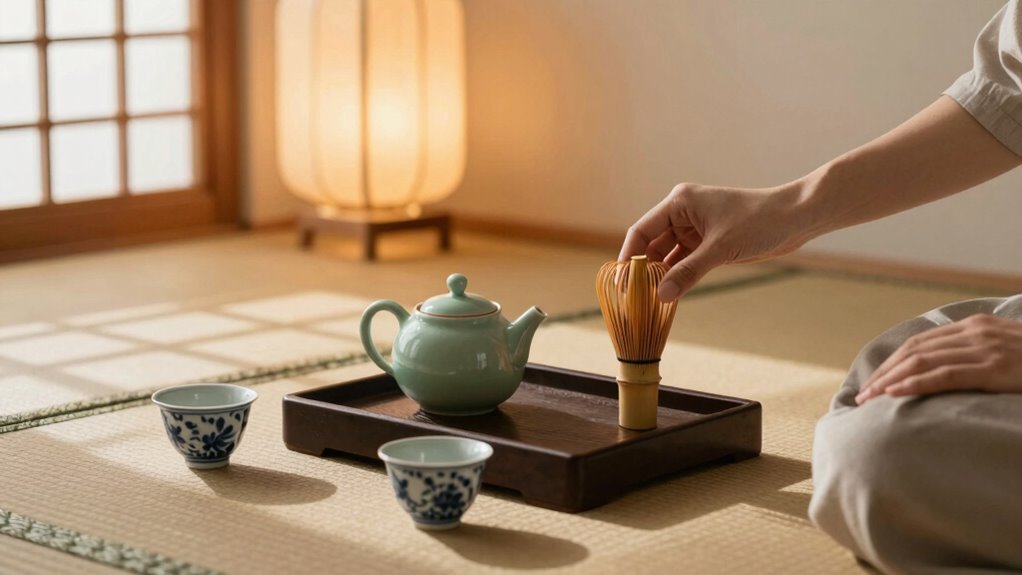

Tea ceremonies are rich traditions rooted in centuries of history, emphasizing respect, mindfulness, and harmony. They symbolize purity, serenity, and social bonds across cultures like Japan and China. Every movement, from pouring to serving, carries deep meaning and reflects cultural values. These rituals promote connection, humility, and appreciation for the present moment. Modern influences highlight their environmental significance, showing how tradition evolves. To uncover more about their fascinating origins and enduring symbolism, keep exploring the story behind these meaningful practices.

Get coffee and tea gear delivered free with Prime
- Fast, free delivery on millions of items
- Prime Video, Amazon Music and more included
- Member-only deals all year
Key Takeaways
- Tea ceremonies are rooted in centuries-old cultural traditions emphasizing respect, mindfulness, and harmony.
- They symbolize purity, serenity, and social bonds, reflecting deep philosophical and spiritual values.
- Ritual movements are deliberate, embodying etiquette that elevates tea preparation to a sacred practice.
- Ceremonies serve to reinforce community, social hierarchy, and cultural identity across different regions.
- Modern practices incorporate environmental sustainability, maintaining the ceremonies’ cultural significance and ecological awareness.
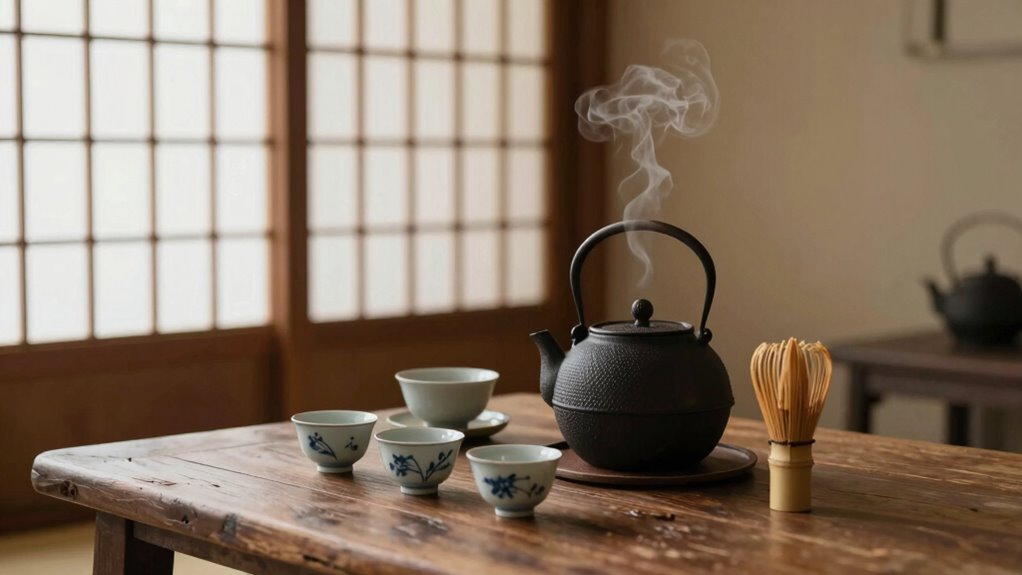
Tea ceremonies are often seen as elegant traditions rooted in cultural rituals, but their origins reveal much more than just aesthetics. When you observe a tea ceremony, you’re witnessing a carefully crafted practice that embodies centuries of history, philosophy, and social values. At its core, tea etiquette isn’t just about following rules; it’s a way to show respect, mindfulness, and harmony. Every movement, from how you hold the cup to the way you serve others, is deliberate and meaningful. These rituals serve as a bridge between the past and present, emphasizing humility and appreciation for the moment.
Tea ceremonies embody centuries of history, respect, mindfulness, and harmony through deliberate, meaningful movements.
Understanding the cultural symbolism behind tea ceremonies deepens your appreciation for their significance. In many traditions, tea isn’t merely a beverage; it’s a symbol of purity, serenity, and unity. For example, in Japanese tea ceremonies, the act of preparing and drinking tea reflects Zen Buddhist principles—simplicity, mindfulness, and harmony with nature. Every step, from the cleansing of utensils to the final sip, carries spiritual weight. Similarly, in Chinese culture, tea symbolizes hospitality, respect, and the pursuit of balance. Offering tea to a guest is more than a gesture; it’s a way to honor their presence and foster genuine connection.
As you participate in or observe a tea ceremony, you can see how these cultural symbols reinforce community bonds and social hierarchy. The precise procedures and etiquette are designed to create a respectful, harmonious environment. You might notice that the quiet, deliberate movements serve to calm the mind and cultivate an awareness of the present moment. This focus on mindfulness isn’t accidental—it’s embedded in the ritual’s purpose. The way you handle the teapot, the gentle way you pour, and the attentive way you listen to instructions all communicate a shared value: that the experience of tea is sacred, deserving of reverence and care. Recognizing the centuries of history behind these practices enhances your understanding of their enduring importance. Additionally, these rituals often incorporate elements of biodiversity and sustainable practices, reflecting a deep respect for the environment and the natural resources involved. Moreover, the cultural significance of tea ceremonies extends beyond individual traditions, influencing modern practices that emphasize eco-consciousness and social harmony.
Ultimately, tea ceremonies are more than just aesthetic displays; they’re a reflection of cultural identity and philosophical ideals. When you learn about their origins, you see how they promote social cohesion and spiritual reflection. Whether in Japan, China, or elsewhere, these rituals invite you to slow down, appreciate beauty in simplicity, and connect with others on a deeper level. It’s through understanding the history, the etiquette, and the symbolism that you truly grasp the profound significance behind each sip.
As an affiliate, we earn on qualifying purchases.
Frequently Asked Questions
How Did Tea Ceremonies Originate Historically?
You might be surprised to learn that tea ceremonies originated in ancient China, where they evolved from simple tea drinking into a highly ritualized art form. As you observe tea etiquette, you’ll notice the emphasis on mindfulness and respect. Ceremonial attire often includes traditional garments, highlighting the ceremony’s significance. Over time, these practices spread to Japan and Korea, where they became refined customs symbolizing harmony, respect, and tranquility.
Are Tea Ceremonies Practiced Differently Across Cultures?
Yes, tea ceremonies vary across cultures, reflecting unique cultural symbolism and ritual etiquette. In Japan, you focus on harmony and respect, emphasizing precise movements and spiritual mindfulness. In China, the ceremony highlights hospitality and tradition, with specific brewing techniques. Meanwhile, in the UK, afternoon tea centers on social etiquette and leisurely enjoyment. These differences show how each culture’s values shape the way they practice and interpret tea ceremonies.
What Are the Spiritual Aspects of Tea Ceremonies?
You experience the spiritual aspects of tea ceremonies through mindfulness practice, where every movement and moment becomes a form of meditation. You embrace spiritual symbolism, like harmony, respect, purity, and tranquility, which deepen your connection to the ritual. As you prepare and share tea, you cultivate inner peace and mindfulness, allowing you to appreciate the present moment and foster a sense of spiritual harmony and balance.
How Have Modern Influences Changed Traditional Tea Practices?
Modern influences have reshaped traditional tea practices like a river carving new paths. You might notice changes in tea etiquette, such as more casual gatherings or the blending of Western and Eastern styles. Modern adaptations include using trendy tea accessories or hosting informal tastings. These shifts make tea ceremonies more accessible and personalized, yet they still honor the core spirit of mindfulness and respect, even as they evolve with contemporary tastes.
What Equipment Is Essential for a Traditional Tea Ceremony?
You need crucial tea accessories like a tea bowl, whisk, and scoop for a traditional tea ceremony. These tools help you prepare and serve matcha properly, reflecting the ceremony etiquette that emphasizes respect and harmony. A bamboo tea scoop and a chasen (whisk) are essential, along with a tea caddy for storing powdered tea. Using the right accessories guarantees an authentic experience and honors the cultural significance of the ceremony.
Conclusion
As you sip your tea, remember it’s more than just a drink—it’s a bridge to centuries of tradition. Imagine a quiet tea ceremony, where each movement is like a carefully played note in a symphony, blending history, culture, and mindfulness. Just as a single drop can reveal the depth of the ocean, each cup holds stories that connect us across time. Embrace the ritual, and let it remind you of the rich tapestry woven into every sip.
Halloween Picks
halloween
As an affiliate, we earn on qualifying purchases.